DocTransfer
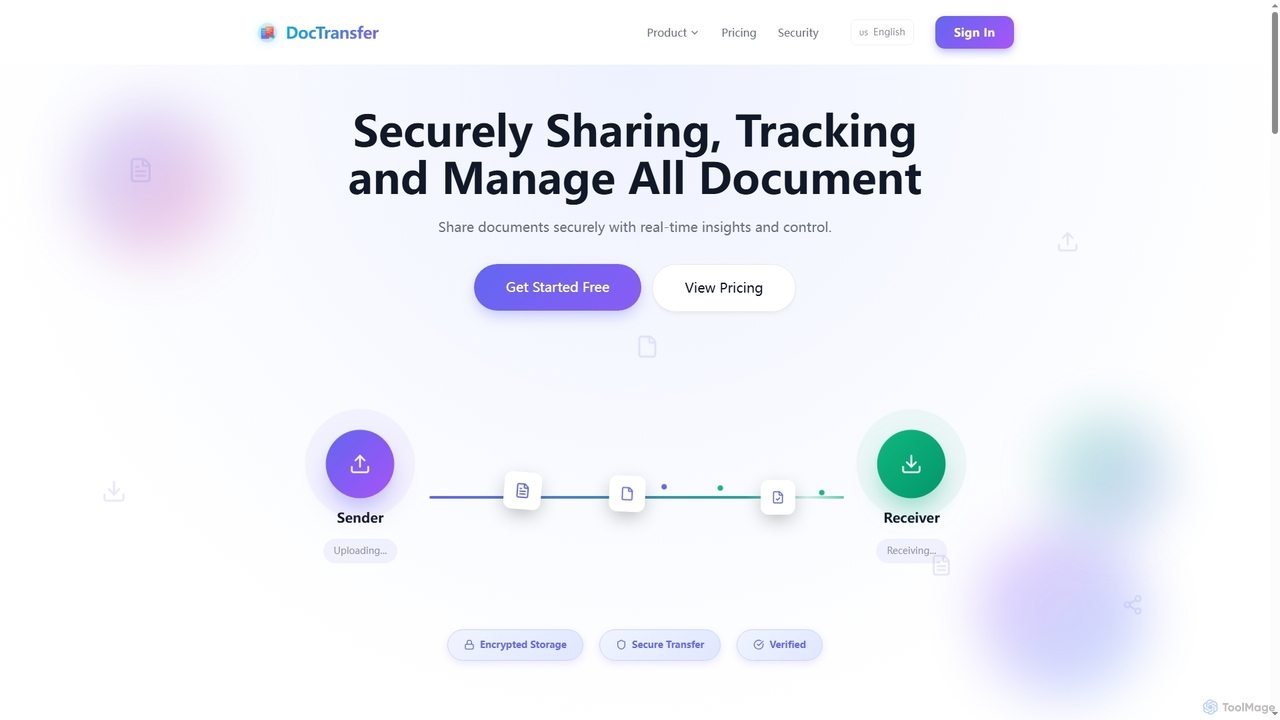
DocTransfer is a secure document sharing and analytics platform designed for professionals and teams. It enables encrypted file …
DocTransfer is a secure document sharing and analytics platform designed for professionals and teams. It enables encrypted file transfer, real-time tracking of engagement, and robust access controls, ensuring confidentiality and compliance for sensitive information.
eighttoseven
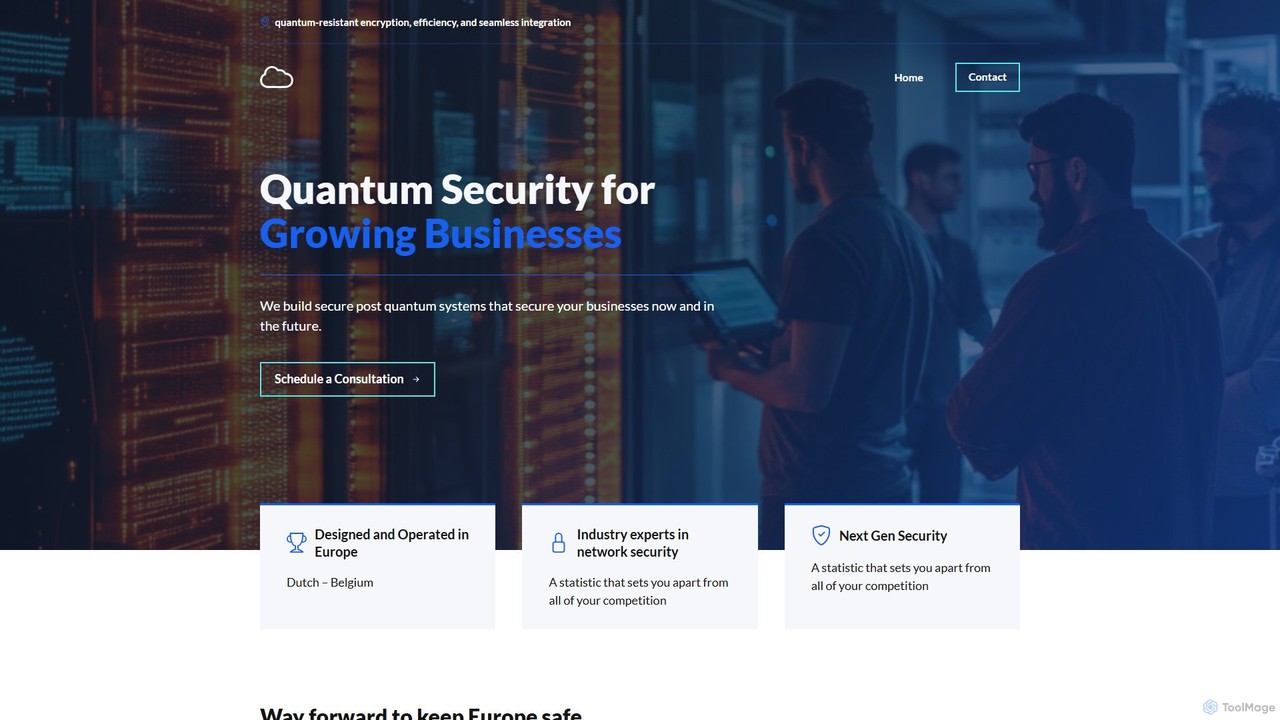
A specialized cybersecurity firm providing post-quantum cryptography (PQC) solutions for businesses. eighttoseven offers future-proof security through services like …
A specialized cybersecurity firm providing post-quantum cryptography (PQC) solutions for businesses. eighttoseven offers future-proof security through services like Encryption as a Service (EaaS), secure data storage, and custom communication platforms, all powered by their proprietary NaVeOl algorithm. Designed and operated in Europe, it helps organizations in sensitive sectors like healthcare, finance, and government protect their data against both current and emerging quantum threats, ensuring long-term confidentiality and regulatory compliance.
About Encryption
AI Encryption tools are a specialized class of security software that leverage machine learning to create, manage, and analyze cryptographic systems. These tools go beyond static algorithms by using AI to dynamically adjust encryption strength, predict vulnerabilities, and develop next-generation cryptographic methods. They are crucial for protecting sensitive data against evolving cyber threats and preparing for future challenges like quantum computing. This intelligent approach enables more robust, adaptive, and efficient data protection strategies.
Core Features
- Adaptive Encryption: Automatically adjusts encryption levels based on real-time threat analysis and data sensitivity.
- Homomorphic Encryption Optimization: Facilitates complex computations on encrypted data without decryption, preserving privacy.
- Quantum-Resistant Algorithm Design: Uses AI to help create and test new cryptographic standards resilient to quantum attacks.
- Intelligent Key Management: Automates the lifecycle of cryptographic keys, including generation, rotation, and revocation based on predictive risk models.
- Cryptanalytic Simulation: Employs AI to simulate attacks and identify potential weaknesses in existing encryption protocols.
Use Cases
These tools are essential in sectors with high-security requirements, such as finance, healthcare, and government intelligence. They are used for securing cloud databases, protecting confidential communications, enabling privacy-preserving machine learning, and future-proofing critical infrastructure against emerging cryptographic threats.
How to Choose
When selecting an AI Encryption tool, consider the specific cryptographic standards it supports (e.g., AES, PQC). Evaluate its performance overhead and scalability for your environment. Assess its integration capabilities with your existing security infrastructure and ensure it meets relevant compliance requirements like GDPR or HIPAA.

EncryptionUse Cases
Dynamic Data Protection in Financial Services
A financial institution uses an AI encryption platform to protect customer transaction data. The AI analyzes risk factors for each transaction in real-time, such as amount, geographic location, and device reputation. Based on this analysis, it dynamically applies a stronger or lighter encryption algorithm, optimizing the balance between security and system performance. This ensures that high-risk transactions receive maximum protection without slowing down routine operations.
Privacy-Preserving Medical Data Analysis
A consortium of hospitals and research labs uses an AI tool to manage homomorphic encryption. This allows researchers to perform large-scale statistical analysis and train machine learning models on a combined, encrypted patient dataset. The AI optimizes the complex computations, making the process feasible while ensuring that individual patient data is never decrypted or exposed, thus complying with strict HIPAA regulations.
Automated Security for IoT Networks
An IoT device manufacturer deploys an AI-driven encryption system to manage security for millions of connected devices. The AI monitors the network for anomalous behavior indicative of a breach. If a threat is detected, it automatically isolates affected devices and rotates their cryptographic keys, preventing the compromise from spreading across the network and securing the entire device ecosystem.
Developing Post-Quantum Cryptography (PQC)
A government cybersecurity agency employs an AI platform to accelerate the development of quantum-resistant encryption algorithms. The AI generates vast numbers of potential cryptographic structures and then simulates attacks from both classical and quantum computers to test their resilience. This process significantly shortens the research and development cycle for creating next-generation security standards.
Securing Confidential Corporate Communications
A multinational corporation integrates an AI encryption tool into its internal messaging and file-sharing platform. The tool uses AI to classify the sensitivity of information being shared in real-time. Based on the classification, it automatically applies end-to-end encryption policies, ensuring that trade secrets and executive communications are protected with the highest level of security without requiring manual intervention from employees.
Intelligent Data Obfuscation for Software Testing
A software development company uses an AI encryption tool to create realistic but anonymized datasets for testing purposes. The AI analyzes the structure of the production database and generates a synthetically encrypted version that preserves data formats and relationships. This allows developers to test new features thoroughly without using real, sensitive customer information, reducing the risk of data leaks.