ToolMage
Sign in

Best 8 Chat AI tools for Social

Popular Chat AI tools in Social include Camsoda, thundr, Voicemod, Dubbing AI, LemonChat, Omegle, HeartEcho, and Amewz, helping you work more efficiently.

Dubbing AI
Freemium

Dubbing AI

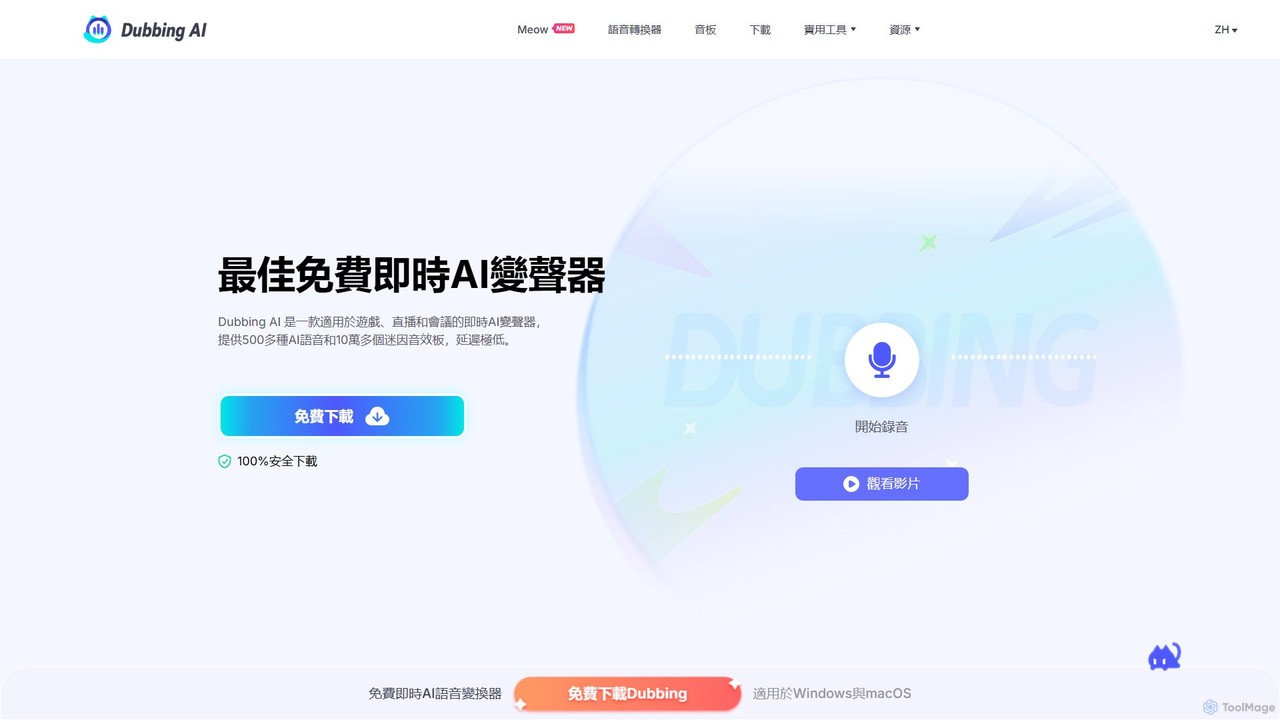
Dubbing AI is a free, real-time AI voice changer and soundboard designed for gamers, streamers, and content creators. It offers over 500 AI voices and 100,000+ meme sounds with ultra-low latency, enhancing online interactions on platforms like Discord, OBS, and popular games. Easy to set up and light on system resources, it allows users to transform their voice into characters, celebrities, and more.

Voice Modulation
Visits 549.1KFavorites 142Likes 124
Voicemod
Freemium

Voicemod

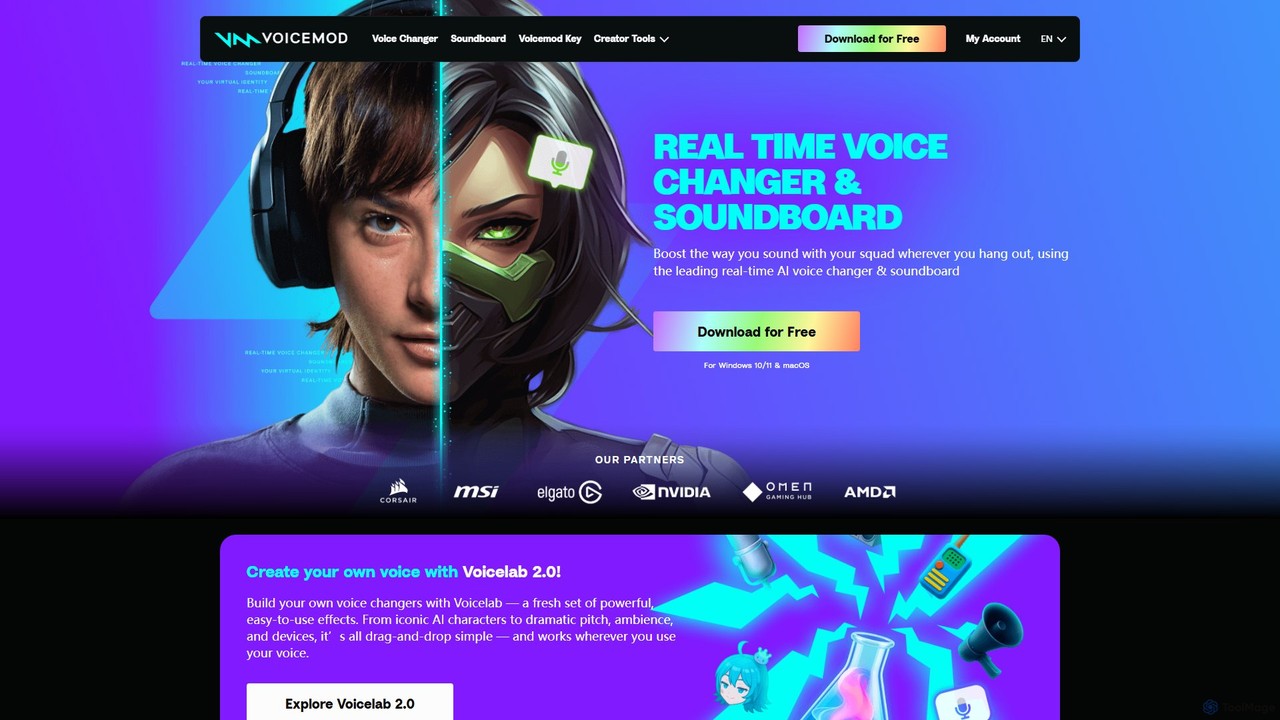
Voicemod is the leading real-time AI voice changer and soundboard for PC and Mac. Designed for gamers, streamers, and content creators, it allows you to transform your voice into anything you can imagine, from a robot to an anime character. With a vast library of voices, sound effects, and the powerful Voicelab for custom voice creation, Voicemod integrates seamlessly with all your favorite games and communication apps like Discord, Zoom, and VRChat.

Voice Modulation
Visits 4.3MFavorites 151Likes 166

About Chat

AI Chat tools are a category of AI-powered applications designed to simulate human-like conversations through text or voice. Leveraging advanced Natural Language Processing (NLP) and Large Language Models (LLMs), these tools can understand user intent, generate coherent responses, and maintain conversational context. They serve to automate communication, enhance user engagement, and provide instant information, making them a cornerstone of the broader Social AI landscape.

Core Features

  • Natural Language Understanding (NLU): Interprets complex human language, including nuances, slang, and varied sentence structures.
  • Contextual Memory: Retains information from previous interactions to provide more relevant and personalized responses within a single conversation.
  • Multilingual Support: Communicates effectively in multiple languages, broadening accessibility and global reach.
  • Integration Capabilities: Seamlessly connects with existing platforms like CRM systems, messaging apps, and websites for unified workflows.
  • Personalization & Learning: Adapts responses based on user preferences and learns from interactions to improve performance over time.

Applicable Scenarios

AI Chat tools are widely adopted across various sectors. Businesses utilize them for automating customer support, handling frequently asked questions, and guiding users through processes. Content creators leverage them for brainstorming ideas, generating initial drafts, and refining text. Individuals find value in them for personal assistance, language practice, and quick information retrieval.

How to Choose

When selecting an AI Chat tool, consider its NLU accuracy and ability to understand diverse queries. Evaluate its integration ecosystem to ensure compatibility with your existing software. Assess customization options for tailoring responses and branding. Finally, examine scalability to handle varying user loads and data privacy measures to protect sensitive information.

Chat use cases

1

Automate Customer Service & Support

E-commerce businesses or service providers can deploy AI Chat tools on their websites or messaging platforms to handle common customer inquiries 24/7. These tools can answer FAQs, provide order status updates, troubleshoot basic issues, and even guide users to relevant products or services, significantly reducing response times and freeing up human agents for complex cases.

2

Content Brainstorming and Idea Generation

Content creators, marketers, and writers can use AI Chat tools as a creative partner. By inputting prompts or initial ideas, the AI can generate a wide range of concepts, outlines, headlines, or even draft paragraphs for blog posts, social media updates, or marketing campaigns. This accelerates the ideation phase and helps overcome creative blocks, providing diverse perspectives quickly.

3

Personalized Learning and Tutoring

Students and lifelong learners can leverage AI Chat tools as personalized tutors or study aids. The AI can explain complex concepts, answer specific questions about a subject, provide examples, or even generate quizzes to test understanding. This offers a flexible and accessible way to learn at one's own pace, supplementing traditional educational resources with instant, tailored support.

4

Sales Lead Qualification and Engagement

Sales teams can deploy AI Chat tools on landing pages or product sites to engage potential leads. The AI can ask qualifying questions, gather contact information, answer initial product queries, and even schedule demos or calls with human sales representatives. This streamlines the sales funnel, ensuring that human agents interact with more qualified and interested prospects, improving conversion rates.

5

Internal Knowledge Base Access for Employees

Large organizations can use AI Chat tools to provide employees with instant access to internal company knowledge. Instead of sifting through documents or waiting for IT support, employees can simply ask the AI questions about company policies, HR procedures, technical documentation, or project details. This boosts internal productivity and ensures consistent information dissemination across the workforce.

6

Language Practice and Translation

Individuals learning a new language can use AI Chat tools for conversational practice. The AI can act as a language partner, correcting grammar, suggesting vocabulary, and engaging in free-form conversations. Additionally, these tools can provide real-time translation for text, facilitating communication across language barriers in personal or professional contexts, making them a valuable part of social interaction.

Chat FAQ

What are AI Chat tools?

AI Chat tools are software applications that use artificial intelligence to simulate human conversation. They are powered by advanced Natural Language Processing (NLP) and Large Language Models (LLMs) to understand user input, generate relevant responses, and maintain conversational flow. These tools are designed to automate communication, provide instant information, and enhance user engagement across various platforms.

How do AI Chat tools differ from traditional chatbots?

AI Chat tools, often powered by LLMs, differ significantly from traditional, rule-based chatbots. Traditional chatbots follow predefined scripts and keyword matching, limiting their ability to handle complex or unexpected queries. AI Chat tools, however, use advanced NLP to understand context, intent, and even sentiment, allowing for more natural, flexible, and human-like conversations. They can learn and adapt, providing more personalized and effective interactions.

What should I consider when choosing an AI Chat tool?

When selecting an AI Chat tool, prioritize its Natural Language Understanding (NLU) accuracy and ability to handle diverse queries. Evaluate its integration capabilities with your existing CRM, marketing, or communication platforms. Consider the level of customization offered for branding and specific use cases. Scalability to accommodate future growth and robust data privacy/security features are also crucial for long-term success and compliance.

What are the main benefits of using AI Chat tools for businesses?

Businesses gain several key benefits from AI Chat tools. They enable 24/7 customer support, reducing response times and improving customer satisfaction. Automation of routine inquiries frees up human agents for more complex tasks, leading to increased operational efficiency. AI Chat tools can also gather valuable customer data, personalize interactions, and qualify leads, ultimately driving sales and enhancing overall business performance.

Can AI Chat tools integrate with existing platforms?

Yes, most modern AI Chat tools are designed with robust integration capabilities. They can seamlessly connect with a wide array of existing platforms, including Customer Relationship Management (CRM) systems like Salesforce, messaging applications such as Slack or WhatsApp, website content management systems (CMS), and various social media channels. This allows for unified communication, data synchronization, and a consistent user experience across different touchpoints.