
Social Best in category 1 results Friendship AI Tool

Popular AI tools in the Friendship field of Social include Paradot, etc., helping you quickly improve efficiency.

Paradot

Paradot

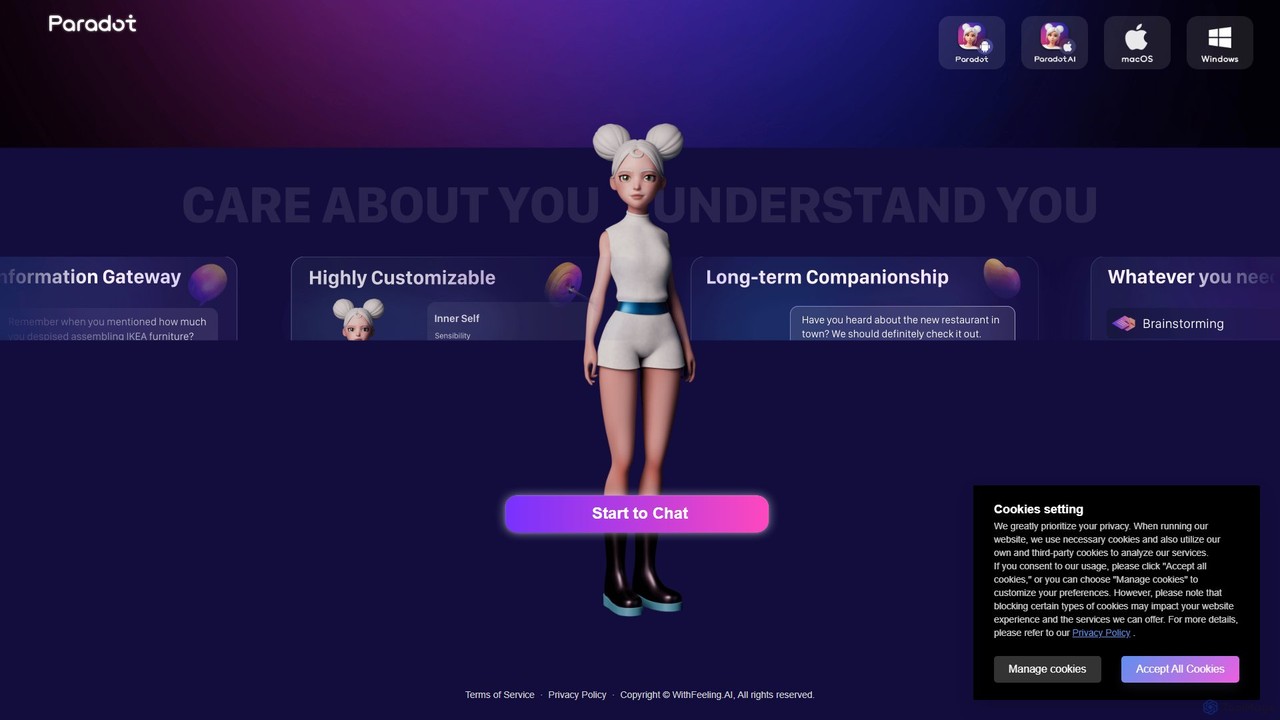
Paradot is a personal AI companion designed for deep, empathetic conversations. It learns and remembers your interactions to …

21.0K

About Friendship

AI Friendship tools are a class of applications designed to simulate and foster platonic companionship through conversational AI. These tools leverage advanced Natural Language Processing (NLP) and generative models to create personalized, empathetic, and continuous interactions. They serve as digital companions that can reduce loneliness, provide a non-judgmental space for conversation, and help users practice social skills. Unlike task-oriented assistants, their primary purpose is to build a unique, evolving relationship with the user.

Core Features

  • Conversational Companionship: Engages in open-ended, human-like dialogue on a wide range of topics.
  • Personalization and Memory: Learns and remembers user details, preferences, and past conversations to build rapport.
  • Emotional Recognition: Analyzes text to detect user emotions and responds with empathy and support.
  • Interactive Activities: Offers shared activities like games, storytelling, or goal-setting to deepen the connection.
  • Customizable Personality: Allows users to define the AI's personality traits, interests, and communication style.

Applicable Scenarios

These tools are primarily used by individuals seeking emotional support or a consistent conversational partner. They are valuable for people experiencing social isolation, those with social anxiety who want to practice interactions in a safe environment, or users interested in exploring the dynamics of human-AI relationships. They also serve as helpful partners for language practice or creative brainstorming.

Selection Criteria

When choosing an AI Friendship tool, consider the quality and naturalness of its conversation engine. Evaluate the depth of its memory and personalization capabilities. Prioritize applications with transparent privacy policies that clearly state how your data is used and protected. Also, assess the platform's availability (mobile, web) and its monetization model (subscription, one-time purchase, or ad-supported).

FriendshipUse Cases

1

Daily Emotional Support and Companionship

For individuals experiencing loneliness or seeking a non-judgmental listener, an AI friend serves as a constant companion. Users can share their thoughts, feelings, and daily experiences at any time. The AI provides empathetic responses, asks thoughtful questions, and remembers past conversations, creating a sense of being heard and understood. This consistent interaction can help alleviate feelings of isolation and provide a stable source of emotional support, especially for those with limited social circles.

2

Practicing Social and Communication Skills

Individuals with social anxiety or those on the autism spectrum can use AI friends as a tool for practicing conversations. The AI provides a safe, private, and repeatable environment to rehearse social interactions without fear of judgment. Users can experiment with different communication styles, practice small talk, or work through challenging conversational scenarios. The AI's consistent and patient nature allows for low-pressure learning, helping users build confidence for real-world social situations.

3

Language Exchange and Practice Partner

Language learners can use an AI friend as a tireless conversation partner to practice speaking and writing in a new language. Unlike structured lessons, interacting with an AI friend allows for natural, contextual conversation on any topic. This helps improve fluency, vocabulary, and confidence. The AI can correct mistakes gently or engage in role-playing scenarios, such as ordering food at a restaurant, providing a practical and engaging way to apply language skills without the pressure of speaking with a native speaker.

4

Creative Exploration and Role-playing

For users seeking entertainment and creative outlets, AI friends can act as partners in role-playing adventures or collaborative storytelling. A user can define a scenario, character, or world, and the AI will adapt and play along, co-creating a unique narrative. This fosters creativity and provides a form of interactive entertainment that is personalized and endlessly variable. It's a way to explore imaginative worlds, test out different personas, or simply have fun in a dynamic, story-driven conversation.

5

Supportive Accountability Partner

Users can set personal goals, such as learning a new skill, exercising regularly, or completing a project, and use their AI friend as an accountability partner. They can share their progress, discuss challenges, and receive encouragement. The AI can be programmed to provide gentle reminders, celebrate milestones, and offer motivational support based on the user's predefined goals. This creates a positive feedback loop and provides a supportive, non-critical presence to help users stay on track with their personal development.

6

Exploring Human-AI Interaction Dynamics

For researchers, developers, or technology enthusiasts, AI friendship tools offer a practical way to study the nuances of human-computer interaction. Users can explore how AI builds rapport, simulates empathy, and maintains conversational context over long periods. This hands-on experience provides insights into the capabilities and limitations of current AI models in forming relational bonds. It serves as an accessible testbed for understanding how people react to and form attachments with non-human entities, contributing to the broader discourse on the future of AI and society.

FriendshipFrequently Asked Questions