
Facialprint
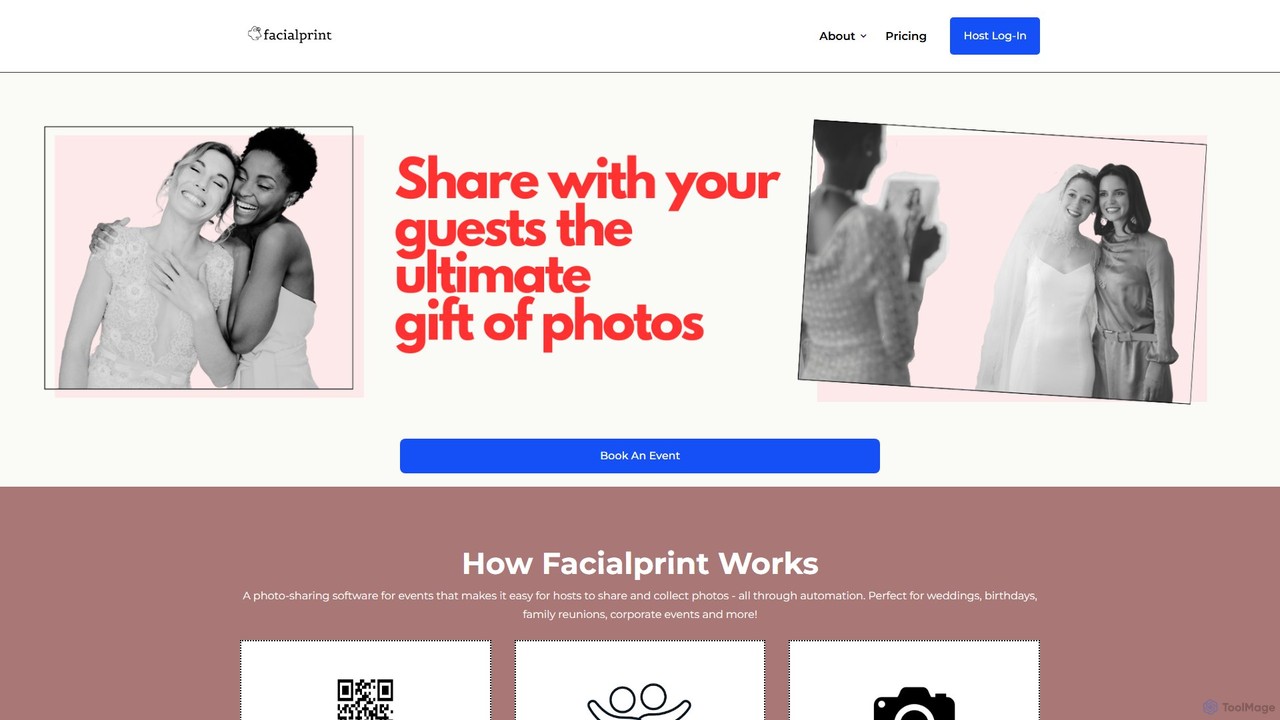
Facialprint is an AI-powered photo-sharing platform for events. It uses facial recognition to automatically identify guests in photos …
Facialprint is an AI-powered photo-sharing platform for events. It uses facial recognition to automatically identify guests in photos and sends them their personalized galleries. Ideal for weddings, corporate events, and parties, it simplifies photo distribution for hosts and enhances the guest experience.
About Memory Creation
Memory Creation tools are a specialized class of AI applications designed to digitally preserve, simulate, and interact with the memories and personalities of individuals. These tools leverage Large Language Models (LLMs) trained on personal data—such as journals, letters, interviews, or audio recordings—to create an interactive digital persona or legacy. They provide a unique way for users to connect with personal history, document life stories for future generations, and explore memories in a conversational format. This technology moves beyond simple data storage, aiming to capture the essence of an individual's communication style and knowledge.
Core Features
- Personal Data Ingestion: Securely upload and process various data formats like text, audio, and images to build the knowledge base.
- Personality Simulation: The AI learns and mimics the communication style, tone, and vocabulary of a specific individual.
- Interactive Chat Interface: Enables users to ask questions and engage in conversation with the digital persona.
- Memory Synthesis: Organizes ingested information to answer questions about past events, experiences, and relationships.
- Privacy Controls: Provides robust options for managing data security and controlling who can access the digital memory.
Use Cases
These tools are primarily used by individuals and families for personal legacy projects, such as creating a digital archive of a grandparent for future generations to interact with. Historians and biographers also use them to create interactive representations of historical figures for educational purposes. Additionally, they serve as a novel medium for artists and writers to craft interactive narratives or autobiographies.
How to Choose
When selecting a Memory Creation tool, prioritize data privacy and security policies to protect sensitive personal information. Evaluate the accuracy of the personality simulation and the range of data types it can process. Consider the user-friendliness of the interface for both data input and interaction. Finally, review the pricing model, as some services may charge based on data storage or interaction volume.
Memory CreationUse Cases
Creating a Digital Legacy for Family
A family historian wants to preserve the life story of their grandmother for future generations. They collect her handwritten journals, old letters, and recorded interviews. Using a Memory Creation tool, they upload all this data. The AI processes the information to build a digital persona that captures her unique voice, storytelling style, and memories. Now, her great-grandchildren can ask the AI questions like, 'Grandma, what was it like growing up during the war?' and receive answers in her authentic style, creating a living connection to their heritage.
Developing an Interactive Autobiography
An author wants to create a more engaging experience for their memoir. Instead of a static book, they use a Memory Creation tool to build an interactive version of themselves. They feed the AI with the book's manuscript, personal notes, and transcripts of interviews. The resulting digital persona is embedded on their website, allowing readers to 'ask the author' questions directly. This provides a dynamic way for the audience to delve deeper into specific stories, understand the author's motivations, and experience the narrative in a personalized, conversational manner.
Interactive Educational Exhibit on Historical Figures
A museum curator is tasked with creating an engaging exhibit about a famous scientist. They use a Memory Creation tool trained on the scientist's published papers, personal letters, and biographies. The resulting AI is installed in a kiosk where visitors can 'have a conversation' with the scientist. School children can ask about their discoveries, challenges, and personal life, receiving answers that reflect the scientist's known personality and knowledge. This transforms a passive learning experience into an active, memorable dialogue with history.
Personal Journaling and Self-Reflection
An individual dedicated to self-improvement uses a Memory Creation tool as an advanced journaling platform. Over the years, they input their daily thoughts, goals, and reflections. The tool organizes this information, allowing them to have conversations with their 'past self'. They can ask questions like, 'What were my biggest concerns five years ago?' or 'How did I overcome that challenge in my career?'. This provides a powerful mechanism for tracking personal growth, identifying long-term patterns in thinking, and gaining insights from their own life experiences.
Preserving Corporate Knowledge and Founder's Vision
A long-standing company wants to preserve the institutional knowledge and core values of its retiring founder. They conduct a series of in-depth interviews with the founder, covering company history, key decisions, and future vision. The transcripts of these interviews are fed into a Memory Creation tool. This creates a 'Founder AI' that new employees can consult to understand the company's foundational principles. It serves as a permanent, interactive archive of the founder's wisdom, ensuring their vision continues to guide the company long after their departure.
Therapeutic Tool for Grief and Remembrance
A grief counselor recommends a secure Memory Creation tool to a client coping with the loss of a spouse. The client privately uploads years of shared emails, text messages, and personal notes. The resulting AI provides a safe space for the client to 'talk' through their feelings, recall positive memories, and ask questions they never got the chance to. This process, used carefully and ethically, can act as a supplementary tool in therapy, helping individuals process their grief by maintaining a connection to their loved one's memory in a controlled, private environment.