Rune
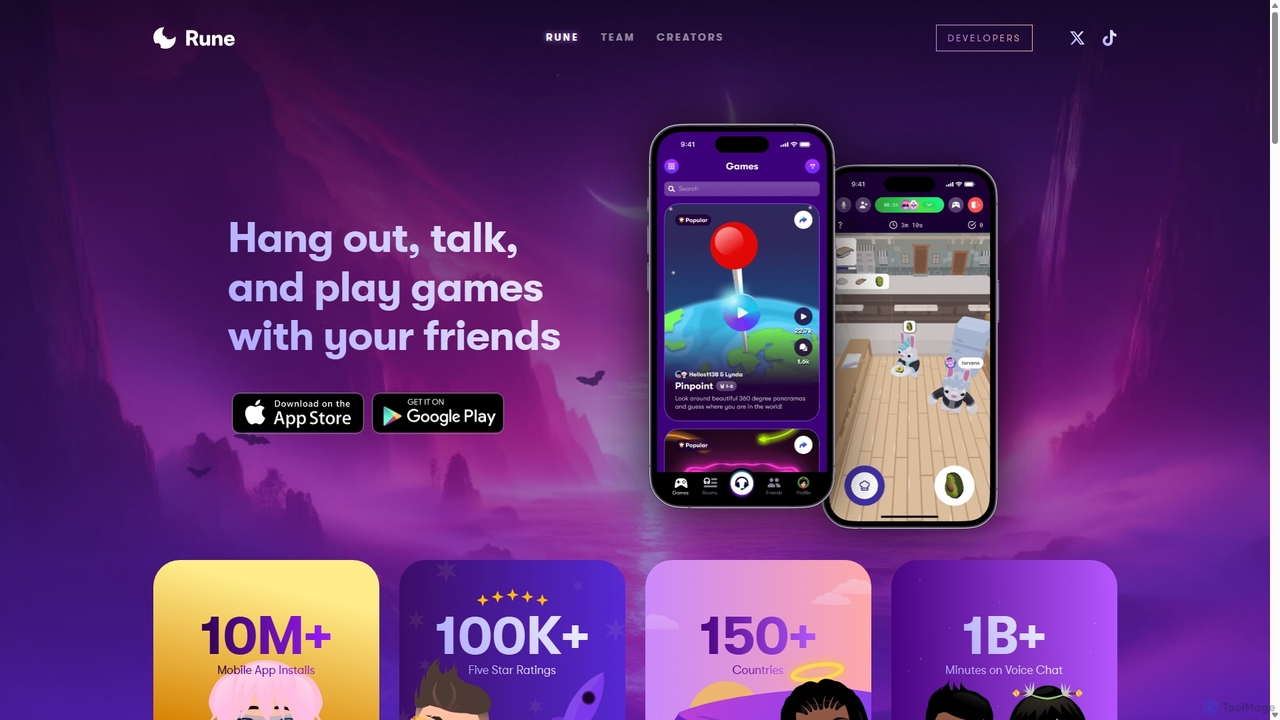
Rune is a social gaming platform that seamlessly integrates multiplayer games directly into voice chat rooms. It allows …
Rune is a social gaming platform that seamlessly integrates multiplayer games directly into voice chat rooms. It allows friends to talk, laugh, and play together instantly without needing separate installations or dealing with ads. Discover a constantly growing library of unique games and enjoy a frictionless social experience.
About Gaming
AI Gaming tools are a class of software that leverage artificial intelligence to create, enhance, and manage interactive game experiences. These tools utilize machine learning models, particularly generative AI and reinforcement learning, to automate the production of game assets, develop intelligent character behaviors, and personalize gameplay. They empower developers to build more complex, dynamic, and immersive worlds while significantly accelerating development cycles. This technology is transforming how games are made, from indie projects to AAA titles.
Core Features
- Procedural Content Generation (PCG): Automatically creates game levels, landscapes, quests, and items, offering endless replayability.
- Intelligent NPC Behavior: Develops non-player characters (NPCs) with dynamic, adaptive behaviors that learn from player interactions.
- Generative Asset Creation: Produces 2D/3D art, textures, music, and sound effects from simple text or image prompts.
- Gameplay Analytics & Balancing: Analyzes player data to identify patterns, balance game difficulty, and detect unfair play.
- Natural Language Interaction: Enables players to communicate with in-game characters using natural speech or text.
Use Cases
AI Gaming tools are primarily used by game developers, narrative designers, and 3D artists. Indie developers use them for rapid prototyping and asset creation to compete with larger studios, while AAA studios integrate them to manage the complexity of massive open worlds and create more believable character interactions.
How to Choose
When selecting an AI Gaming tool, consider its integration with your chosen game engine (like Unity or Unreal Engine). Evaluate its core function—whether you need asset generation, NPC logic, or analytics. Also, assess the learning curve, documentation quality, and the pricing model, especially for commercial use.

GamingUse Cases
Rapid Prototyping for Indie Game Developers
An indie developer with a small team needs to create a vast open world for their RPG. Using an AI tool for procedural content generation, they can generate entire landscapes, forests, and basic city layouts in hours instead of months. This allows them to quickly build a playable prototype to test core mechanics and secure funding, dramatically reducing initial development costs and time.
Creating Lifelike NPCs for Immersive Storytelling
A narrative designer for a story-driven game wants to move beyond repetitive, scripted dialogue. They use an AI platform that integrates a large language model to power their NPCs. Now, players can have unscripted, context-aware conversations with characters, asking unique questions and receiving dynamic responses that make the game world feel truly alive and reactive.
Generating Diverse Game Assets at Scale
An art director at a major studio is tasked with creating thousands of unique assets for a fantasy game, from armor sets to magical plants. By using a generative AI art tool, the art team can input concepts and style guides to produce hundreds of variations for each asset. This frees up artists to focus on refining the best designs rather than creating every single item from scratch.
Automated Game Balancing and QA Testing
A quality assurance (QA) lead needs to ensure their new competitive multiplayer game is balanced before launch. They deploy AI agents that use reinforcement learning to play the game millions of times. These agents discover overpowered strategies, character imbalances, and game-breaking bugs that human testers might miss, leading to a more fair and stable launch experience.
Dynamic Difficulty Adjustment for Players
A mobile game developer wants to improve player retention. They implement an AI analytics tool that monitors player performance in real-time. The system automatically adjusts the game's difficulty—making it easier for struggling players to prevent frustration and offering greater challenges for skilled players to keep them engaged, creating a personalized experience for everyone.
Real-Time Moderation in Online Communities
The community manager for a massive multiplayer online (MMO) game struggles with toxic behavior in the global chat. They integrate an AI moderation tool that understands slang, context, and multiple languages. The tool automatically flags or removes harmful messages, identifies cheaters, and alerts human moderators to serious issues, fostering a safer and more positive social environment for players.