ToolMage
Sign in

Best 1 Assistants for Social Media

Popular Assistants in Social Media include TanyaGPT, helping you work more efficiently.

TanyaGPT
Freemium

TanyaGPT

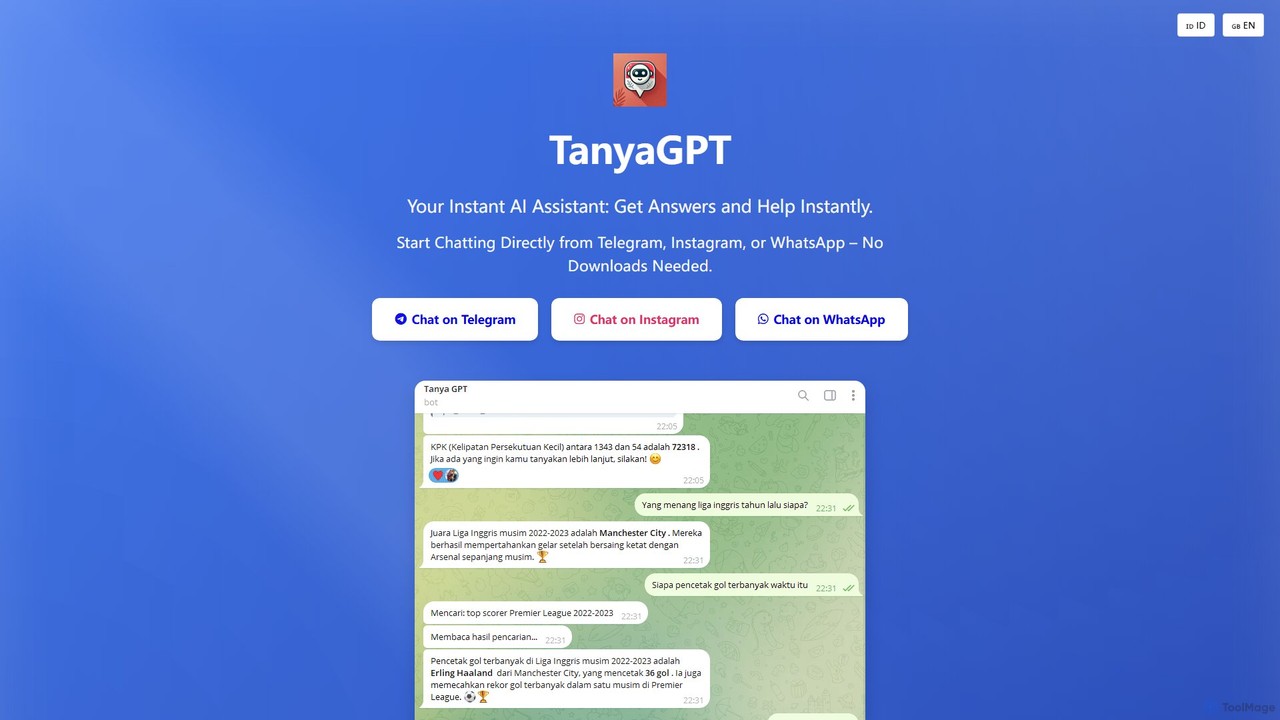
TanyaGPT is a versatile AI assistant integrated directly into WhatsApp, Telegram, and Instagram. It provides 24/7 support, analyzes images and YouTube videos, performs real-time web searches, and even acts as a shopping assistant for Indonesian e-commerce. Interact naturally through text or voice notes without needing a separate app.

Virtual Assistants
Visits 5.9KFavorites 135Likes 146

About Assistants

AI-powered Assistants are specialized tools designed to streamline and enhance social media management, operating within the broader context of social media tools. These intelligent platforms leverage advanced natural language processing and machine learning to automate repetitive tasks, generate creative content ideas, and provide actionable insights. They empower social media managers, marketers, and content creators to maintain a consistent online presence, engage effectively with their audience, and optimize their strategies across various platforms, ultimately saving time and improving campaign effectiveness.

Core Features

  • Content Generation: Generates diverse post ideas, compelling captions, relevant hashtags, and even visual concepts based on specified topics or keywords.
  • Scheduling & Automation: Automates the precise scheduling and publishing of content across multiple social media channels at optimal times for maximum reach.
  • Audience Engagement: Assists in drafting personalized responses to comments and messages, identifies key engagement opportunities, and helps manage community interactions efficiently.
  • Performance Analytics: Provides comprehensive, data-driven insights into post performance, audience demographics, and emerging trends to refine social media strategies.
  • Trend Monitoring: Actively identifies trending topics, keywords, and content formats relevant to a brand's niche, enabling timely and relevant content creation.

Applicable Scenarios

Social media assistants are invaluable for marketing agencies managing multiple client accounts, ensuring consistent brand messaging and efficient content delivery. Small business owners can leverage these tools to grow their online presence without needing dedicated staff, automating routine tasks. Individual content creators also benefit significantly by maximizing their reach and engagement, simplifying daily operations from content ideation to performance tracking, allowing them to focus on strategic growth and creative output.

How to Choose

When selecting an AI social media assistant, consider its core AI capabilities for content generation, analysis, and predictive insights. Evaluate the range of social platforms it seamlessly integrates with and the depth of its automation features for scheduling, publishing, and audience engagement. Assess the comprehensiveness of its analytics and reporting, its overall ease of use, and its scalability to match your team's size and evolving needs. Finally, compare pricing models and the quality of customer support for a sustainable long-term solution.

Assistants use cases

1

Automate Social Media Scheduling

Social media managers can use AI assistants to automatically schedule posts across various platforms like Instagram, Facebook, and X (formerly Twitter) at optimal times identified by AI. This ensures a consistent content flow, maximizes audience reach, and frees up significant time from manual scheduling, allowing focus on strategy and content quality.

2

Generate Engaging Captions and Hashtags

Content creators can leverage AI assistants to quickly generate multiple variations of compelling captions and relevant hashtags for their posts. By inputting a topic or image, the AI suggests creative text and trending tags, significantly reducing brainstorming time and improving content discoverability and engagement rates.

3

Streamline Audience Interaction

Community managers utilize AI assistants to draft quick, personalized responses to comments and direct messages, especially during peak engagement times. The AI can analyze sentiment and suggest appropriate replies, ensuring timely and consistent brand communication, fostering a more active and satisfied online community.

4

Identify Trending Topics for Content

Marketing strategists employ AI assistants to monitor social media trends, popular keywords, and competitor activities in real-time. This allows them to quickly identify emerging topics relevant to their niche, enabling the creation of timely and highly engaging content that resonates with current audience interests and boosts visibility.

5

Manage Multi-Platform Campaigns

Marketing teams can use AI assistants to centrally manage and coordinate content for campaigns running across multiple social media platforms. The assistant ensures brand consistency, adapts content formats for each platform, and tracks overall campaign performance from a single dashboard, simplifying complex cross-platform execution.

6

Analyze Performance and Optimize Strategy

Marketers and data analysts use AI assistants to gain deep insights into social media performance. The tools analyze metrics like engagement rates, reach, and follower growth, identifying patterns and suggesting data-driven optimizations for future content and scheduling. This leads to more effective campaigns and a better return on investment.

Assistants FAQ

What are AI Social Media Assistants?

AI Social Media Assistants are intelligent software tools that use artificial intelligence, primarily natural language processing and machine learning, to help manage and optimize social media activities. They automate various tasks, generate content, analyze data, and facilitate audience engagement, acting as a virtual team member for social media professionals. Their core purpose is to enhance efficiency and effectiveness in digital marketing.

What specific tasks can AI Social Media Assistants automate?

These assistants can automate a wide range of tasks, including content scheduling and publishing across multiple platforms, generating creative captions and relevant hashtags, drafting responses to comments and messages, and identifying optimal posting times. They also assist with trend monitoring, competitor analysis, and compiling performance reports, significantly reducing manual workload and ensuring consistent online presence.

How do AI Social Media Assistants improve marketing efforts?

AI Social Media Assistants improve marketing efforts by boosting efficiency, enhancing content quality, and providing data-driven insights. They free up time from repetitive tasks, allowing marketers to focus on strategy. By generating engaging content and optimizing posting schedules, they increase reach and engagement. Furthermore, their analytical capabilities help refine strategies for better campaign performance and ROI.

What's the difference between a general social media management tool and an AI Assistant?

While both manage social media, a general social media management tool primarily offers scheduling, publishing, and basic analytics. An AI Assistant goes further by leveraging AI for advanced functions like content generation (captions, ideas), sentiment analysis, predictive analytics for optimal posting, and intelligent response drafting. The AI component adds a layer of automation, intelligence, and personalization that traditional tools lack, making it more proactive and strategic.

What should I consider before adopting an AI Social Media Assistant?

Before adopting an AI Social Media Assistant, consider your specific needs: what tasks do you want to automate, and which platforms are crucial? Evaluate the tool's AI capabilities for content generation, analytics depth, and integration with your existing marketing stack. Assess its ease of use, scalability, and pricing model. Also, check for robust customer support and data privacy policies to ensure a secure and effective implementation.