ToolMage
Sign in

Best 1 Chatbot AI tools for Social Media

Popular Chatbot AI tools in Social Media include prOFphet, helping you work more efficiently.

prOFphet
Freemium

prOFphet

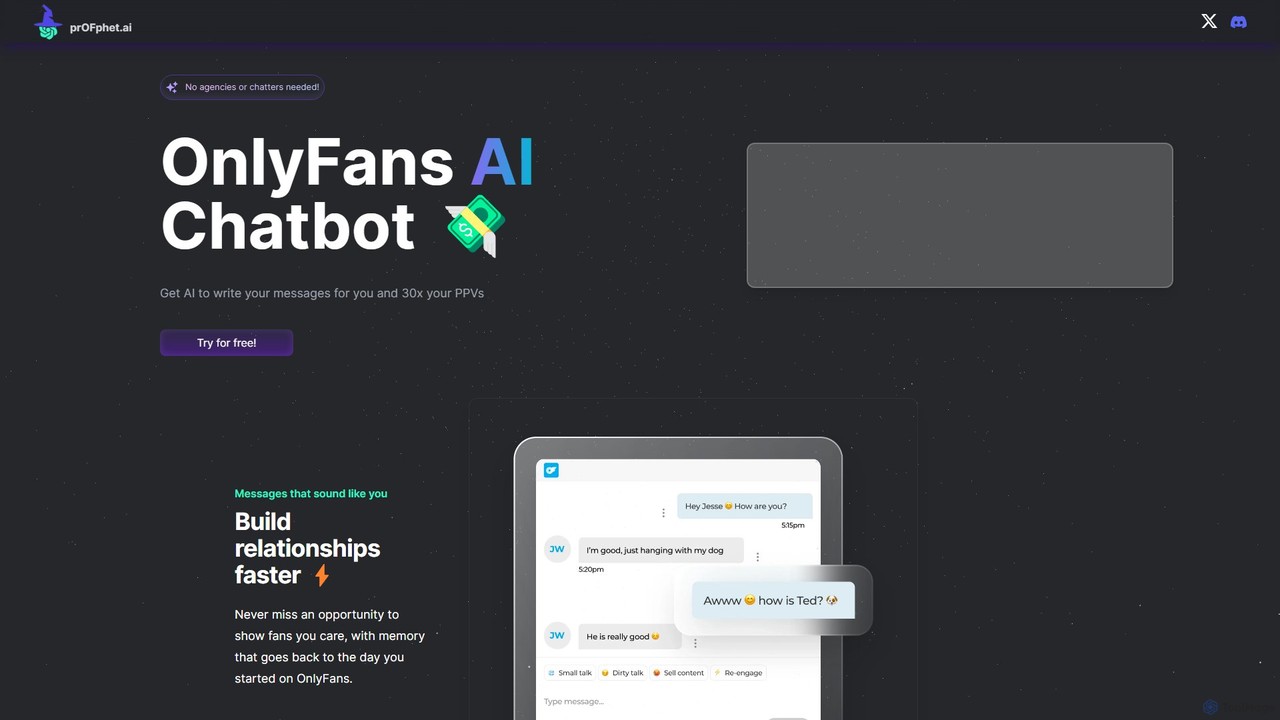
prOFphet is an AI-powered chatbot specifically designed for OnlyFans creators. It automates fan messaging, learns your unique communication style to create authentic interactions, and helps boost revenue by intelligently upselling Pay-Per-View (PPV) content, saving creators significant time and effort.

Automation
Visits 5.5KFavorites 109Likes 112

About Chatbot

Chatbots are AI-powered conversational agents designed to simulate human-like interactions through text or voice. They leverage natural language processing (NLP) to understand user queries, provide instant responses, and automate communication. Primarily used for customer service, marketing, and information delivery, chatbots enhance user engagement and streamline operations, especially within social media platforms.

Core Features

  • Natural Language Understanding (NLU): Interprets user intent and context from diverse linguistic inputs.
  • Automated Responses: Delivers pre-programmed or dynamically generated answers to common questions.
  • Multi-channel Integration: Connects with various platforms like websites, messaging apps, and social media.
  • Personalization: Tailors interactions based on user data, history, and preferences.
  • Lead Qualification: Gathers information and identifies potential leads through guided conversations.

Applicable Scenarios

Businesses across various sectors utilize chatbots to manage high volumes of customer inquiries, provide 24/7 support, and automate routine tasks. On social media, they serve as immediate touchpoints for followers, answering FAQs about products or services, guiding users through sales funnels, and collecting feedback, significantly improving response times and user satisfaction.

How to Choose

When selecting a chatbot, consider its NLU capabilities, ease of integration with existing systems (CRM, social media platforms), scalability to handle varying user loads, and customization options for branding and specific use cases. Evaluate the analytics and reporting features to measure performance and identify areas for improvement, alongside the pricing model and support offered.

Chatbot use cases

1

Automating Social Media Customer Support

Social media managers deploy chatbots on platforms like Facebook Messenger or Instagram Direct to instantly answer common customer questions about products, services, or order status. This reduces response times, frees up human agents for complex issues, and provides 24/7 support, enhancing customer satisfaction and brand loyalty.

2

Generating Leads via Conversational Marketing

Marketing teams use chatbots on landing pages or within social media ads to engage potential customers, qualify leads, and collect contact information. The chatbot guides users through a series of questions, identifies their needs, and directs them to relevant resources or sales representatives, streamlining the lead generation process.

3

Personalizing Product Recommendations

E-commerce businesses integrate chatbots into their websites or social commerce channels to offer personalized product suggestions. By asking users about their preferences, budget, and needs, the chatbot can recommend suitable items, improving the shopping experience and increasing conversion rates.

4

Facilitating Event Registration and Information

Event organizers leverage chatbots to manage registrations, provide event schedules, answer FAQs, and send reminders to attendees. This automates administrative tasks, ensures attendees have timely information, and reduces the workload on event staff, making the registration process seamless.

5

Collecting User Feedback and Surveys

Companies use chatbots to conduct interactive surveys and gather customer feedback directly within messaging apps or websites. The conversational format encourages higher response rates compared to traditional forms, providing valuable insights into customer satisfaction and areas for improvement.

6

Distributing Content and News Updates

Media outlets and content creators utilize chatbots to deliver personalized news updates, articles, or blog posts to subscribers. Users can specify their interests, and the chatbot will push relevant content directly to their preferred messaging app, increasing content consumption and engagement.

Chatbot FAQ

What is an AI Chatbot?

An AI chatbot is a computer program that simulates human conversation through text or voice, powered by artificial intelligence. It uses natural language processing (NLP) to understand user input, learn from interactions, and provide intelligent, context-aware responses, often automating customer service or information delivery.

How do AI Chatbots differ from traditional rule-based chatbots?

AI chatbots use machine learning and NLP to understand intent and context, allowing for more flexible, human-like conversations and the ability to learn over time. Traditional rule-based chatbots follow predefined scripts and keywords, offering less flexibility and only responding to specific, anticipated queries. AI chatbots are better for complex, dynamic interactions.

What are the main benefits of using chatbots on social media?

Chatbots on social media offer 24/7 instant support, significantly improving response times and customer satisfaction. They automate routine inquiries, freeing human agents for complex issues, and can personalize interactions, qualify leads, and drive sales directly within messaging platforms, enhancing overall engagement and efficiency.

What should I consider when choosing an AI chatbot platform?

When choosing an AI chatbot platform, evaluate its natural language understanding (NLU) capabilities, ease of integration with your existing CRM and social media channels, and scalability. Also, consider customization options, analytics features for performance tracking, security protocols, and the level of technical support provided by the vendor.

Can chatbots handle complex customer service issues?

While chatbots excel at handling routine inquiries and providing instant answers to FAQs, they are generally designed to escalate complex or sensitive issues to human agents. Advanced AI chatbots can gather initial information and context, making the handover to a human smoother and more efficient, but they are not a complete replacement for human empathy and problem-solving for intricate cases.