ToolMage
Sign in

Best 10 Engagement AI tools for Social Media

Popular Engagement AI tools in Social Media include Yuma, YapYap, Echo AI, oomfmap, RespoAI, QuickUtils, CommentBuddy.ai, Lovaime, ReplyMind, and Choosier, helping you work more efficiently.

YapYap
Freemium

YapYap

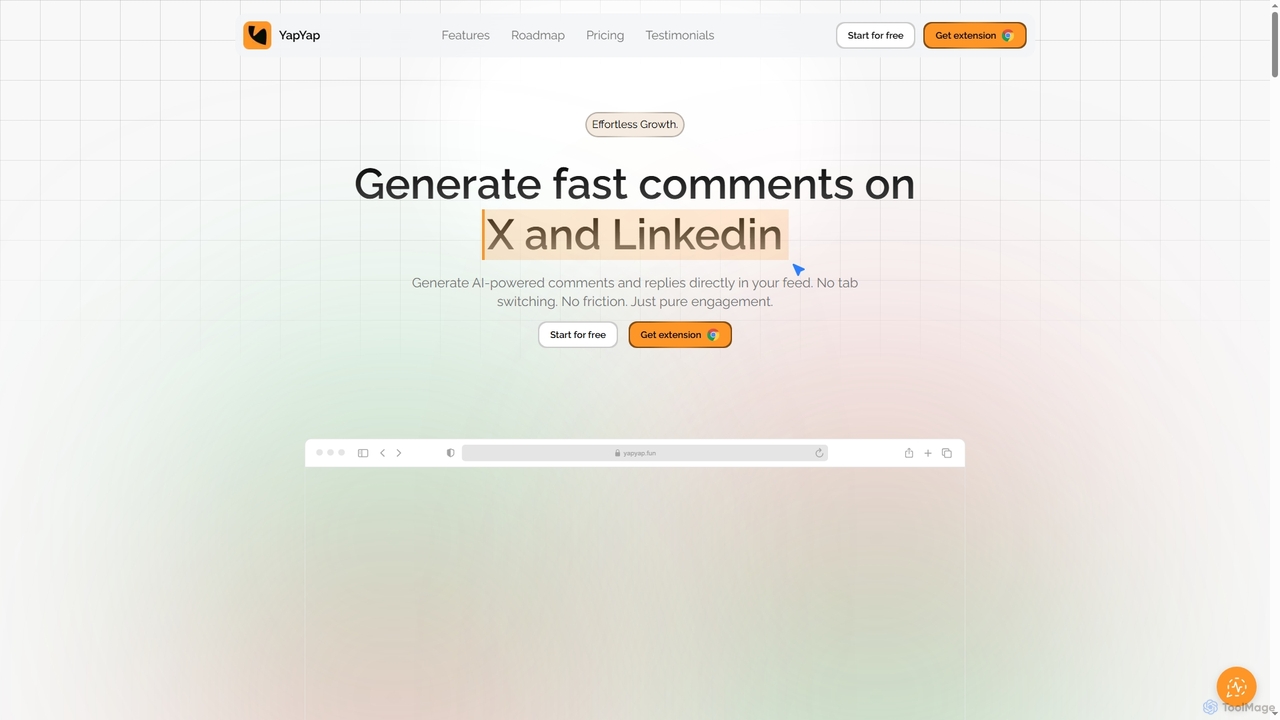
YapYap is an AI-powered browser extension designed to boost social media engagement on X and LinkedIn. It generates context-aware comments and replies directly within your feed, eliminating the need for tab switching or copy-pasting. With over 12 authentic tones and a smart pitch mode, YapYap helps creators, influencers, and professionals maintain consistent online presence, foster genuine interactions, and grow their reach effortlessly.

Content Marketing
Visits 9.4KFavorites 106Likes 113
CommentBuddy.ai
Freemium

CommentBuddy.ai

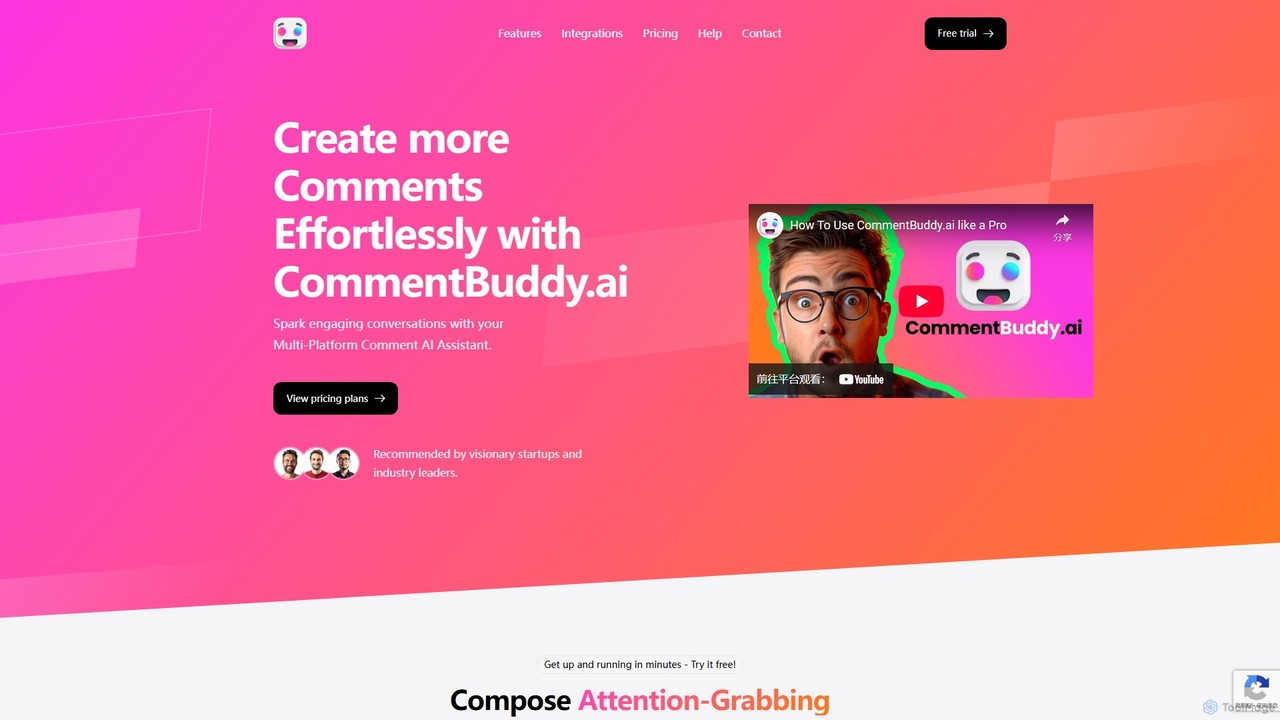
CommentBuddy.ai is an AI-powered Chrome extension designed to help users craft engaging, funny, and professional comments across various social media platforms. It utilizes customizable personas and a prompt editor to generate high-quality, context-aware comments in seconds, saving time and boosting online engagement.

Social Media Marketing
Visits 6KFavorites 149Likes 153
RespoAI
Freemium

RespoAI

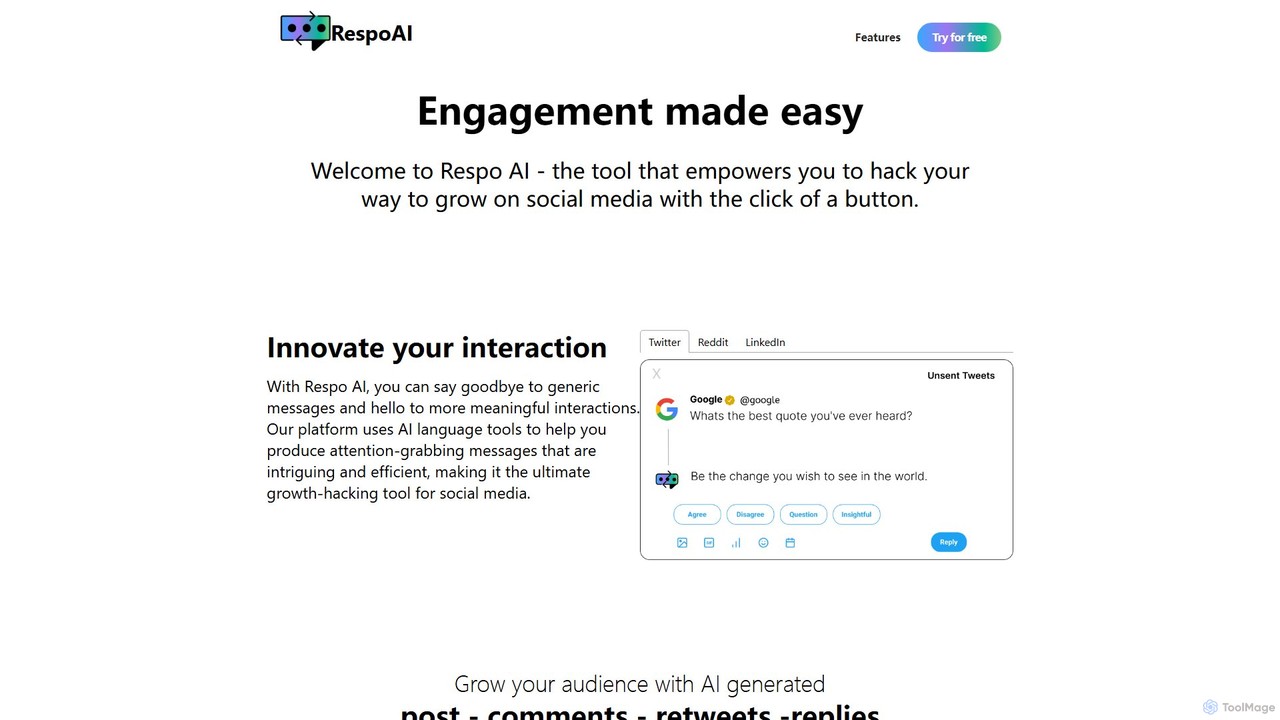
RespoAI is an AI-powered Chrome extension designed to boost your social media growth. It helps you generate authentic, attention-grabbing comments and replies for platforms like Twitter, LinkedIn, and Reddit. Move beyond generic messages and foster meaningful interactions to build your brand, engage your community, and attract new followers effortlessly.

Automation
Visits 7.3KFavorites 132Likes 135

About Engagement

AI Engagement tools are specialized platforms designed to manage and automate interactions with audiences across social media channels. They leverage natural language processing (NLP) and machine learning to analyze comments, messages, and mentions in real-time. This enables brands to streamline community management, provide faster customer support, and gain insights from social conversations. Unlike general social media management suites, these tools focus specifically on the conversational aspect, turning passive audiences into active communities.

Core Features

  • Unified Social Inbox: Consolidate comments, DMs, and mentions from multiple platforms into a single, manageable feed.
  • Automated Moderation: Automatically identify and handle spam, inappropriate comments, or frequently asked questions.
  • Sentiment Analysis: Analyze the emotional tone of user interactions to gauge public perception and prioritize responses.
  • Social Listening: Actively monitor keywords, brand mentions, and hashtags to discover relevant conversations and trends.
  • Team Collaboration Workflows: Assign conversations to specific team members, add internal notes, and track resolution times.

Use Cases

These tools are essential for community managers, social media support teams, and digital marketing agencies. They are frequently used to manage high-volume interactions for e-commerce brands, monitor brand reputation for large corporations, and foster community for content creators and public figures.

How to Choose

When selecting an AI Engagement tool, consider the supported social media platforms, the sophistication of its automation and NLP capabilities, integration with CRM or helpdesk software, and the scalability of its pricing model based on user volume or profiles connected.

Featured tool rankings

Engagement use cases

1

Streamlining Social Media Customer Support

A customer support team for an online retailer uses a unified inbox to manage all incoming queries from Facebook Messenger, Instagram DMs, and Twitter mentions. The AI automatically tags inquiries by topic (e.g., 'shipping,' 'refund') and assigns them to the correct agent. This reduces response time from hours to minutes and ensures no customer query is missed, improving overall customer satisfaction.

2

Proactive Brand Reputation Management

A PR manager for a global tech company sets up social listening alerts for the company's name, product names, and key executives. The AI analyzes the sentiment of each mention. When a negative-sentiment post with high reach is detected, it instantly notifies the PR team, allowing them to craft a response and mitigate potential crises before they escalate.

3

Automating Community Moderation

A community manager for a popular gaming channel on YouTube and Discord uses an AI tool to automatically filter spam, profanity, and malicious links from the comment sections. The tool also identifies frequently asked questions, like 'What's the next stream schedule?', and posts a pre-written answer, freeing up the manager to engage in more meaningful conversations.

4

Identifying Sales Leads from Social Conversations

A B2B software company's sales team monitors keywords like 'looking for CRM software' or 'best project management tool' on Twitter and LinkedIn. The AI Engagement tool surfaces these posts in a dedicated feed. The sales team can then engage directly with these potential leads, offering helpful advice and introducing their solution in a relevant context.

5

Measuring Campaign Audience Sentiment

After launching a major marketing campaign, a brand analyst uses an AI Engagement tool to track the campaign's official hashtag. The tool provides a real-time dashboard showing the breakdown of positive, negative, and neutral sentiment. This data helps the team understand public reception and make data-driven adjustments to future campaign messaging.

6

Engaging with User-Generated Content (UGC)

A marketing team for a travel brand encourages users to post photos with a specific hashtag. An AI Engagement tool automatically gathers all posts using this hashtag into one stream. The team can then easily comment on, like, and request permission to reshare the best content, fostering a stronger relationship with their audience and sourcing authentic marketing material.

Engagement FAQ

What are AI Engagement tools?

AI Engagement tools are software platforms that use artificial intelligence to help manage, analyze, and automate interactions on social media. Their primary function is to streamline communication by consolidating messages, moderating comments, and analyzing audience sentiment. They are crucial for brands looking to build relationships and manage their online reputation at scale.

How do I choose the right AI Engagement tool?

To choose the right tool, evaluate these factors:

  • Platform Support: Ensure it integrates with all the social media channels you use.
  • AI Capabilities: Assess the accuracy of its sentiment analysis and the flexibility of its automation rules.
  • Collaboration Features: Check for team-based workflows like conversation assignment and internal notes if you work in a team.
  • Analytics & Reporting: Verify that it provides actionable insights on response times, sentiment trends, and team performance.

What's the difference between Engagement and Social Media Scheduling tools?

The primary difference lies in their focus. Social Media Scheduling tools are for planning and publishing content (outbound communication). AI Engagement tools are for managing and responding to audience interactions like comments and messages (inbound communication). While some suites offer both, dedicated engagement tools provide more advanced features for conversation management, moderation, and social listening.

What are the key features of AI Engagement tools?

Most AI Engagement tools include a unified social inbox, automated comment moderation, real-time social listening for keywords and mentions, sentiment analysis to understand audience tone, and collaborative workflows for teams. Many also offer detailed analytics on engagement metrics and team productivity to help refine social media strategy.

Who should use AI Engagement tools?

These tools are ideal for any individual or organization managing a significant social media presence. This includes social media managers, community managers, customer support teams, PR professionals, and marketing agencies. They are particularly valuable for businesses that receive a high volume of comments and messages and need to maintain a responsive and positive online presence.