ToolMage
Sign in

Best 1 Marketing Tools for Social Media

Popular Marketing Tools in Social Media include Insider Memes, helping you work more efficiently.

Insider Memes
Freemium

Insider Memes

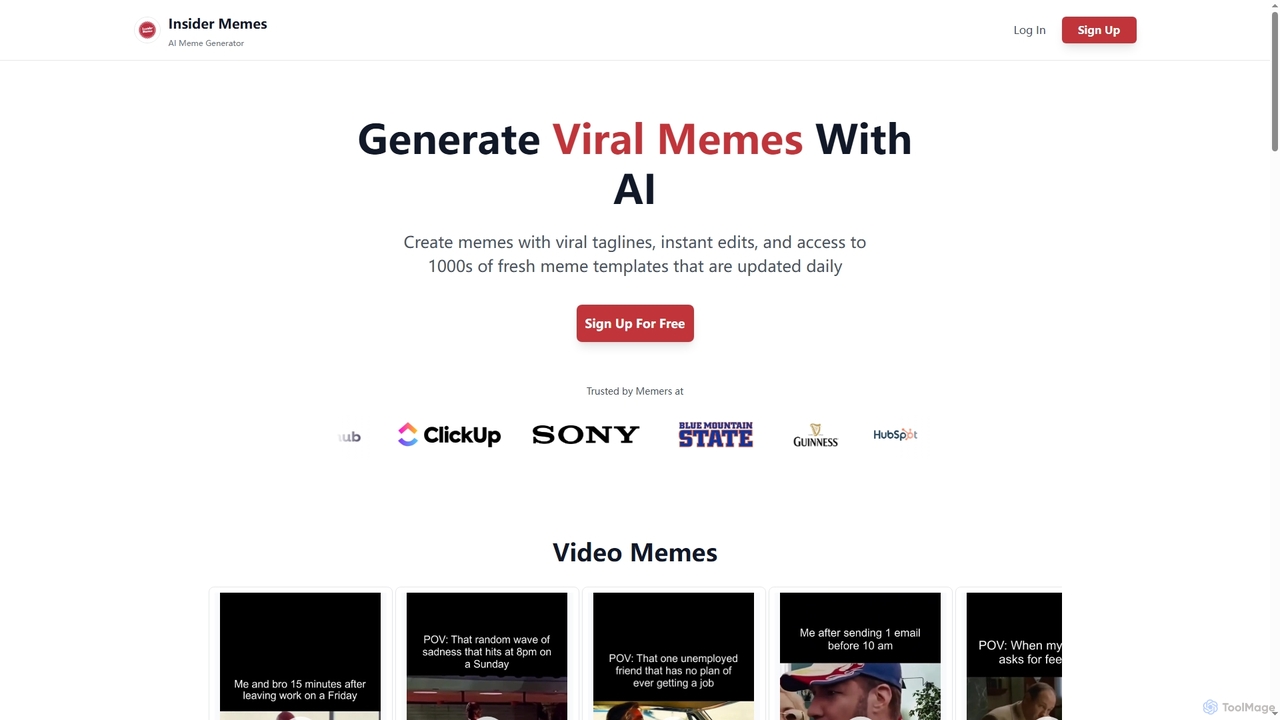
Insider Memes is an AI-powered viral meme generator that helps users create engaging and humorous memes in seconds. It offers instant edits, viral taglines, and access to thousands of fresh, daily-updated meme templates for both image and video formats.

Meme Generation
Visits 74.7KFavorites 102Likes 130

About Marketing Tools

Marketing Tools are AI-powered solutions designed to optimize and automate various aspects of digital marketing, particularly within the social media ecosystem and broader online channels. These tools leverage advanced machine learning and natural language processing to analyze market trends, predict consumer behavior, and generate high-performing content. They empower marketers to execute more effective campaigns, personalize customer interactions, and achieve superior ROI across diverse platforms.

Core Features

  • Audience Segmentation & Targeting: AI analyzes demographic, psychographic, and behavioral data to identify precise target audiences and personalize messaging.
  • Content Generation & Optimization: Automatically creates marketing copy, ad creatives, and social media posts, optimizing them for engagement and conversion.
  • Campaign Performance Analysis: Provides deep insights into campaign effectiveness, identifying trends, predicting outcomes, and suggesting real-time adjustments.
  • Ad Spend Optimization: Dynamically allocates advertising budgets across platforms and campaigns to maximize reach and minimize cost per acquisition.
  • Personalized Customer Engagement: Powers chatbots and recommendation engines to deliver tailored experiences and improve customer satisfaction.

Use Cases

AI Marketing Tools are indispensable for businesses aiming to enhance their digital presence and campaign efficiency. They are widely adopted by digital marketing agencies for managing multiple client accounts, e-commerce businesses for personalized product recommendations and ad targeting, and content creators for generating engaging social media captions and blog post ideas. These tools streamline workflows, from initial strategy to execution and analysis, ensuring data-driven decisions.

How to Choose

When selecting AI Marketing Tools, consider the specific marketing functions you need to automate or enhance, such as content creation, ad management, or analytics. Evaluate the tool's integration capabilities with your existing CRM, social media platforms, and analytics dashboards. Assess its scalability to grow with your business needs and compare pricing models based on features and usage. Finally, consider the ease of use and the level of technical expertise required for implementation and daily operation.

Marketing Tools use cases

1

Automating Social Media Ad Copy Generation

A digital marketing specialist needs to launch multiple ad campaigns across Facebook, Instagram, and LinkedIn daily. Using AI marketing tools, they input product features and target audience demographics, and the AI generates diverse ad copy variations, headlines, and calls-to-action optimized for each platform. This significantly reduces the time spent on copywriting and A/B testing, leading to faster campaign deployment and improved ad performance.

2

Personalizing E-commerce Product Recommendations

An e-commerce manager wants to increase conversion rates by offering highly relevant product suggestions. An AI marketing tool analyzes customer browsing history, purchase patterns, and real-time behavior to dynamically display personalized product recommendations on the website, in email newsletters, and through retargeting ads. This enhances the customer shopping experience and drives higher sales volumes.

3

Optimizing Multi-channel Campaign Budget Allocation

A marketing director oversees campaigns running across Google Ads, social media platforms, and email marketing. An AI marketing tool continuously monitors the performance of each channel and campaign, automatically reallocating budget in real-time to the best-performing segments. This ensures maximum ROI by preventing overspending on underperforming channels and capitalizing on successful ones.

4

Generating Engaging Blog Post Ideas and Outlines

A content marketer struggles with writer's block and needs fresh ideas for their company blog. An AI marketing tool, fed with industry keywords and competitor content, generates a list of trending topics, compelling blog post titles, and detailed outlines. This accelerates the content creation process, ensuring a steady stream of relevant and SEO-friendly articles that attract organic traffic.

5

Analyzing Competitor Social Media Strategies

A brand manager wants to understand their competitors' social media strengths and weaknesses. An AI marketing tool monitors competitor posts, engagement rates, audience sentiment, and ad strategies across various platforms. It provides actionable insights into successful content formats, optimal posting times, and potential gaps in the market, informing the brand's own social media marketing strategy.

6

Automating Customer Segmentation for Email Marketing

An email marketing specialist aims to send highly targeted email campaigns. An AI marketing tool automatically segments the customer database based on purchase history, engagement levels, demographics, and predicted future behavior. This allows for the creation of hyper-personalized email sequences, leading to higher open rates, click-through rates, and ultimately, increased customer loyalty and conversions.

Marketing Tools FAQ

What are AI Marketing Tools?

AI Marketing Tools are software applications that utilize artificial intelligence, including machine learning and natural language processing, to automate, optimize, and personalize marketing activities. They help marketers analyze vast datasets, predict consumer behavior, generate content, manage ad campaigns, and engage with customers more effectively across digital channels, often integrating with social media platforms.

How do AI Marketing Tools differ from traditional Social Media Management Tools?

While traditional Social Media Management Tools primarily focus on scheduling posts, monitoring mentions, and basic analytics, AI Marketing Tools go much deeper. They leverage AI for advanced tasks like predictive analytics for audience targeting, automated content generation (ad copy, captions), dynamic ad budget optimization, and personalized customer journey mapping. They move beyond mere management to strategic optimization and automation of marketing outcomes.

What are the key benefits of using AI Marketing Tools?

The primary benefits of using AI Marketing Tools include significantly increased efficiency through automation of repetitive tasks, enhanced personalization of marketing messages for better customer engagement, and improved decision-making driven by data-backed insights and predictive analytics. They also lead to optimized ad spend, higher conversion rates, and a deeper understanding of market trends and customer behavior.

How can I choose the right AI Marketing Tool for my business?

To choose the right AI Marketing Tool, first identify your specific marketing challenges and goals, such as improving content creation, optimizing ad spend, or enhancing customer personalization. Look for tools that offer the core features you need, integrate seamlessly with your existing tech stack (CRM, social media platforms), and fit within your budget. Consider user-friendliness, scalability, and the quality of customer support and training provided.

Who can benefit most from using AI Marketing Tools?

AI Marketing Tools offer significant benefits to a wide range of users. Digital marketing agencies can streamline client campaign management and reporting. E-commerce businesses can personalize shopping experiences and optimize ad performance. Content creators can generate ideas and optimize their output. Large enterprises can manage complex multi-channel campaigns, while small businesses can gain access to sophisticated marketing capabilities without extensive manual effort.