
ToolMage
Sign in

Best 1 Messaging Assistant for Social Media

Popular Messaging Assistant in Social Media include ChatsApp, helping you work more efficiently.

ChatsApp
Freemium

ChatsApp

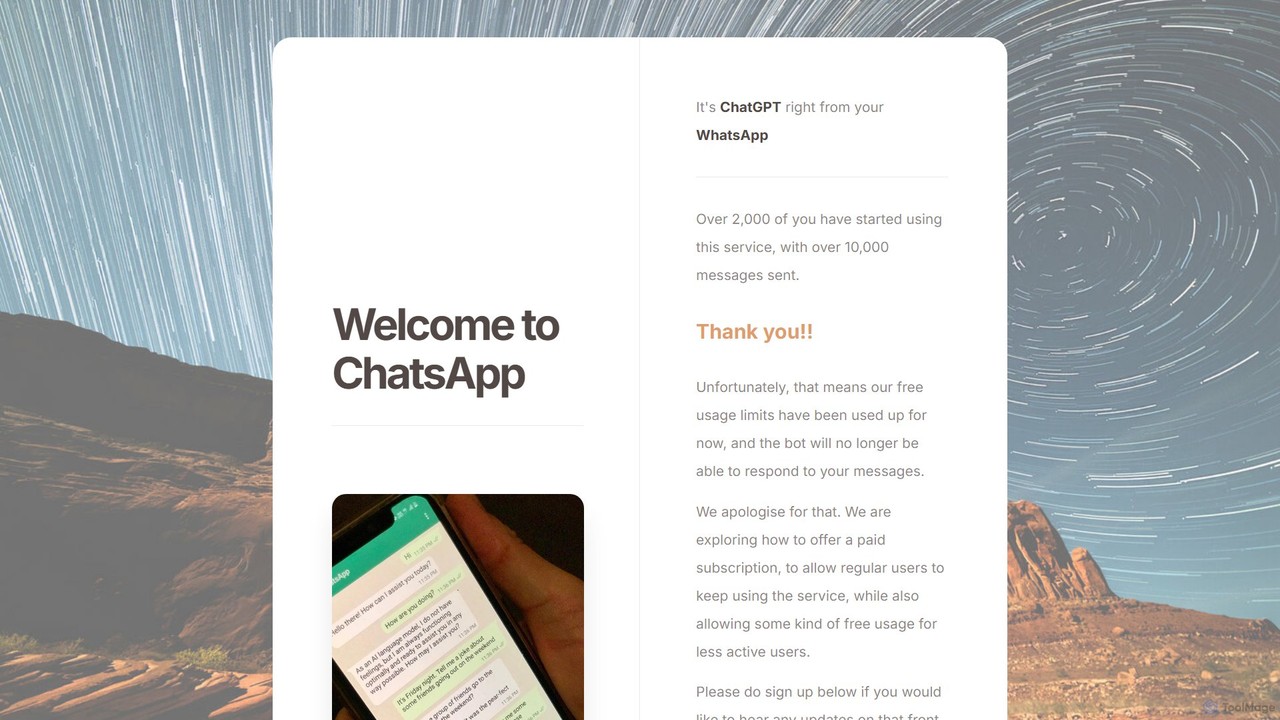
Integrate the power of ChatGPT directly into your WhatsApp. ChatsApp allows you to interact with a sophisticated AI assistant without leaving your favorite messaging app. Get instant answers, generate content, and brainstorm ideas seamlessly within your chats, with upcoming support for voice notes and conversation memory.

Virtual Assistant
Visits 6.3KFavorites 130Likes 124

About Messaging Assistant

Messaging Assistants are AI-powered tools designed to streamline and enhance digital communication across various platforms. Leveraging natural language processing and generation, these assistants automate message drafting, manage conversations, and provide intelligent responses. They empower individuals and businesses to maintain consistent, efficient, and personalized interactions within the broader context of social media and direct messaging.

Core Features

  • Automated Response Generation: Automatically drafts replies to common inquiries or initiates conversations based on predefined triggers.
  • Content Personalization: Adapts message tone, style, and content to individual recipients or audience segments for greater engagement.
  • Multi-Platform Integration: Connects with various messaging apps and social media platforms (e.g., WhatsApp, Instagram DMs, Facebook Messenger).
  • Sentiment Analysis: Analyzes the emotional tone of incoming messages to prioritize urgent or negative interactions.
  • Conversation Summarization: Provides quick overviews of lengthy chat histories for faster context understanding.

Applicable Scenarios

Messaging Assistants are invaluable for customer support teams automating initial responses, social media managers drafting engaging direct messages and handling community interactions, and sales professionals personalizing outreach to leads. They streamline communication workflows across diverse roles and industries.

How to Choose

When selecting a Messaging Assistant, prioritize tools with robust integration capabilities for your existing platforms and CRM. Evaluate their customization and training options to ensure the AI can adapt to your brand voice. Consider scalability for future growth and assess the quality of analytics and reporting features for performance insights.

Messaging Assistant use cases

1

Automate Customer Service Replies on Social Media

For e-commerce businesses or customer support teams, a Messaging Assistant can automatically detect common questions (e.g., "shipping status," "return policy") in social media DMs and provide instant, accurate answers. This reduces response times, improves customer satisfaction, and allows human agents to focus on more complex or sensitive inquiries, significantly boosting support efficiency.

2

Personalize Sales Outreach for Lead Nurturing

Sales professionals can leverage Messaging Assistants to draft highly personalized initial contact messages or follow-ups to leads on platforms like LinkedIn or WhatsApp. By analyzing lead data, the AI can suggest tailored content, highlight relevant product features, and schedule messages, making outreach more effective and increasing conversion rates compared to generic templates.

3

Managing Community Engagement on Social Platforms

Social media managers overseeing large online communities can use Messaging Assistants to proactively engage with members, answer frequently asked questions, and even identify and flag inappropriate content in private messages. This ensures a positive community environment, provides timely support, and maintains brand consistency across all direct interactions.

4

Drafting Engaging Content for Influencer Collaborations

Marketing teams can utilize Messaging Assistants to craft compelling and personalized messages when reaching out to potential influencers for collaborations. The AI can help tailor the pitch to each influencer's style and audience, suggest relevant talking points, and manage follow-up communications, streamlining the influencer marketing process and improving response rates.

5

Streamlining Internal Team Communication

Within organizations, Messaging Assistants can facilitate internal communication by drafting routine updates, summarizing long chat threads, or answering common HR/IT questions in internal messaging apps. This reduces information overload, ensures quick access to essential information, and frees up employees from repetitive communication tasks, enhancing overall team productivity.

6

Handling Event Registration and Reminders via Chat

Event organizers can deploy Messaging Assistants to handle the entire event registration process through chat applications. From collecting attendee information and processing payments to sending personalized confirmation messages and timely reminders, the assistant automates repetitive tasks, reduces manual errors, and provides a seamless, interactive experience for participants.

Messaging Assistant FAQ

What are Messaging Assistants?

Messaging Assistants are AI-powered tools designed to automate, optimize, and personalize digital communications across various platforms like social media DMs, chat apps, and email. Unlike basic chatbots, they leverage advanced natural language processing (NLP) and generation (NLG) to proactively assist with drafting messages, managing conversations, and providing intelligent, context-aware responses. They aim to enhance efficiency and effectiveness in both personal and professional messaging.

How do Messaging Assistants differ from traditional chatbots?

While both automate communication, Messaging Assistants offer more advanced capabilities than traditional rule-based chatbots. Traditional chatbots follow predefined scripts and keywords, suitable for simple FAQs. Messaging Assistants, however, use AI to understand context, generate more natural and varied responses, personalize content, and even proactively suggest message drafts. They are designed for more dynamic, nuanced, and strategic communication assistance, often integrating with human workflows rather than fully replacing them.

What are the key benefits of using a Messaging Assistant?

Using a Messaging Assistant offers several key benefits. Firstly, it significantly boosts efficiency by automating repetitive tasks like drafting replies and managing routine inquiries, freeing up human time. Secondly, it enhances personalization, allowing for tailored messages that improve engagement and customer satisfaction. Thirdly, it ensures consistency in brand voice and messaging across all interactions. Finally, many assistants provide analytics, offering insights into communication performance and areas for improvement.

Can Messaging Assistants integrate with existing social media platforms?

Yes, most modern Messaging Assistants are designed with robust integration capabilities. They can connect directly with popular social media platforms such as Facebook Messenger, Instagram DMs, WhatsApp Business API, Twitter DMs, and LinkedIn Messaging. This allows them to manage conversations directly within these channels, ensuring seamless operation and centralized control over your social media communications without needing to switch between multiple tools.

How can I ensure a Messaging Assistant maintains my brand's voice?

To ensure a Messaging Assistant maintains your brand's voice, focus on its customization and training features. You should be able to:

  • Provide extensive training data: Feed the AI with examples of your brand's existing communications.
  • Define tone and style guidelines: Set parameters for formality, humor, and specific terminology.
  • Implement review processes: Regularly review AI-generated messages and provide feedback to refine its output.
  • Utilize custom knowledge bases: Populate it with your brand's FAQs and approved responses.
This iterative process helps the AI learn and adapt to your unique brand identity.