ToolMage
Sign in

Best 1 Personality Analysis AI tools for Social

Popular Personality Analysis AI tools in Social include redditroast.ai, helping you work more efficiently.

redditroast.ai
Freemium

redditroast.ai

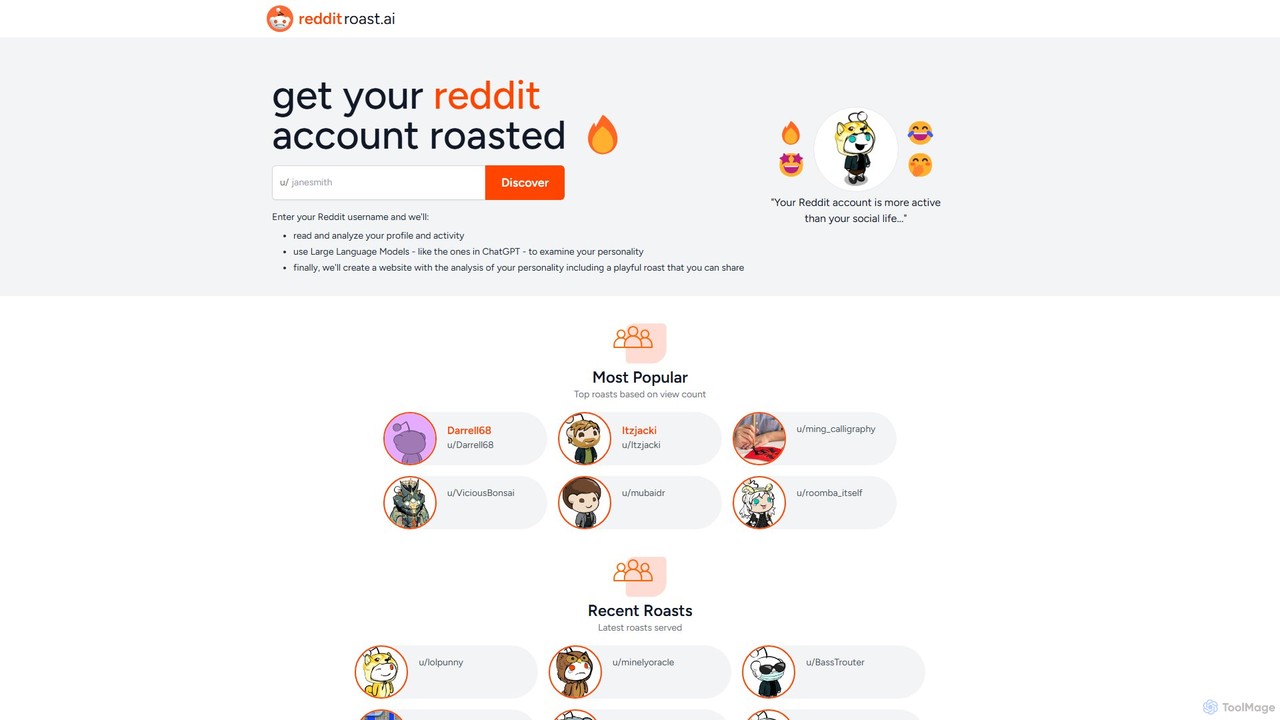
redditroast.ai is an AI-powered entertainment tool that analyzes your Reddit profile activity to generate a humorous roast. By simply entering your username, the tool uses large language models to examine your posts and comments, creating a witty and personalized critique. For a small fee, you can unlock a full personality analysis, including your strengths, weaknesses, and even a suggested 'spirit animal'. It's a fun way to see your online persona through the eyes of an AI.

Humor
Visits 8.9KFavorites 138Likes 130

About Personality Analysis

AI Personality Analysis tools are a specialized class of software that uses artificial intelligence to interpret digital data and infer human personality traits. These tools typically leverage Natural Language Processing (NLP) and machine learning models trained on vast datasets to analyze text, speech, or even video. Their primary value lies in providing data-driven insights into communication styles, behavioral patterns, and psychological characteristics for applications in marketing, human resources, and personal development. This enables a deeper, scalable understanding of individuals without traditional questionnaires.

Core Features

  • Trait Identification: Analyzes data to score individuals on established psychometric models like the Big Five (OCEAN) or DISC.
  • Communication Style Analysis: Determines a person's preferred communication style (e.g., analytical, amiable, formal) from their writing or speech.
  • Behavioral Prediction: Forecasts potential behaviors, motivations, and decision-making patterns based on the inferred personality profile.
  • Sentiment and Emotion Detection: Assesses the underlying emotional tone and sentiment within the provided text or speech data.

Applicable Scenarios

These tools are widely used in human resources for candidate screening and team building, helping to assess cultural fit and improve team dynamics. Marketers utilize them for creating nuanced customer segments and personalizing campaigns. In sales, they help tailor communication strategies to individual prospects, while coaches and individuals use them for self-awareness and personal growth.

Selection Criteria

When choosing a tool, evaluate the scientific validity and transparency of the underlying personality model. Prioritize solutions with strong data privacy and compliance policies (like GDPR). Consider its integration capabilities with your existing platforms (e.g., CRM, ATS) and the types of data it can analyze (text, audio, video). Finally, assess the clarity and actionability of the reports it generates.

Personality Analysis use cases

1

Enhance Candidate Screening for Cultural Fit

An HR manager at a fast-growing tech company needs to screen hundreds of applicants efficiently while ensuring a strong cultural fit. They use an AI personality analysis tool to analyze the cover letters and written responses from candidates. The tool generates a personality profile for each applicant based on the Big Five model, highlighting traits like openness to experience and conscientiousness. This allows the hiring team to quickly shortlist candidates whose personality traits align with the company's innovative and collaborative culture, reducing screening time by over 50% and improving the quality of hires.

2

Create Data-Driven Marketing Personas

A marketing team is struggling with generic customer personas that don't drive engagement. A marketing strategist uses an AI tool to analyze thousands of customer reviews and social media comments related to their brand. The AI identifies distinct personality clusters within the customer base, such as 'cautious analysts' who value details and 'enthusiastic explorers' who seek novelty. Based on these insights, the team builds rich, psychologically-grounded personas. This leads to the development of highly targeted messaging and content, resulting in a 30% increase in campaign engagement rates.

3

Improve Team Dynamics and Collaboration

A project manager notices recurring communication breakdowns within their team, leading to project delays. They use a personality analysis tool that integrates with their communication platform (like Slack). The tool analyzes public channel conversations to provide insights into each team member's communication style. It reveals that some members are highly analytical and prefer data-driven arguments, while others are more relationship-focused. The manager uses these insights to facilitate better communication protocols, such as encouraging data-focused members to provide context for others. This leads to fewer misunderstandings and a 20% improvement in project completion times.

4

Personalize Sales Outreach at Scale

A sales development representative (SDR) needs to personalize outreach emails to hundreds of prospects to increase response rates. They use an AI tool that analyzes a prospect's public LinkedIn profile and recent posts. The tool provides a quick summary of the prospect's likely personality, suggesting they are 'results-oriented' and prefer 'concise, direct communication'. The SDR then customizes the email template to be brief, data-focused, and centered on clear outcomes. This personalized approach resonates better than generic templates, leading to a 40% increase in open rates and a 25% rise in positive replies.

5

Facilitate Personal Development and Self-Awareness

An individual seeking personal growth uses an AI personality analysis app to better understand their own patterns. They allow the app to analyze their personal journal entries over several months. The AI identifies recurring themes and maps them to personality traits, revealing a high level of conscientiousness but also a tendency towards neuroticism (anxiety). The app provides personalized insights and suggests mindfulness exercises to manage stress. By tracking their progress, the user gains a deeper self-awareness, learns effective coping mechanisms, and reports a significant reduction in daily anxiety levels.

6

Tailor User Onboarding Experience

A product manager for a complex software application wants to reduce user churn during the onboarding phase. They integrate a personality analysis API into their sign-up flow, which analyzes the language a user uses when describing their goals. Based on the analysis, the onboarding process is dynamically adjusted. For users identified as 'methodical', the onboarding provides a step-by-step, detailed tutorial. For users identified as 'exploratory', it highlights key features and encourages them to discover the tool freely. This personalized onboarding leads to a 15% increase in user activation rates and higher long-term retention.

Personality Analysis FAQ

What are AI Personality Analysis tools?

AI Personality Analysis tools are applications that use machine learning and natural language processing (NLP) to analyze digital communication (like text, speech, or video) and infer an individual's personality traits. Instead of relying on self-reported questionnaires, they identify patterns in language and behavior to map them onto established psychological frameworks, such as the Big Five (OCEAN) model. These tools provide scalable, data-driven insights for understanding customers, candidates, or team members.

How to choose the right AI personality analysis tool?

Choosing the right tool depends on your specific needs. Consider the following factors:

  • Scientific Validity: Check if the tool is based on a recognized and validated psychological model (e.g., Big Five, DISC).
  • Data Privacy and Ethics: Ensure the provider has a transparent policy on data usage, storage, and complies with regulations like GDPR.
  • Input Data Type: Determine if you need to analyze text, audio, video, or a combination, and choose a tool that supports your required formats.
  • Integration Capabilities: Look for tools that can integrate with your existing systems, such as your CRM, Applicant Tracking System (ATS), or communication platforms.
  • Actionability of Insights: The tool should provide clear, easy-to-understand reports and actionable recommendations, not just raw data.
What is the difference between AI analysis and traditional personality tests?

The primary difference lies in the data source and method. Traditional personality tests, like the MBTI or DISC assessments, rely on a structured set of self-report questions where individuals consciously rate themselves. AI personality analysis, on the other hand, analyzes unstructured, naturally occurring data such as emails, chat logs, or social media posts. It infers personality from authentic communication patterns rather than direct questions. This can potentially reduce biases from self-perception and provide insights based on actual behavior, offering a more dynamic and scalable approach.

Are AI-driven personality analyses accurate?

The accuracy of AI personality analysis can vary significantly between tools. It depends heavily on the quality and diversity of the training data, the sophistication of the AI model, and the validity of the underlying psychological framework it uses. Reputable tools are often benchmarked against traditional, validated assessments and can achieve high levels of predictive accuracy for certain traits. However, it's important to view these analyses as probabilistic insights rather than definitive labels. They are most effective when used as a supplementary data point to support human judgment, not replace it entirely.

Who can benefit from using personality analysis tools?

A wide range of professionals and individuals can benefit from these tools. Key users include:

  • HR and Recruiters: For screening candidates for cultural fit, improving team building, and leadership development.
  • Marketers and Sales Teams: To create detailed customer personas, personalize communication, and improve customer segmentation.
  • Team Leaders and Managers: To understand team dynamics, improve communication, and manage conflicts more effectively.
  • Coaches and Therapists: As a supplementary tool to help clients gain self-awareness and track personal development.
  • Individuals: For personal growth, understanding their own communication style, and improving interpersonal relationships.