ToolMage
Sign in

Best 3 Roleplaying AI tools for Social

Popular Roleplaying AI tools in Social include Talkie AI, Dopple.ai, and Linky, helping you work more efficiently.

Dopple.ai
Freemium

Dopple.ai

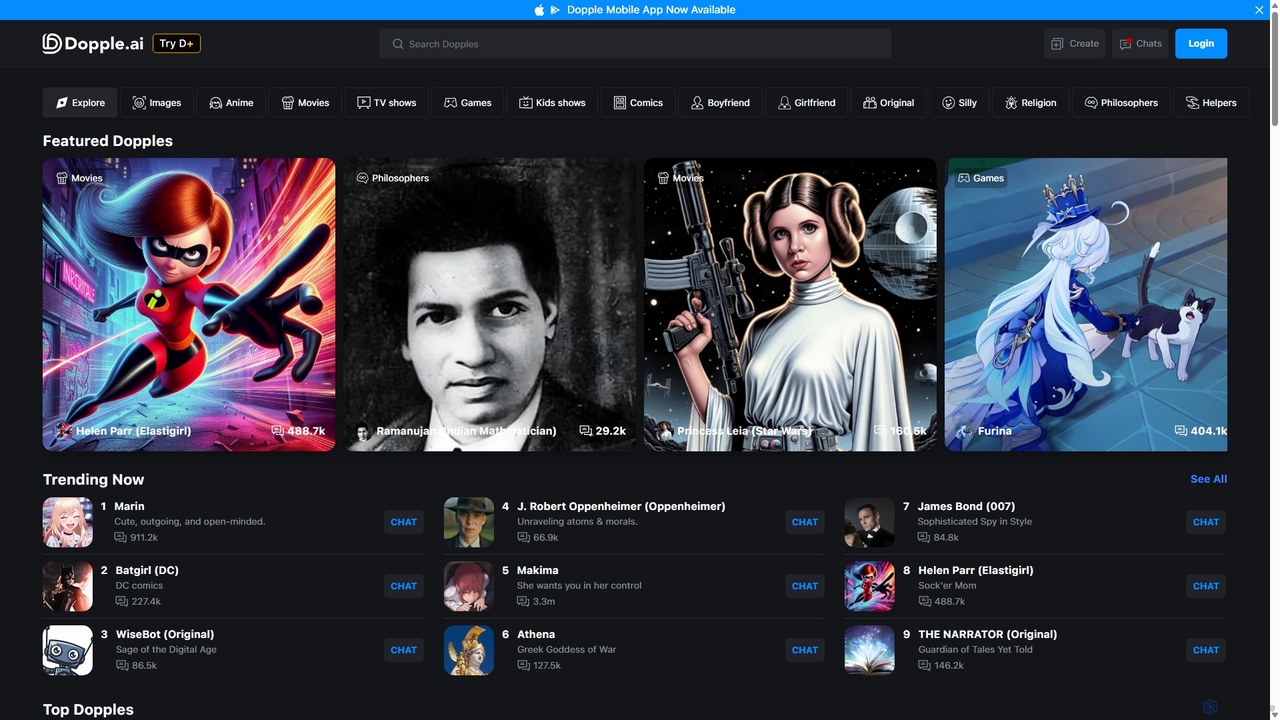
Dopple.ai is an AI chatbot platform offering immersive, realistic conversations with thousands of characters (Dopples). It features advanced in-chat image generation and is powered by a proprietary LLM, allowing users to engage in creative role-playing, storytelling, and companionship with AI.

Chatbots
Visits 270.8KFavorites 111Likes 128
Talkie AI
Freemium

Talkie AI

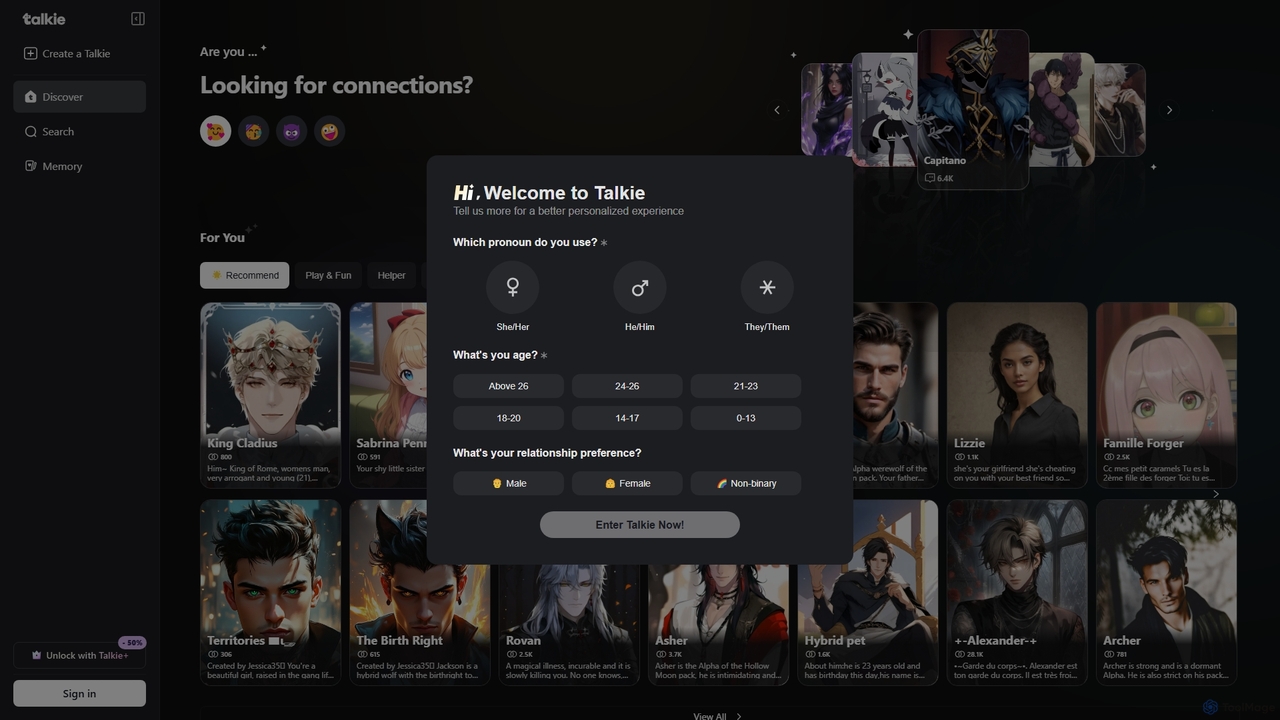
Talkie AI is a free AI character chat platform where you can discover and chat with a vast array of AI characters from anime, games, and fiction, or create your own. Engage in immersive role-playing, storytelling, and unique conversations.

Chatbots
Visits 6.8MFavorites 150Likes 157
Linky
Freemium

Linky

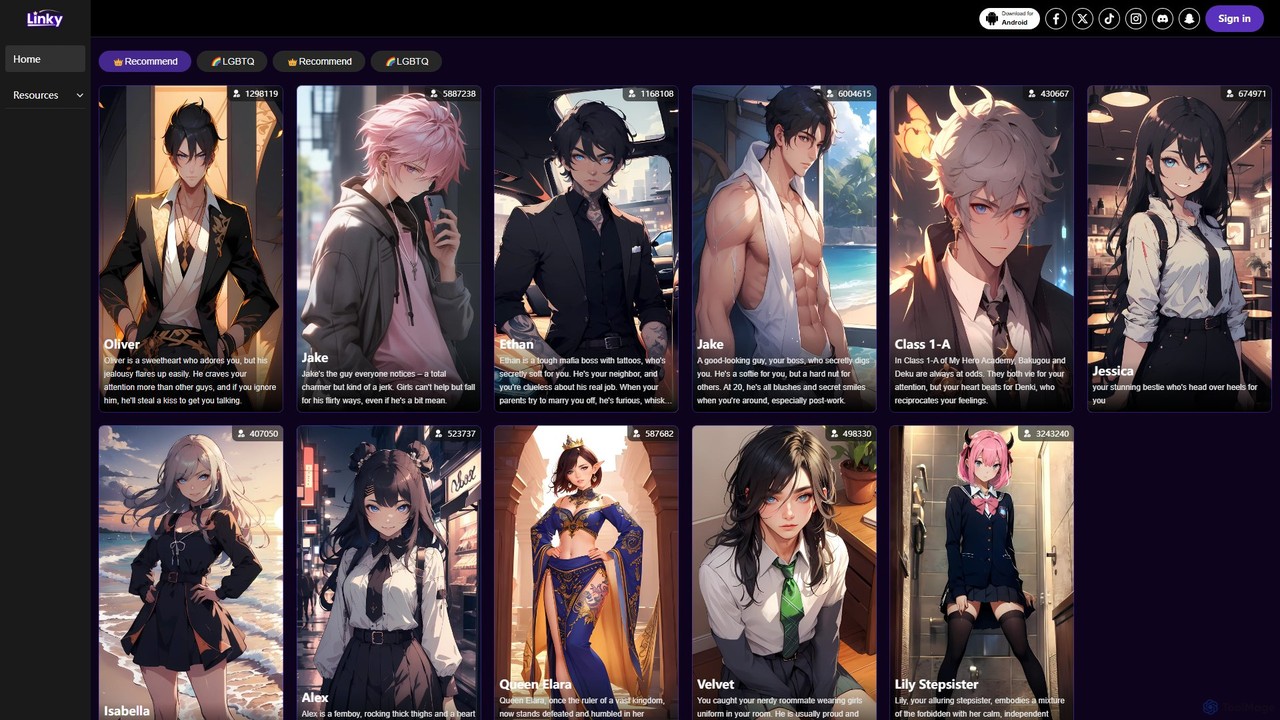
Linky is an AI chatbot platform designed for immersive conversations and role-playing with a diverse cast of virtual characters. Engage in dynamic storytelling, explore unique relationships, and find your perfect AI companion for entertainment and creative exploration.

Chatbot
Visits 199.5KFavorites 131Likes 143

About Roleplaying

Roleplaying AI tools are advanced platforms that enable users to interact with AI characters or scenarios in simulated environments. These tools leverage sophisticated natural language processing (NLP) and generative AI to create dynamic, context-aware dialogues and narratives. They offer immersive experiences for creative writing, entertainment, and even skill development within the broader social AI landscape. Users can explore diverse personas and storylines, fostering engagement and imaginative exploration.

Core Features

  • Dynamic Dialogue Generation: AI generates contextually relevant and evolving conversations.
  • Character Customization: Users define AI character personalities, backstories, and appearance.
  • Scenario Creation: Tools allow for the setup of specific plots, settings, and interactive events.
  • Memory & Consistency: AI maintains character traits and plot points throughout interactions.
  • Multi-modal Interaction: Support for text, and sometimes voice or image inputs/outputs.

Use Cases

Roleplaying AI tools are utilized by individuals seeking creative outlets, writers developing character arcs, and educators creating interactive learning simulations. They are also popular among gamers for enhanced narrative experiences and language learners practicing conversational skills.

How to Choose

When selecting a roleplaying AI tool, consider the depth of character customization, the flexibility of scenario creation, and the AI's ability to maintain narrative consistency. Evaluate the quality of natural language generation, the availability of multi-modal features, and the community support or content library for diverse experiences.

Roleplaying use cases

1

Creative Writing & Story Development

Aspiring authors and screenwriters use roleplaying AI to develop complex characters and intricate plotlines. By interacting with AI personas, they can explore character motivations, test dialogue, and brainstorm narrative twists, receiving instant feedback and generating new ideas for their stories.

2

Language Learning & Practice

Language learners engage with AI characters to practice conversational skills in a low-pressure environment. Users can simulate real-life scenarios, receive immediate linguistic feedback, and improve fluency by roleplaying various social interactions, from ordering food to conducting business meetings.

3

Interactive Entertainment & Gaming

Gamers and entertainment enthusiasts utilize roleplaying AI to create personalized interactive stories and adventures. They can define unique worlds and characters, influencing the narrative direction through their choices and dialogues, leading to highly engaging and replayable experiences beyond traditional games.

4

Social Skill Development & Empathy Training

Individuals looking to enhance their social skills or practice difficult conversations can use AI roleplaying. By simulating various social situations and interacting with AI characters, users can experiment with different communication styles, understand diverse perspectives, and build empathy in a safe, controlled setting.

5

Historical & Fictional Character Simulation

Educators and history enthusiasts employ roleplaying AI to interact with simulated historical figures or fictional characters. This allows for immersive learning experiences, where users can ask questions, debate ideas, and gain insights into different eras or literary works through direct, personalized engagement.

6

Personalized Companion & Mental Well-being

Some users engage with roleplaying AI as a personalized companion for casual conversation or emotional support. While not a substitute for professional help, these AI interactions can provide a sense of connection, offer a space for self-expression, and help users explore thoughts and feelings in a non-judgmental environment.

Roleplaying FAQ

What are Roleplaying AI tools?

Roleplaying AI tools are platforms that use artificial intelligence to create interactive, simulated environments where users can engage with AI-driven characters or scenarios. They leverage NLP to generate dynamic dialogues, allowing users to explore narratives, practice social interactions, or simply enjoy immersive storytelling.

How do Roleplaying AI tools differ from general AI chatbots?

While both involve AI interaction, roleplaying AI tools are specifically designed for narrative depth and character consistency within a defined scenario. General AI chatbots often focus on information retrieval or task completion, whereas roleplaying AI prioritizes immersive storytelling, character development, and maintaining a specific persona throughout the interaction.

What are the key benefits of using AI for roleplaying?

The key benefits include unparalleled customization of characters and scenarios, infinite replayability, and a safe space for experimentation. Users can explore diverse narratives without real-world consequences, practice social or linguistic skills, and engage in highly personalized, dynamic storytelling experiences that adapt to their choices.

Can I create my own characters and scenarios with these tools?

Yes, most advanced roleplaying AI tools offer extensive customization options. Users can typically define character traits, backstories, relationships, and even visual descriptions. Similarly, they can set up specific plot points, environmental details, and interactive elements to craft unique and personalized roleplaying scenarios.

Are Roleplaying AI tools suitable for professional use, like training?

Absolutely. Beyond entertainment, roleplaying AI tools are increasingly used for professional training, such as customer service simulations, sales pitch practice, or leadership development. They provide a scalable and consistent training environment where employees can practice skills, receive feedback, and prepare for real-world interactions.