
ToolMage
Sign in

Best 1 Prediction Tools for Sports

Popular Prediction Tools in Sports include Playoff Bracket Maker, helping you work more efficiently.

Playoff Bracket Maker
Free

Playoff Bracket Maker

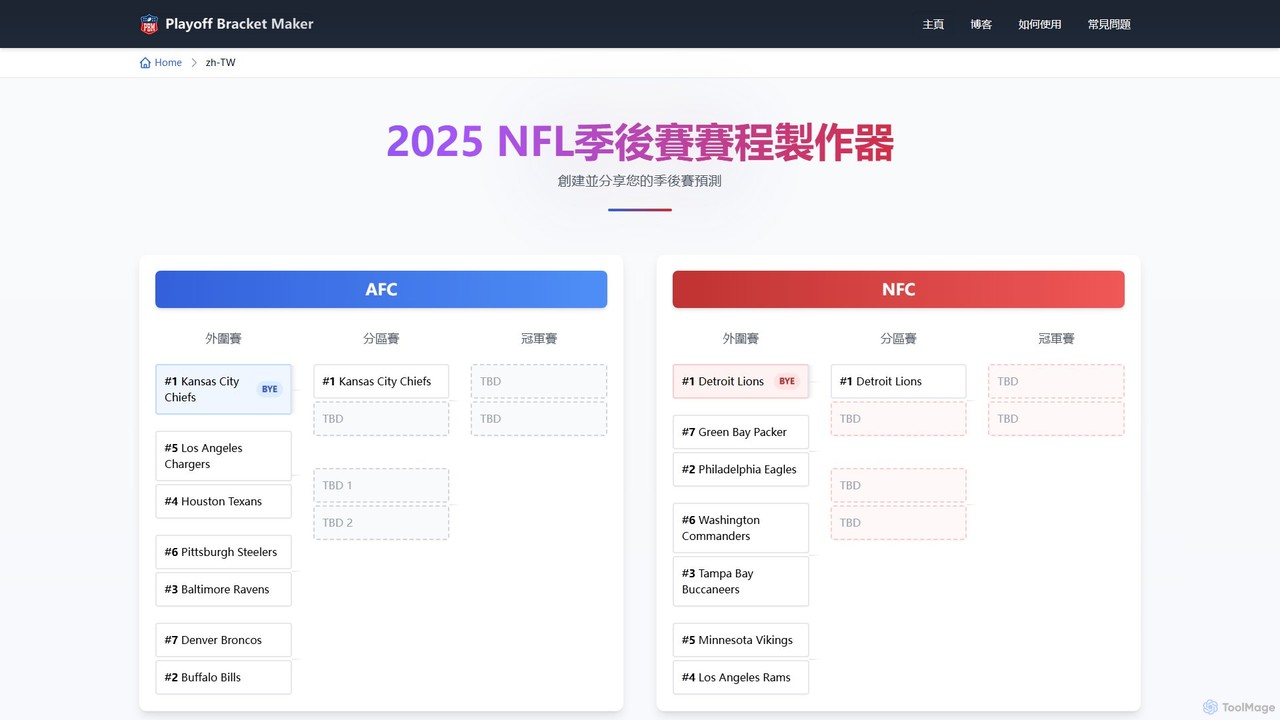
A free, interactive web tool for NFL fans to create, visualize, and share their playoff predictions. Easily click through matchups from the Wild Card round to the Super Bowl, and share your custom bracket with friends on social media.

Games
Visits 5.8KFavorites 117Likes 126

About Prediction Tools

Sports Prediction Tools are a specialized category of AI that analyzes vast amounts of historical sports data to forecast future outcomes. These tools leverage machine learning algorithms to identify patterns in team performance, player statistics, and game conditions, generating probabilistic insights. They are primarily used by sports analysts, bettors, and fantasy league managers to gain a data-driven edge in predicting match results, player performance, and scoring totals. Unlike simple statistics websites, these tools actively model future possibilities rather than just presenting past data.

Core Features

  • Predictive Modeling: Utilizes historical data to generate probabilities for game winners, point spreads, and totals.
  • Player Performance Analysis: Forecasts individual player statistics like points, goals, or yards for upcoming matches.
  • Odds Comparison: Aggregates and analyzes betting odds from various sources to identify potential value.
  • Simulation Capabilities: Runs thousands of game simulations to project a range of possible outcomes.
  • Data Visualization: Presents complex statistical data and predictions in easy-to-understand charts and graphs.

Use Cases

These tools are invaluable in the sports industry. Professional bettors and analysts use them to inform their wagering strategies by identifying favorable odds. Fantasy sports managers rely on them for drafting players and setting weekly lineups based on performance projections. Sports media and content creators also use these tools to generate data-rich articles and pre-game analyses.

How to Choose

When selecting a Sports Prediction Tool, consider the sports coverage offered and ensure it includes the leagues you follow. Evaluate the accuracy and transparency of its predictive models; some tools provide back-tested results. Assess the user interface for ease of use and the quality of data visualization. Finally, consider the subscription cost relative to the depth of analysis and features provided.

Prediction Tools use cases

1

Informing Sports Betting Strategies

A professional sports bettor uses a prediction tool to analyze an upcoming NBA game. The tool processes historical head-to-head data, recent team form, player injuries, and even travel schedules. It generates a probability for the home team to win by more than 5.5 points. By comparing this AI-generated probability with the odds offered by bookmakers, the bettor identifies a 'value bet' where the perceived probability is higher than the implied probability of the odds, leading to a more informed wagering decision.

2

Optimizing Fantasy Football Drafts

A fantasy football manager preparing for their league's annual draft uses a prediction tool to gain an edge. The tool projects season-long statistics for every NFL player, considering factors like past performance, team changes, and strength of schedule. The manager can filter players by position and see projected fantasy points. This allows them to identify undervalued players who are projected to perform better than their average draft position (ADP), helping them build a roster with high scoring potential.

3

Generating Data-Driven Sports Content

A sports journalist is writing a preview for a major soccer match. Instead of relying solely on opinion, they use a prediction tool to generate quantitative insights. The tool simulates the match 10,000 times, providing probabilities for a win, draw, or loss, and predicts the most likely final score. It also highlights key player matchups by projecting which player is most likely to score. The journalist incorporates these specific, data-backed predictions (e.g., 'AI models give Team A a 55% chance of victory') into their article, adding depth and authority to their analysis.

4

Assisting Team Scouting and Analysis

A scout for a professional basketball team is evaluating a potential draft pick. They use a prediction tool that specializes in player performance forecasting. By inputting the player's college statistics and physical measurements, the tool projects their potential NBA stats over the next five seasons. It also runs simulations to compare the player's projected career trajectory against current NBA stars. This data provides the scouting department with an objective, analytical perspective to complement their traditional video analysis and in-person evaluations.

5

Powering Fan Engagement Competitions

A sports media company runs a 'Bracket Challenge' for the annual NCAA basketball tournament. To help fans make their picks, they integrate an AI prediction tool into their website. The tool provides a win probability for every potential matchup in the tournament. Users can see the AI's favored winner for each game or use the simulation feature to see how different upsets could affect the overall bracket. This enhances the user experience, provides a fun and interactive element, and helps even casual fans make more educated guesses for their brackets.

6

Dynamic In-Game Win Probability Adjustment

During a live cricket match, a broadcaster displays a real-time win probability graph powered by an AI prediction tool. The model continuously updates its forecast based on live events: every run scored, wicket taken, or over bowled. For example, when a key batsman is dismissed, the win probability for their team might drop from 60% to 35% instantly. This provides viewers with a dynamic, moment-by-moment analytical narrative of the game, helping them understand the significance of key events as they unfold.

Prediction Tools FAQ

What are Sports Prediction Tools?

Sports Prediction Tools are specialized AI applications that analyze historical sports data to forecast the outcomes of future games and player performances. They use machine learning models to identify complex patterns that are not obvious to human analysts. Unlike simple stats websites that show past results, these tools generate probabilities for future events, such as a team's chance of winning or a player's projected points.

How do I choose the right Sports Prediction Tool?

Choosing the right tool depends on your needs. Consider the following factors:

  • Sports Coverage: Does it cover the specific leagues and sports you are interested in?
  • Model Transparency: Does the tool explain its methodology or provide back-tested accuracy rates? More transparency can lead to greater trust.
  • Features: Do you need simple win/loss predictions, detailed player stats, or betting odds analysis? Match the features to your use case.
  • User Interface: Is the platform easy to navigate and are the data visualizations clear and insightful?
  • Cost: Compare subscription plans and determine if the value provided justifies the price for your level of use.
Are sports prediction tools always accurate?

No, sports prediction tools are not always accurate. Sports are inherently unpredictable, with outcomes often influenced by random chance, human factors, and unforeseen events. These tools provide probabilistic forecasts, not certainties. Their value lies in their ability to process vast amounts of data to identify trends and probabilities that can give users an analytical edge over time. It's best to use them as a source of information to supplement your own knowledge, not as an infallible crystal ball.

What kind of data do these tools use for sports predictions?

Sports prediction tools ingest a wide variety of data points. This typically includes:

  • Historical Game Data: Final scores, point spreads, and totals from past matchups.
  • Team Statistics: Offensive and defensive efficiency ratings, pace of play, and recent form.
  • Player Statistics: Individual performance metrics, usage rates, and efficiency numbers.
  • Situational Data: Factors like home-field advantage, rest days between games, and travel distance.
  • Betting Market Data: Some advanced tools also analyze odds movements to gauge market sentiment.
What's the difference between prediction tools and sports statistics websites?

The key difference is their focus: retrospective vs. prospective. A sports statistics website is retrospective; it provides a comprehensive database of past results and historical data for you to analyze. A sports prediction tool is prospective; it uses that same historical data as input for a machine learning model to actively forecast what is likely to happen in the future. In short, stats sites tell you what happened, while prediction tools tell you what might happen next.