ToolMage
Sign in

Best 1 Assistant for Travel

Popular Assistant in Travel include Flyo, helping you work more efficiently.

Flyo
Freemium

Flyo

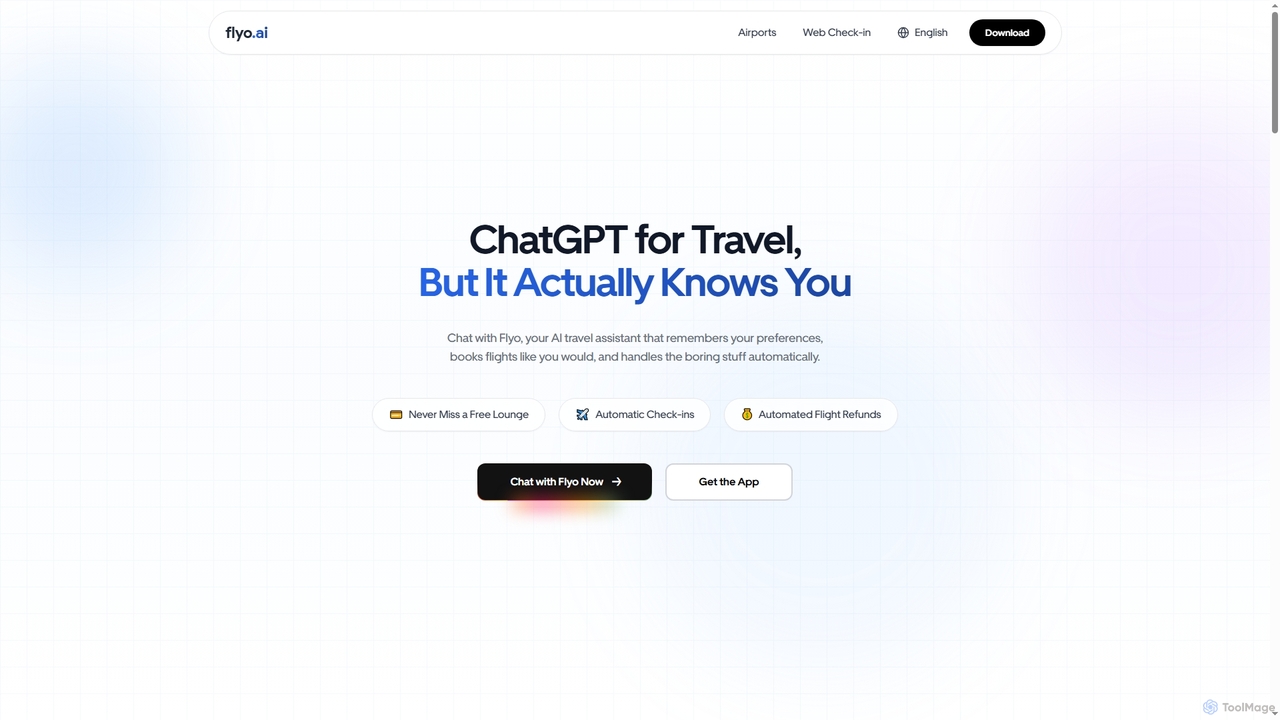
Flyo is an AI-powered travel assistant designed to automate the tedious aspects of travel, allowing users to focus on their journey. It offers features like natural language booking, automatic flight check-ins, real-time flight alerts, and personalized travel recommendations based on past preferences and history. Available on iOS and Android, Flyo aims to make travel stress-free and efficient.

Travel
Visits 22.1KFavorites 163Likes 159

About Assistant

Travel Assistants are AI-powered tools designed to streamline and enhance the travel planning and execution process. Leveraging natural language processing and machine learning, these tools act as virtual companions, offering personalized recommendations, itinerary management, and real-time support. They help users discover destinations, book services, and navigate their journeys more efficiently, transforming complex travel logistics into a seamless experience.

Core Features

  • Personalized Itinerary Generation: Automatically creates customized travel plans based on user preferences, budget, and interests.
  • Real-time Information & Updates: Provides live flight status, weather forecasts, local events, and alerts for delays or changes.
  • Booking & Reservation Assistance: Helps find and book flights, hotels, car rentals, and activities directly within the platform.
  • Local Recommendations: Suggests restaurants, attractions, and hidden gems tailored to the traveler's location and tastes.
  • Multilingual Support: Offers translation services and local phrasebooks to facilitate communication in foreign countries.

Use Cases

Travel assistants are invaluable for individual travelers, families, and business professionals seeking to optimize their journeys. They are used for planning elaborate multi-city tours, finding last-minute hotel deals, managing flight changes on the go, or discovering authentic local experiences without extensive manual research. These tools simplify decision-making and reduce stress associated with travel logistics.

How to Choose

When selecting an AI travel assistant, consider its range of features, such as itinerary customization, booking integrations, and real-time data accuracy. Evaluate its user interface for ease of use and intuitive navigation. Check for compatibility with your existing travel apps and devices, and assess its privacy policy regarding personal data. Finally, compare pricing models and customer support options to ensure it meets your specific travel needs and budget.

Assistant use cases

1

Personalized Itinerary Planning for Family Vacations

A family planning a vacation to a new city can use an AI travel assistant to generate a customized itinerary. By inputting preferences like child-friendly activities, dietary restrictions, and budget, the assistant suggests suitable attractions, restaurants, and accommodation options, optimizing travel times between locations and ensuring a balanced schedule for all family members.

2

Real-time Flight and Gate Change Notifications for Business Travelers

A busy business traveler frequently flying for meetings relies on an AI assistant to monitor flight statuses. The tool provides instant alerts for gate changes, delays, or cancellations, suggests alternative routes if necessary, and even helps rebook flights or find nearby lounges, minimizing stress and ensuring timely arrival at destinations.

3

Discovering Authentic Local Experiences in Unfamiliar Destinations

An adventurous solo traveler arriving in a foreign country wants to explore beyond typical tourist traps. The AI assistant, using location data and user interests, recommends hidden local eateries, cultural events, and unique workshops, providing directions and even basic translation phrases, allowing for a deeper, more authentic immersion into the local culture.

4

Automated Expense Tracking and Budget Management for Group Trips

A group of friends traveling together often struggles with splitting costs. An AI travel assistant can track shared expenses, categorize spending, and automatically calculate who owes whom, integrating with payment apps. It also helps manage the overall trip budget, alerting the group if they are overspending in certain categories like dining or activities.

5

Emergency Assistance and Local Support During Unexpected Situations

A traveler encounters an unexpected medical emergency or loses their passport abroad. The AI assistant can quickly provide contact information for local embassies, hospitals, or emergency services, offer translation support, and guide the user through necessary steps, acting as a crucial first point of contact in stressful situations.

6

Optimizing Multi-City Road Trips with Route and Stop Suggestions

A couple planning an extensive road trip across several states needs help with route optimization and finding interesting stops. The AI assistant calculates the most efficient driving routes, suggests scenic detours, recommends points of interest, overnight stays, and gas stations along the way, ensuring a smooth and enjoyable journey without excessive manual planning.

Assistant FAQ

What are AI Travel Assistants?

AI Travel Assistants are intelligent software tools that leverage artificial intelligence, primarily natural language processing and machine learning, to help users plan, manage, and enhance their travel experiences. They act as virtual concierges, offering personalized recommendations, automating bookings, providing real-time information, and assisting with various travel-related tasks to make journeys smoother and more efficient.

How do AI Travel Assistants personalize recommendations?

AI Travel Assistants personalize recommendations by analyzing a user's past travel history, stated preferences (e.g., budget, interests, travel companions), real-time location data, and even sentiment from reviews. They use machine learning algorithms to identify patterns and suggest flights, accommodations, activities, and dining options that align closely with the individual traveler's unique profile and current needs.

What is the difference between a general travel app and an AI Travel Assistant?

A general travel app typically provides static information, booking interfaces, or basic organizational tools. In contrast, an AI Travel Assistant offers dynamic, proactive, and personalized support. It can understand natural language queries, learn from user interactions, adapt to changing plans, and provide intelligent suggestions or solutions, going beyond simple data retrieval to offer a more interactive and adaptive travel experience.

Can AI Travel Assistants help with last-minute travel changes?

Yes, AI Travel Assistants are particularly useful for handling last-minute travel changes. They can monitor real-time data for flight delays, gate changes, or cancellations and proactively alert the user. Many can also suggest alternative flights, help rebook accommodations, or find nearby services like lounges or hotels, significantly reducing the stress and effort involved in unexpected travel disruptions.

What kind of data do AI Travel Assistants use, and is it secure?

AI Travel Assistants typically use various data points, including user preferences, search history, location data, booking details, and publicly available travel information (e.g., flight schedules, weather, local events). Reputable AI travel assistants prioritize data security and privacy, employing encryption, anonymization, and strict access controls. Users should always review the privacy policy of any tool to understand how their data is collected, used, and protected.