ToolMage
Sign in

Best 1 Aviation AI tools for Travel

Popular Aviation AI tools in Travel include VoyagerAid, helping you work more efficiently.

VoyagerAid
Paid

VoyagerAid

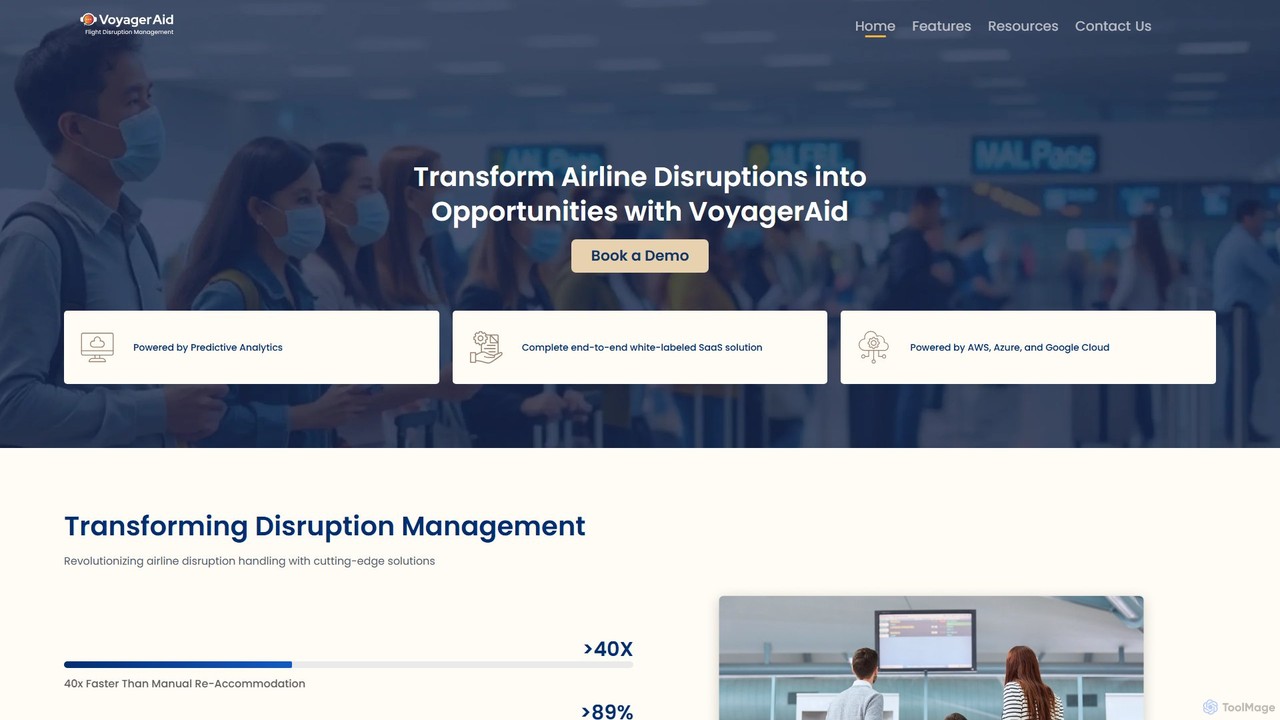
VoyagerAid is an AI-powered airline disruption management system for airlines of all sizes. It uses predictive analytics to anticipate flight disruptions, automates passenger rebooking and communication, and streamlines compensation. The platform aims to reduce operational costs, enhance passenger satisfaction, and turn potential crises into opportunities for improved customer loyalty.

Operations Management
Visits 7.3KFavorites 143Likes 120

About Aviation

AI Aviation tools are a class of specialized software that apply artificial intelligence to optimize the safety, efficiency, and operations of the air travel industry. These tools leverage machine learning, predictive analytics, and complex algorithms to process vast amounts of data from aircraft sensors, weather systems, and operational logs. Their primary value lies in enhancing decision-making for critical tasks such as predictive maintenance, flight path optimization, and air traffic management. By identifying patterns and forecasting outcomes, these tools help reduce operational costs, minimize delays, and significantly improve safety standards.

Core Features

  • Predictive Maintenance: Analyzes real-time sensor data to forecast component failures before they occur, enabling proactive repairs.
  • Flight Path Optimization: Calculates the most fuel-efficient and timely routes by considering weather, wind, and air traffic conditions.
  • Crew Scheduling Automation: Optimizes crew rosters based on regulatory compliance, qualifications, and operational efficiency.
  • Air Traffic Flow Management: Predicts airspace congestion and suggests adjustments to flight plans to mitigate delays.
  • Intelligent Baggage Handling: Uses computer vision and tracking systems to reduce the rate of lost or mishandled luggage.

Use Cases

AI Aviation tools are primarily used by airlines, airport authorities, air traffic control organizations, and Maintenance, Repair, and Overhaul (MRO) providers. For instance, an airline can use these tools to lower fuel consumption by optimizing flight routes, while an airport can dynamically allocate gates to reduce aircraft taxiing time and improve passenger flow. MRO providers use them to shift from scheduled to condition-based maintenance, increasing aircraft availability.

How to Choose

When selecting an AI Aviation tool, consider its data integration capabilities with your existing systems (e.g., Flight Operations, MRO software). Evaluate the proven accuracy and validation of its predictive models. Ensure the tool complies with stringent industry regulations from bodies like the FAA or EASA. Finally, assess its scalability to handle the massive data volumes generated by a fleet of aircraft or a major airport's operations.

Aviation use cases

1

Predictive Aircraft Maintenance Scheduling

An airline's maintenance, repair, and overhaul (MRO) team uses an AI aviation tool to shift from reactive to proactive maintenance. The system continuously analyzes thousands of data points from engine sensors and flight logs across their entire fleet. When the AI model detects subtle anomalies that indicate a potential component failure in the near future, it automatically generates an alert for the maintenance team. This allows them to schedule a replacement during the next planned downtime, preventing unexpected failures, reducing aircraft on ground (AOG) time, and significantly enhancing flight safety.

2

Dynamic Fuel-Efficient Route Planning

A flight operations dispatcher for a major airline uses an AI tool to optimize flight paths in real-time. Instead of relying solely on standard pre-filed routes, the dispatcher inputs the flight origin and destination, and the AI system analyzes current and forecasted weather, wind patterns, and known air traffic control restrictions. It then calculates multiple route options, each with a detailed breakdown of fuel consumption, flight time, and potential turbulence. The dispatcher can select the optimal route that saves thousands of pounds of fuel per flight, leading to significant cost savings and a reduction in carbon emissions for the airline.

3

Intelligent Airport Gate Allocation

An airport operations manager uses an AI-powered system to automate and optimize gate assignments. The tool integrates with real-time flight schedules, aircraft size data, and passenger connection information. It dynamically assigns gates to minimize aircraft taxiing time on the tarmac and reduce passenger walking distances between connecting flights. If a flight is delayed, the system automatically re-evaluates all assignments and suggests a new, optimized plan in seconds. This leads to smoother airport operations, fewer ground delays, and an improved overall passenger experience.

4

Automated Crew Scheduling and Compliance

A crew planning manager at a regional airline faces the complex task of creating monthly rosters that comply with strict regulations on flight hours, rest periods, and qualifications. Using an AI tool, they can generate optimized schedules in minutes instead of days. The system automatically considers all constraints, including union agreements and crew preferences, to produce fair and efficient rosters. It can also rapidly find replacements for sick calls or disruptions, ensuring flights remain fully staffed and compliant, which minimizes operational disruptions and potential fines.

5

Enhanced Air Traffic Control Conflict Detection

An air traffic controller in a busy sector uses an AI-powered decision support tool. This system analyzes the trajectories, speeds, and altitudes of all aircraft in the airspace in real-time. It goes beyond traditional alerts by predicting potential conflicts minutes in advance, even in complex, multi-aircraft scenarios. The AI suggests optimal resolution maneuvers, such as slight heading or altitude changes, for the controller to issue. This enhances the controller's situational awareness, reduces their cognitive load, and adds a critical layer of safety to prevent near-misses and maintain separation standards.

6

AI-Powered Baggage Tracking and Reconciliation

A ground handling operations team at a major international airport implements an AI baggage handling system. Cameras equipped with computer vision scan baggage tags at every touchpoint, from check-in to loading onto the aircraft. The AI system reconciles the scanned data with passenger and flight manifests in real-time. If a bag is routed to the wrong carousel or is not loaded onto the correct flight, the system immediately alerts ground staff with the bag's exact location. This drastically reduces the number of lost or delayed bags, improving customer satisfaction and lowering compensation costs for airlines.

Aviation FAQ

What are AI Aviation tools?

AI Aviation tools are specialized software systems that use artificial intelligence, particularly machine learning and data analytics, to improve the operational efficiency, safety, and profitability of the aviation industry. They process vast datasets to provide predictive insights and automate complex decisions. Key applications include predictive maintenance for aircraft, flight path and fuel optimization, automated crew scheduling, and enhanced air traffic management.

How to choose the right AI Aviation tool?

Choosing the right tool involves evaluating several key factors. First, assess its integration capabilities with your existing operational systems. Second, scrutinize the accuracy and reliability of its AI models, preferably through case studies or trials. Third, ensure it complies with all relevant aviation regulations (e.g., FAA, EASA). Finally, consider the provider's industry expertise and the scalability of the solution to meet your organization's future growth.

What's the difference between AI Aviation tools and general Travel AI?

The primary difference lies in their target user and application scope. General Travel AI tools are consumer-focused, designed to help travelers plan and book trips (e.g., finding flights, hotels, creating itineraries). In contrast, AI Aviation tools are B2B (business-to-business) solutions for the industry itself. They focus on the complex operational backbone of air travel, such as aircraft maintenance, air traffic control, crew management, and airport logistics, aiming to improve safety and efficiency rather than the consumer booking experience.

What are the main benefits of using AI in aviation?

The main benefits are centered around safety, efficiency, and cost reduction. Key advantages include:

  • Enhanced Safety: Predictive maintenance reduces equipment failures, and AI-assisted air traffic control can prevent conflicts.
  • Operational Efficiency: Optimized flight paths save fuel, and automated scheduling reduces manual workload and errors.
  • Cost Savings: Proactive maintenance minimizes costly downtime, and efficient resource allocation lowers operational expenses.
  • Improved Passenger Experience: Reduced delays, better gate management, and efficient baggage handling lead to higher customer satisfaction.

Who are the typical users of AI Aviation tools?

AI Aviation tools are used by a range of professionals and organizations within the air travel ecosystem. Key users include:

  • Airlines: For flight operations, maintenance planning, crew scheduling, and fuel management.
  • Airport Operators: For gate allocation, ground handling optimization, security screening, and passenger flow management.
  • Air Traffic Control (ATC) Organizations: For decision support, conflict detection, and airspace capacity management.
  • Maintenance, Repair, and Overhaul (MRO) Providers: For predictive maintenance and optimizing repair schedules and spare parts inventory.