Travel Best in category 1 results Ancillary Services AI Tool

Popular AI tools in the Ancillary Services field of Travel include TripAdd, etc., helping you quickly improve efficiency.

TripAdd

TripAdd

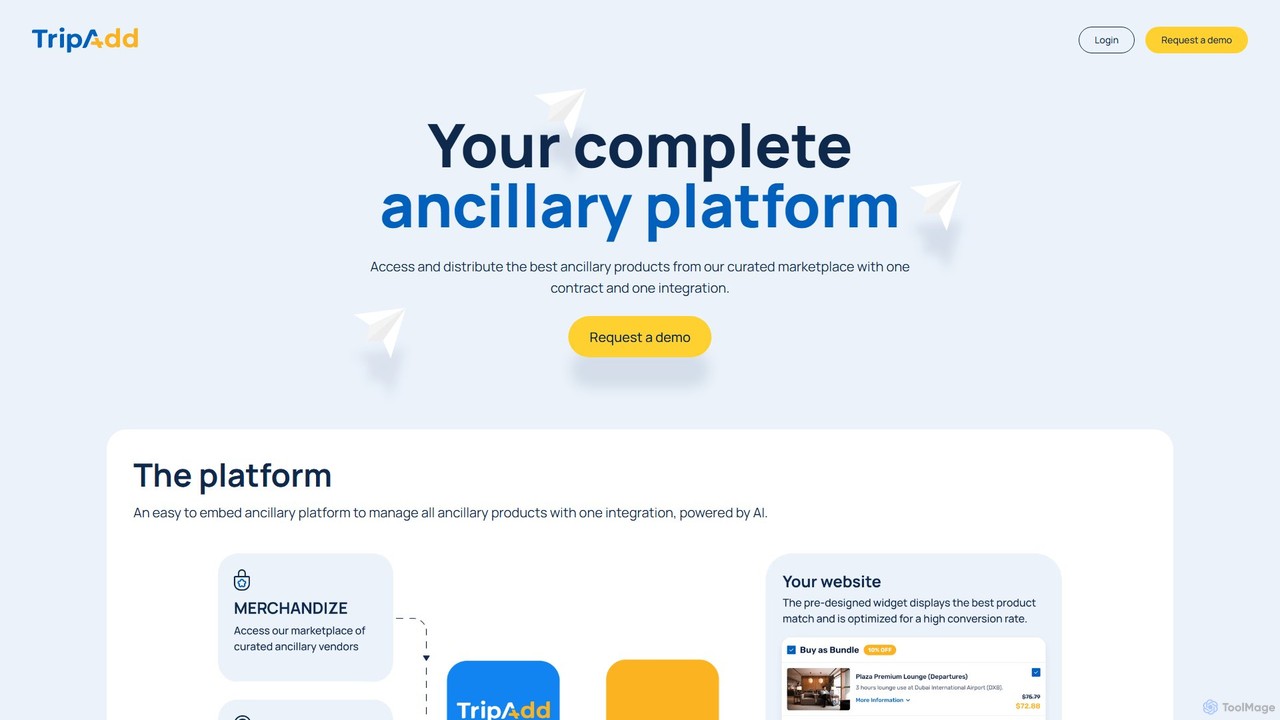
TripAdd is an AI-powered B2B platform for travel companies, providing a unified marketplace to integrate, manage, and optimize …

5.1K

About Ancillary Services

AI Ancillary Services tools are specialized platforms within the travel industry that use machine learning to optimize the sale of non-core products and services. These tools analyze vast datasets, including passenger behavior, booking context, and real-time market demand, to dynamically price and personalize offers like seat upgrades, extra baggage, and travel insurance. Their primary value lies in maximizing ancillary revenue for travel providers while simultaneously enhancing the customer experience by presenting relevant, timely add-ons. This data-driven approach moves beyond static pricing to create more profitable and customer-centric sales strategies.

Core Features

  • Dynamic Pricing Engine: Automatically adjusts the price of ancillary products based on demand, seasonality, and user profile.
  • Personalized Recommendations: Suggests the most relevant add-ons to individual travelers using predictive analytics.
  • Demand Forecasting: Predicts the popularity of specific ancillaries for future flights or stays to optimize inventory.
  • Offer Management & A/B Testing: Allows for the creation, testing, and optimization of different ancillary bundles and promotional offers.

Applicable Scenarios

These tools are primarily used by airlines, Online Travel Agencies (OTAs), hotel chains, and cruise lines. Revenue management and marketing teams leverage them during the online booking process, in pre-departure communications, and via mobile apps to present targeted upsell and cross-sell opportunities.

Selection Criteria

When choosing an AI Ancillary Services tool, key factors include its integration capabilities with existing Passenger Service Systems (PSS) or booking engines, the sophistication and transparency of its machine learning models, compliance with data privacy regulations like GDPR, and a clear pricing structure (e.g., revenue share vs. subscription fee).

Ancillary ServicesUse Cases

1

Dynamic Baggage Fee Pricing for Airlines

A revenue manager at an airline uses an AI ancillary tool to move beyond flat-rate baggage fees. The system analyzes historical booking data, route popularity, seasonality, and passenger loyalty status. For a high-demand holiday flight, the AI automatically increases the price for the first checked bag purchased close to the departure date. Conversely, for a low-demand off-season route, it might offer a discount for pre-paying baggage, encouraging early commitment and securing revenue. This results in optimized pricing per flight, increasing overall ancillary revenue by 10-15%.

2

Personalized Hotel Amenity Upselling

A hotel chain integrates an AI ancillary tool into its booking engine. When a user books a room for two adults over a weekend, the AI analyzes the booking pattern and identifies it as a potential leisure or romantic trip. Instead of showing a generic list of add-ons, it prioritizes and displays a 'Romance Package' including champagne, late check-out, and breakfast in bed. For a family booking, it would instead highlight a 'Family Fun Pack' with tickets to a local attraction. This personalization increases the conversion rate of ancillary offers by tailoring them to the specific travel context.

3

AI-Powered Seat Upgrade Offers

An airline's marketing team uses an AI tool to manage seat upgrade offers. The system identifies passengers on an upcoming flight who have a high propensity to upgrade, based on factors like past upgrade history, loyalty status, and the original fare class purchased. 24 hours before the flight, the tool automatically sends personalized, time-sensitive offers via email or app notification to these selected passengers. The offer price is dynamically calculated to maximize both the probability of acceptance and the revenue generated, filling premium seats that might otherwise go empty.

4

Automated Cross-Selling of Travel Insurance

An Online Travel Agency (OTA) employs an AI ancillary tool at the checkout stage. The AI analyzes the trip details in real-time. For a booking to a ski resort in the Alps, it automatically suggests a travel insurance policy that specifically covers winter sports. For a non-refundable hotel booking, it highlights the benefits of cancellation coverage. This contextual relevance is far more effective than a generic 'Add Insurance' checkbox. It educates the customer on the specific risks of their trip and presents a tailored solution, significantly boosting insurance attachment rates.

5

Optimizing In-Flight Wi-Fi Package Offers

An airline's digital product team wants to optimize Wi-Fi sales. The AI ancillary tool, integrated with the in-flight entertainment system, analyzes passenger data. It identifies a business traveler on a long-haul flight and offers a high-speed, full-flight duration package. For a leisure traveler on a short flight, it might offer a cheaper, lower-speed 'social media only' package. The pricing can also be dynamic, with prices potentially dropping towards the end of the flight to capture last-minute buyers. This segmentation and dynamic pricing strategy maximizes uptake across different passenger profiles.

6

Intelligent Bundling of Car Rentals and Tours

A travel agency uses an AI tool to create post-booking offers. After a customer books a flight to Orlando for a family of four for one week, the system automatically generates a bundled offer. Instead of separate pitches for a car and tours, it suggests a package including a minivan rental and a 3-day pass to a theme park, perhaps with a small discount. The AI selects the components based on destination, party size, and trip duration. This proactive, intelligent bundling simplifies the travel planning process for the customer and increases the total transaction value for the agency.

Ancillary ServicesFrequently Asked Questions