ToolMage
Sign in

Best 1 Guides AI tools for Travel

Popular Guides AI tools in Travel include Chiaro, helping you work more efficiently.

Chiaro
Free

Chiaro

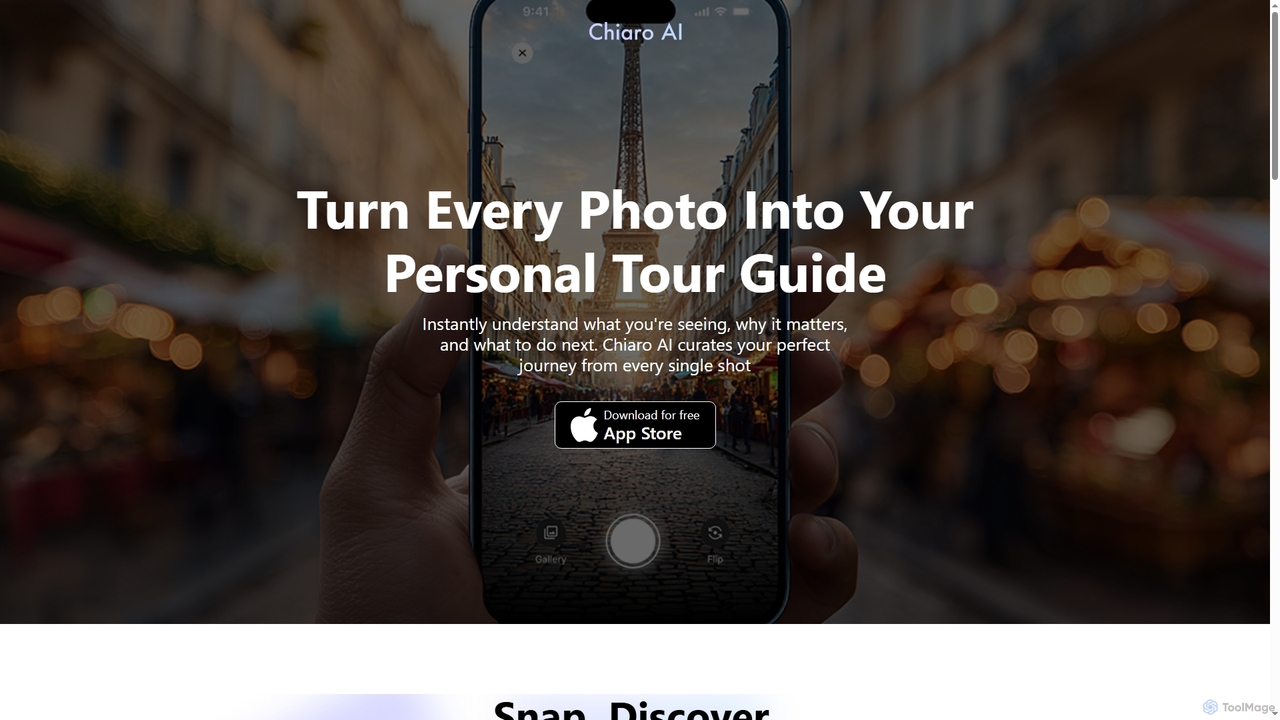
Chiaro is an AI-powered personal tour guide app that turns your phone's camera into an interactive travel companion. Snap a photo of any landmark, artwork, or monument to instantly receive its story, history, and significance through text and audio guides. It also helps you plan your day and discover hidden local gems.

Learning
Visits 8.2KFavorites 110Likes 127

About Guides

AI Travel Guides are tools that generate personalized travel itineraries and real-time recommendations based on user preferences. They utilize machine learning algorithms to analyze vast amounts of data, including maps, reviews, and user interests, to create dynamic and customized travel plans. This approach saves significant planning time and helps travelers discover experiences tailored to their specific tastes, budget, and schedule. Unlike static blog posts, these guides can adapt to changes and provide context-aware suggestions on the go.

Core Features

  • Personalized Itinerary Generation: Creates detailed day-by-day plans based on interests, pace, and budget.
  • Real-time Suggestions: Recommends nearby attractions, restaurants, and events based on location and time.
  • Dynamic Information Synthesis: Aggregates and organizes up-to-date information like opening hours and reviews.
  • Natural Language Queries: Allows users to ask questions conversationally to refine their plans.

Use Cases

Ideal for solo travelers, families, and business travelers who need efficient and customized trip planning. Travel bloggers and content creators also use them to quickly research and structure thematic guides, while spontaneous adventurers can discover hidden gems and local favorites in real-time.

How to Choose

When selecting an AI Travel Guide, consider the depth of personalization options, the freshness and reliability of its data sources, offline map and itinerary access, and any integration capabilities with booking platforms for flights or hotels. Also, evaluate the user interface for ease of use during travel.

Guides use cases

1

Personalized Family Vacation Planning

A family planning a 7-day trip to Italy inputs their interests: history for the parents, art for the teenager, and parks for the younger child, along with a mid-range budget. The AI Travel Guide generates a day-by-day itinerary that balances these interests. It suggests a visit to the Colosseum in the morning, a relaxing afternoon at Villa Borghese gardens, and an interactive art workshop for the teen. The guide also includes family-friendly restaurant recommendations and calculates estimated daily costs, saving the parents hours of complex research and coordination.

2

Spontaneous Day Trip Organization

A solo traveler in Lisbon finds themselves with an unexpected free afternoon. They ask their AI Travel Guide, 'I have 4 hours free near Rossio Square, what can I do?' The tool instantly generates a walking tour that includes a visit to the Santa Justa Lift, a quick stop at a famous pastry shop for a Pastel de Nata, and a stroll through the Chiado district. The guide provides real-time navigation, opening hours for attractions, and user reviews, allowing the traveler to make the most of their limited time without any prior planning.

3

Creating Thematic Travel Guides

A food blogger wants to create a guide on 'The Best Street Food in Bangkok'. Instead of spending days manually searching blogs and forums, they use an AI Travel Guide. They input the theme, desired neighborhoods, and price points. The AI aggregates data from thousands of reviews, blogs, and geo-tagged photos to generate a curated list of top-rated street food stalls, complete with their signature dishes, typical hours, and location pins. This allows the blogger to produce high-quality, well-researched content in a fraction of the time.

4

Business Travel Itinerary Optimization

A consultant is traveling to Berlin for three days of meetings spread across the city. They input their meeting schedule and locations into an AI Travel Guide, along with an interest in modern architecture. The AI tool generates an optimized travel plan that includes the most efficient public transport routes between meetings. It also fills the gaps in their schedule with suggestions for nearby architectural landmarks, such as the Reichstag Dome or the Jewish Museum, ensuring they can effectively combine work with personal interests without wasting time.

5

Accessibility-Focused Travel Planning

A traveler who uses a wheelchair wants to plan a trip to London. They use an AI Travel Guide with accessibility filters. They specify their need for step-free access to attractions and public transport. The AI generates a custom itinerary featuring only wheelchair-accessible sights like the British Museum and the London Eye. It also maps out routes using accessible Tube stations and bus lines, and suggests restaurants and hotels with proven accessibility features. This removes a major barrier to travel planning, making it feasible and less stressful.

6

Off-the-Beaten-Path Discovery

An experienced traveler wants to explore rural Japan and avoid typical tourist traps. They instruct their AI Travel Guide to find 'hidden gems in the Kansai region, focusing on nature and traditional crafts'. The AI analyzes local Japanese blogs, social media location tags, and niche travel forums. It then suggests a multi-day trip including a visit to a small, family-run pottery village, a hike to a secluded waterfall known only to locals, and a stay at a traditional Ryokan that isn't listed on major booking sites. This provides a unique and authentic travel experience that would be difficult to plan through conventional means.

Guides FAQ

What are AI Travel Guides?

AI Travel Guides are applications that use artificial intelligence to create dynamic, personalized travel plans. Unlike static travel blogs or simple map tools, they synthesize information from various sources like reviews, real-time traffic, and user preferences to build a coherent itinerary. Key features often include personalized recommendations for attractions and restaurants, optimized routing, and the ability to adjust plans on the fly based on new inputs or changing conditions.

How to choose the right AI Travel Guide?

When selecting an AI Travel Guide, consider these factors:

  • Personalization Depth: How well can the tool understand and adapt to your specific interests, budget, and travel style?
  • Data Sources: Does it pull real-time, up-to-date information for things like opening hours, prices, and reviews?
  • Offline Functionality: Can you access your itinerary, maps, and key information without an internet connection?
  • User Interface: Is the app intuitive and easy to use while you are on the move?
  • Integration: Does it connect with booking platforms for flights, hotels, or tours to streamline the entire process?
What's the difference between an AI Travel Guide and Google Maps?

The primary difference is planning versus navigation. Google Maps is an exceptional navigation and location-finding tool, telling you how to get from point A to B and what's nearby. An AI Travel Guide is a planning tool that synthesizes information to create a structured itinerary. It helps you decide what your points A, B, and C should be, based on your interests and constraints, and then organizes them into a logical sequence for your trip. It answers 'what should I do?' while Google Maps answers 'how do I get there?'.

What key features should I look for in an AI Travel Guide?

Look for a combination of smart planning and user-friendly features. Key functions include:

  • Dynamic Itinerary Generation: The ability to create a full trip schedule from simple inputs.
  • Real-time Recommendations: Suggestions for food or activities based on your current location and time of day.
  • Budget Tracking: Tools to help you monitor your spending against a pre-set budget.
  • Collaboration Tools: Features that allow you to share and plan a trip with friends or family.
  • Natural Language Input: The ability to describe your travel plans conversationally rather than filling out rigid forms.

Who can benefit from using AI Travel Guides?

A wide range of travelers can benefit. Casual vacationers and families can save dozens of hours on planning. Business travelers can optimize their schedules to mix work and leisure efficiently. Solo and adventurous travelers can use them to discover off-the-beaten-path locations they might not find otherwise. Additionally, travel content creators like bloggers and vloggers can use these tools to quickly research and structure their content, improving their productivity.