ToolMage
Sign in

Best 50 Translation AI tools for Video

Popular Translation AI tools in Video include Maestra, CAMB.AI, Blipcut, VMEG, Speech Studio, VideoDubber, TransDuck, BlipCut, Rask AI, and vidby, helping you work more efficiently.

Braiv
Freemium

Braiv

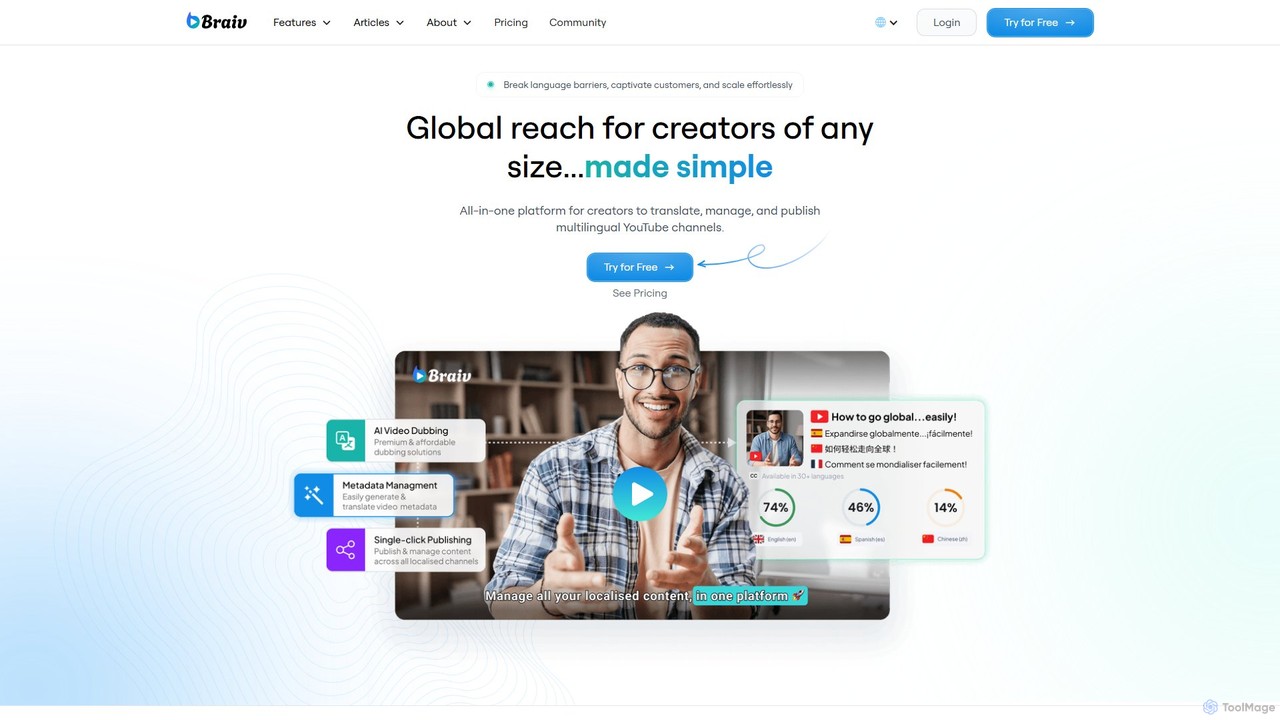
Braiv is an all-in-one AI platform for media translation, designed to help creators, educators, and marketers reach a global audience. It offers AI-powered video dubbing with voice cloning, animated captions, and document translation in over 29 languages. With its intuitive multi-language video player and automated workflows, Braiv simplifies the process of localizing content, making it easy to scale videos, courses, and marketing materials for international markets.

Dubbing
Visits 18.3KFavorites 156Likes 158
Maestra
Freemium

Maestra

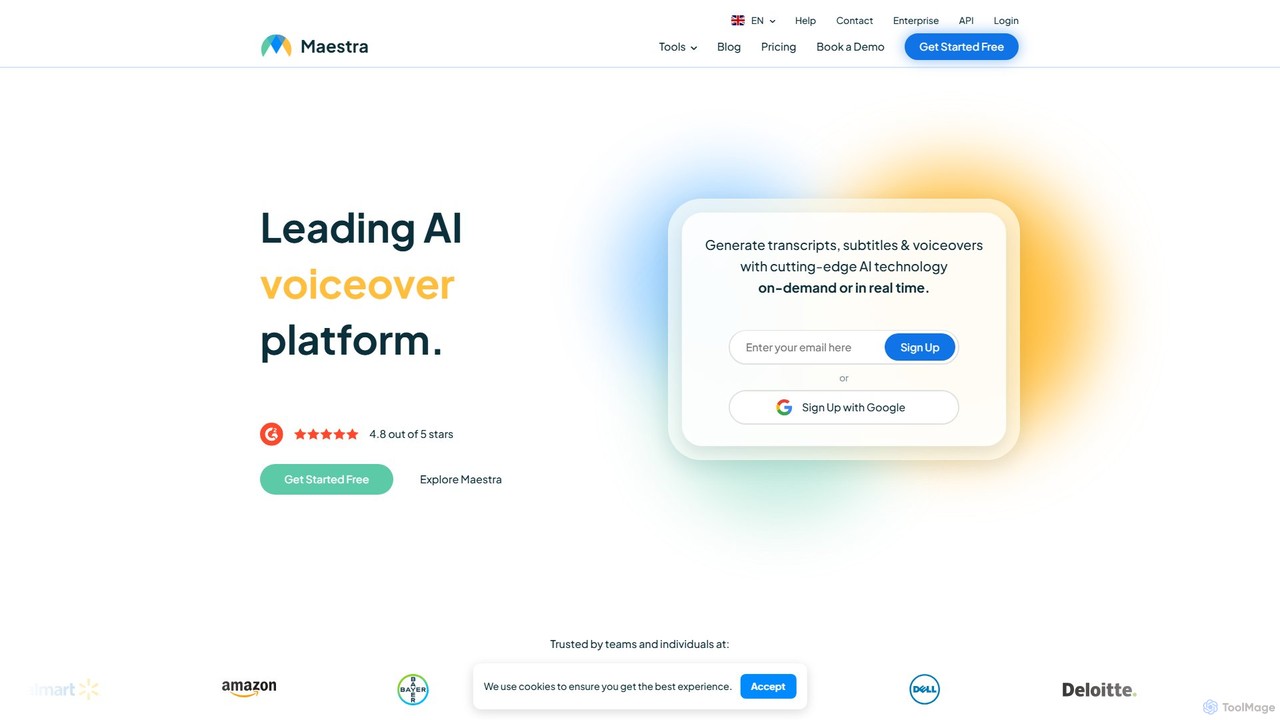
Maestra is an all-in-one AI platform for content creators and businesses, offering fast and accurate transcription, subtitling, translation, and voiceover services in over 125 languages. It features AI dubbing, voice cloning, real-time translation, and robust collaboration tools, integrating seamlessly with platforms like YouTube, Zoom, and Slack to streamline content localization and accessibility workflows.

Transcription
Visits 1.5MFavorites 113Likes 132

About Translation

AI Video Translation tools are AI-powered solutions designed to automatically translate spoken language in video content into multiple target languages, often including translated audio and subtitles. These tools leverage advanced artificial intelligence, including automatic speech recognition (ASR), machine translation (MT), and text-to-speech (TTS) or voice cloning technologies. They enable video creators and businesses to break down language barriers, making their video content accessible to a global audience. By automating the complex process of transcription, translation, and voiceover or subtitling, these tools significantly enhance the reach and impact of video assets.

Core Features

  • Automatic Speech Recognition (ASR): Accurately transcribes spoken words from video audio into text.
  • Machine Translation (MT): Translates the transcribed text into various target languages.
  • Voice Synthesis & Cloning: Generates natural-sounding translated audio, often mimicking the original speaker's voice or tone.
  • Subtitle Generation & Sync: Creates and synchronizes translated subtitles with the video timeline.
  • Multi-language Support: Offers a wide range of source and target languages for comprehensive global reach.

Use Cases

These tools are invaluable for content creators, marketers, educators, and businesses aiming to expand their global footprint. They are used to localize marketing campaigns, adapt e-learning modules for international students, and ensure internal corporate communications are understood by diverse multinational teams.

How to Choose

When selecting an AI video translation tool, consider the accuracy of its ASR and MT, the naturalness and emotional range of its voice synthesis, and the breadth of supported languages. Evaluate its integration capabilities with existing video editing workflows and the flexibility of its subtitle editing features. Cost-effectiveness and scalability for your specific volume needs are also crucial factors.

Featured tool rankings

Translation use cases

1

Global Marketing Campaigns

Marketing teams utilize AI video translation tools to localize promotional videos, product launches, and brand stories for international markets. By translating voiceovers and subtitles into local languages, they can effectively resonate with diverse audiences, increasing engagement and market penetration without the high costs and time associated with traditional manual translation.

2

E-learning Course Localization

Educational institutions and online course providers employ these tools to make their video lectures and training modules accessible worldwide. Translating course content, including spoken explanations and on-screen text, allows them to reach non-native speakers, expand their student base, and provide equitable learning opportunities across different linguistic backgrounds.

3

Corporate Internal Communications

Multinational corporations use AI video translation for internal training videos, CEO announcements, and company-wide updates. Ensuring that all employees, regardless of their native language, can understand critical information fosters a more inclusive work environment, improves compliance, and streamlines communication across global offices.

4

News & Media Content Distribution

News organizations and media outlets leverage AI video translation to rapidly translate breaking news, documentaries, and interviews for global distribution. This enables them to deliver timely content to a wider international audience, enhancing their reach and impact in a fast-paced media landscape, often with near real-time capabilities.

5

User-Generated Content (UGC) Accessibility

Individual content creators, YouTubers, and social media influencers use these tools to translate their vlogs, tutorials, and entertainment videos. This significantly broadens their audience reach beyond their primary language speakers, fostering a more diverse and engaged community and potentially opening new monetization opportunities.

6

Live Event & Webinar Translation

Organizers of virtual conferences, webinars, and live streams deploy AI video translation to provide simultaneous or near-simultaneous translation for attendees. This ensures that participants from various linguistic backgrounds can fully engage with the content, ask questions, and participate in discussions, making events truly global and inclusive.

Translation FAQ

What are AI Video Translation tools?

AI Video Translation tools are software solutions that use artificial intelligence to automatically convert the spoken content of a video from one language to another. This typically involves transcribing the original audio, translating the text, and then either generating new audio (voiceover) or creating synchronized subtitles in the target language. They aim to make video content globally accessible.

How do AI Video Translation tools work?

These tools generally follow a multi-step process. First, Automatic Speech Recognition (ASR) transcribes the audio from the video into text. Second, Machine Translation (MT) translates this text into the desired target language. Third, Text-to-Speech (TTS) or voice cloning technology generates new audio in the target language, often attempting to match the original speaker's voice. Finally, the translated audio or subtitles are synchronized with the video timeline.

What are the benefits of using AI for video translation compared to manual methods?

AI video translation offers significant advantages over manual methods, primarily in speed, cost-effectiveness, and scalability. AI tools can translate hours of video content in minutes or hours, drastically reducing turnaround times and labor costs. They also ensure consistency in terminology and style across large volumes of content, making global distribution more efficient, though human review is often recommended for critical content.

What factors should I consider when choosing an AI Video Translation tool?

Key factors include the accuracy of its speech recognition and machine translation, the naturalness and emotional quality of its voice synthesis, and the range of supported languages. Also, consider its integration capabilities with your existing video editing software, the ease of subtitle editing and customization, and the pricing model relative to your usage volume and budget.

Can AI Video Translation tools handle complex or specialized content?

While AI tools are rapidly improving, handling highly complex, nuanced, or domain-specific content (e.g., medical, legal, highly technical jargon) can still be challenging. They may require post-editing by human translators to ensure complete accuracy, cultural appropriateness, and precise terminology. Some advanced tools offer custom glossaries or domain-specific models to improve performance in specialized fields.