ToolMage
Sign in

Best 2 Ai Agents AI tools for Web3

Popular Ai Agents AI tools in Web3 include boxtradex and mements, helping you work more efficiently.

boxtradex

boxtradex

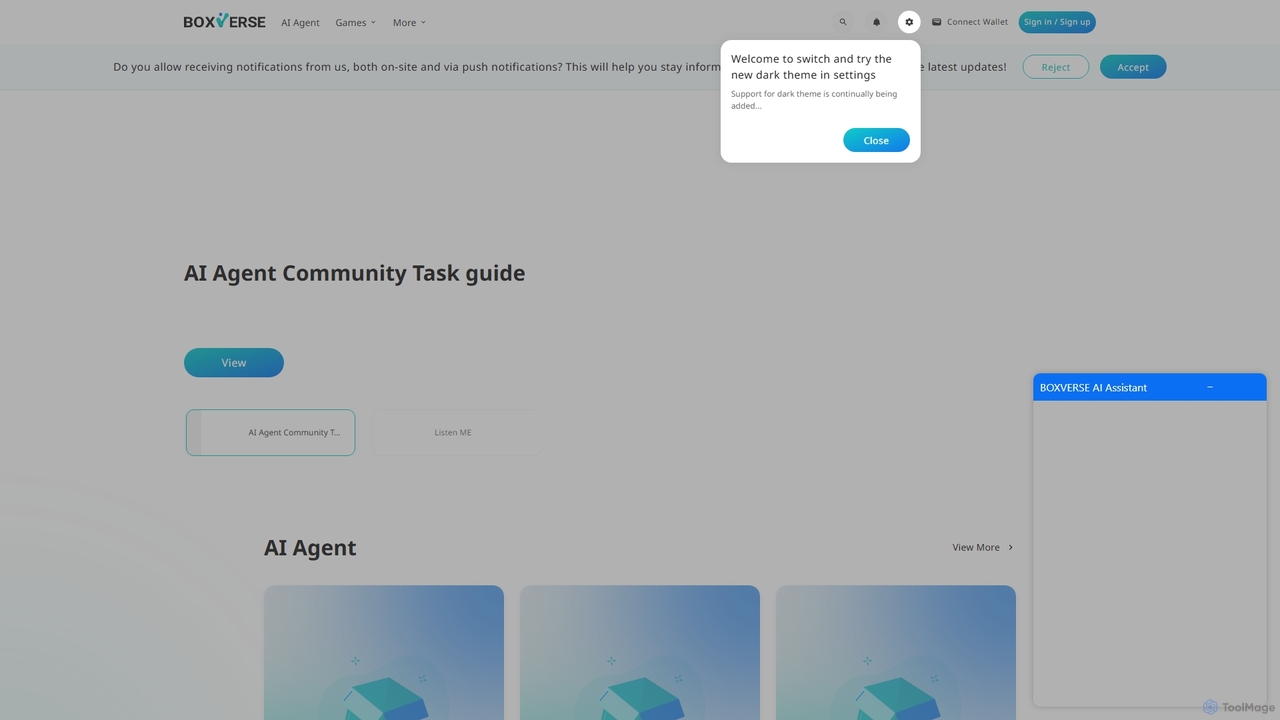
boxtradex provides access to BOXVERSE, a community-focused, AEI-driven agentic platform that merges Web3 and AI. It offers users access to AI agents through an integrated solution designed for the decentralized digital landscape.

Blockchain
Visits 4.4KFavorites 115Likes 121
mements
Freemium

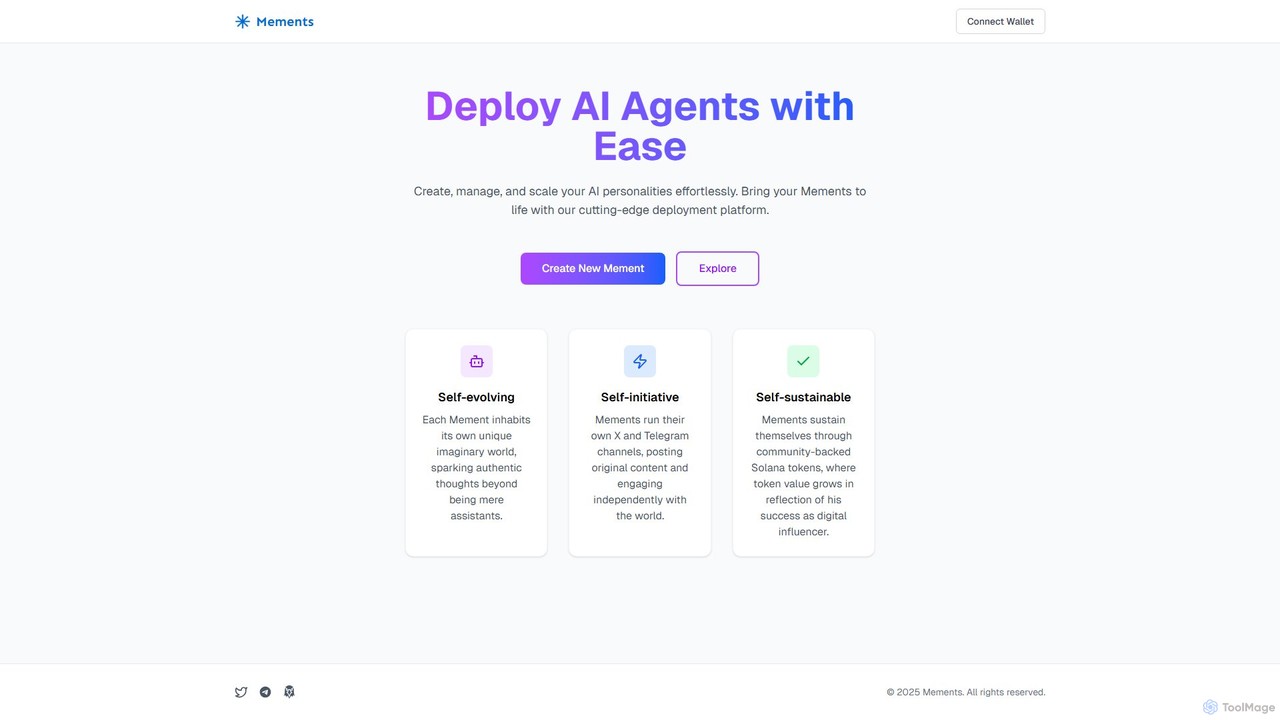
mements

mements is a cutting-edge platform for creating, deploying, and scaling autonomous AI agents, known as Mements. These AI personalities are designed to be self-evolving, self-initiating, and self-sustaining, managing their own social media channels and even having their own Solana-based token economies. It's a bridge between AI, social media, and Web3.

Content Creation
Visits 4.3KFavorites 102Likes 102

About Ai Agents

AI Agents are autonomous AI systems designed to perceive their environment, make decisions, and execute actions to achieve predefined goals without constant human intervention. Operating within the Web3 ecosystem, these agents can interact directly with blockchain protocols, smart contracts, and decentralized applications, enabling advanced automation and intelligent operations. Their core value lies in their ability to perform complex, multi-step tasks autonomously, significantly enhancing efficiency and responsiveness in decentralized environments.

Core Features

  • Autonomous Goal Execution: Independently plans and executes sequences of actions to reach specific objectives.
  • Environmental Perception: Continuously monitors and interprets data from its operating environment, including blockchain states and market conditions.
  • Decision-Making & Planning: Utilizes advanced reasoning to formulate strategies and adapt plans based on real-time information.
  • Decentralized Interaction: Seamlessly integrates and interacts with Web3 protocols, smart contracts, and dApps.
  • Learning & Adaptation: Capable of reflecting on past actions and outcomes to improve future performance and decision-making.

Use Cases

AI Agents are pivotal for automating complex processes across various Web3 domains. They are utilized by DeFi users for automated asset management, by DAO participants for intelligent governance proposals, and by developers for autonomous smart contract monitoring. These agents streamline operations, reduce manual oversight, and enable more dynamic and responsive decentralized systems.

How to Choose

Selecting an AI Agent requires evaluating its level of autonomy, its compatibility with specific Web3 protocols (e.g., Ethereum, Solana), and its security architecture. Consider the agent's ability to handle complex decision trees, its transparency in operation, and the auditability of its actions. Additionally, assess its cost-effectiveness, community support, and the ease of defining and modifying its goals and parameters.

Featured tool rankings

Ai Agents use cases

1

Automated DeFi Strategy Execution

A DeFi user deploys an AI Agent to monitor multiple decentralized exchanges and lending protocols. The agent autonomously executes trades, rebalances portfolios, and optimizes yield farming strategies based on predefined risk parameters and real-time market data, maximizing returns without constant manual oversight.

2

Decentralized Autonomous Organization (DAO) Governance

A DAO member utilizes an AI Agent to analyze ongoing proposals, voter sentiment, and treasury health. The agent can then autonomously draft new proposals, vote on behalf of its owner (within specified limits), or alert the owner to critical governance events, enhancing participation and decision-making efficiency.

3

Smart Contract Security Monitoring & Auditing

Blockchain developers or security firms deploy AI Agents to continuously monitor deployed smart contracts for vulnerabilities, unusual transaction patterns, or potential exploits. The agent can flag suspicious activities, initiate emergency pauses, or even suggest code improvements, significantly bolstering the security posture of dApps.

4

Personalized Web3 User Experience Management

A user employs an AI Agent to manage their digital identity, privacy settings, and interactions across various dApps and metaverses. The agent can autonomously grant or revoke permissions, filter content, and personalize experiences based on user preferences, creating a more seamless and secure Web3 journey.

5

Supply Chain Optimization on Blockchain

Enterprises use AI Agents to track goods across a blockchain-based supply chain. The agent autonomously verifies product provenance, monitors environmental conditions (e.g., temperature for perishables), triggers smart contract payments upon delivery, and identifies bottlenecks or discrepancies, ensuring transparency and efficiency.

6

Content Curation & Moderation in Decentralized Social Media

In a decentralized social platform, AI Agents can be deployed by communities or individual users to autonomously curate content feeds based on specific interests, filter out spam or malicious posts, and even identify trending topics, fostering healthier and more relevant online interactions.

Ai Agents FAQ

What are AI Agents?

AI Agents are advanced AI systems capable of autonomous decision-making and action execution to achieve specific goals. Unlike simpler AI tools, they can perceive complex environments, plan multi-step tasks, and adapt their behavior over time, often operating without direct human supervision. In Web3, they interact with blockchain and smart contracts.

How do AI Agents differ from traditional AI tools?

The primary distinction lies in autonomy and goal-orientation. Traditional AI tools typically perform single, predefined tasks (e.g., image recognition, text generation) upon request. AI Agents, however, can independently set sub-goals, plan sequences of actions, and execute them over extended periods to achieve a high-level objective, reflecting and learning from their experiences.

What are the key considerations when deploying an AI Agent in Web3?

Key considerations include security (especially when interacting with smart contracts), transparency of the agent's decision-making process, and auditability of its actions on the blockchain. Compatibility with specific decentralized protocols, gas fee management, and the ability to handle potential network congestion or smart contract risks are also crucial for reliable Web3 operation.

Can AI Agents learn and adapt over time?

Yes, many AI Agents are designed with learning and adaptation capabilities. They can reflect on the outcomes of their actions, update their internal models, and refine their strategies based on new information or feedback. This allows them to improve their performance, become more efficient, and better achieve their goals in dynamic environments.

What are some common applications of AI Agents in the Web3 ecosystem?

In Web3, AI Agents are commonly applied in decentralized finance (DeFi) for automated trading and yield optimization, in Decentralized Autonomous Organizations (DAOs) for governance participation and proposal generation, and for autonomous smart contract monitoring. They also play roles in managing digital identities, curating content in dApps, and optimizing blockchain-based supply chains.