Postschain
Postschain allows you to permanently store your posts, comments, and thoughts on the blockchain using a simple browser …
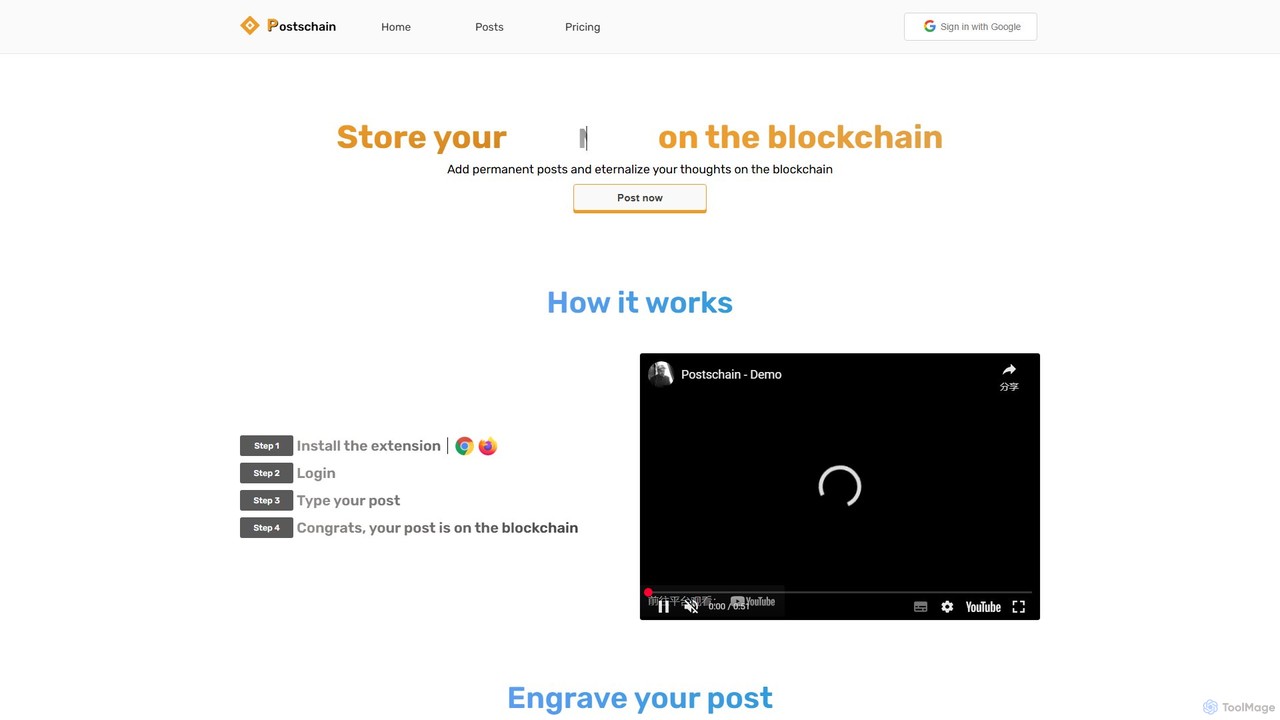
Postschain allows you to permanently store your posts, comments, and thoughts on the blockchain using a simple browser extension. It ensures your content is immutable, uncensorable, and owned by you forever. Bridge the gap between Web2 and Web3, bypass over-moderation, and express yourself freely and honestly on any website.
About Decentralized Social
Decentralized Social platforms are a category of Web3 tools that empower users with greater control over their data, content, and online interactions. Built on blockchain technology and open protocols, these platforms aim to create censorship-resistant and community-governed social environments. They offer an alternative to traditional social media by prioritizing user privacy, data ownership, and transparent governance, fostering a more equitable digital landscape.
Core Features
- User Data Ownership: Users retain full control and ownership of their personal data and content, rather than platforms.
- Censorship Resistance: Content and accounts are less susceptible to arbitrary removal or deplatforming due to decentralized infrastructure.
- Community Governance: Many platforms allow users to participate in decision-making processes through token-based voting.
- Open Protocols & Interoperability: Built on open standards, enabling easier data portability and integration across different applications.
- Creator Monetization: Direct monetization models for content creators, often bypassing traditional intermediaries.
Use Cases
Decentralized Social tools are utilized by individuals seeking privacy-focused communication, content creators desiring direct monetization and ownership, and communities aiming for self-governance. They enable secure, transparent online interactions, fostering niche communities free from central authority, and providing a robust infrastructure for digital identity and reputation management.
How to Choose
When selecting a Decentralized Social platform, consider its underlying blockchain technology, the level of true decentralization and censorship resistance offered, and its community governance model. Evaluate the user experience, the specific features for content creation or communication, and the platform's commitment to data privacy and interoperability with other Web3 services.

Decentralized SocialUse Cases
Empowering Content Creators with Direct Monetization
Content creators, artists, and influencers can leverage decentralized social platforms to directly connect with their audience and monetize their work without intermediaries. By owning their content and audience data, they can offer exclusive access, subscriptions, or NFTs, ensuring a larger share of revenue and freedom from platform-specific algorithms that dictate reach.
Building a Self-Governing Niche Community
Community organizers can leverage decentralized social platforms to establish niche groups with transparent, member-driven governance. By utilizing on-chain voting mechanisms, members can collectively decide on community rules, content moderation policies, and resource allocation, ensuring that the community's direction aligns with its participants' interests, free from external corporate influence.
Building Censorship-Resistant Communication Channels
Journalists, activists, and individuals in regions with strict internet censorship can utilize decentralized social networks to establish secure and resilient communication channels. The distributed nature of these platforms makes it significantly harder for central authorities to block content or shut down accounts, ensuring freedom of speech and information dissemination.
Direct Monetization for Independent Content Creators
Independent artists, writers, and video creators can use decentralized social tools to publish their work and receive direct compensation from their audience. These platforms often integrate cryptocurrency payments or NFT-based monetization, allowing creators to retain a larger share of their earnings and maintain full ownership of their intellectual property, bypassing traditional platform fees and restrictions.
Fostering User-Governed Online Communities
Online communities, DAOs (Decentralized Autonomous Organizations), and niche interest groups can build their presence on decentralized social platforms to ensure transparent and democratic governance. Members can vote on community rules, content moderation policies, and treasury allocations, fostering a sense of collective ownership and reducing conflicts arising from centralized control.
Secure and Private Communication for Activists
Activists and privacy-conscious individuals can utilize decentralized messaging and social networks for secure, end-to-end encrypted communication. The decentralized nature makes it harder for central authorities to monitor, censor, or shut down communication channels, providing a more resilient and private space for organizing and sharing sensitive information without fear of surveillance.
Protecting Personal Data and Digital Identity
Individuals concerned about data privacy and the exploitation of their personal information by tech giants can use decentralized social tools to regain control. These platforms often employ cryptographic methods and self-sovereign identity solutions, allowing users to selectively share data and maintain a private, secure digital identity across various applications.
Managing a Portable Digital Identity and Reputation
Users can create and manage a sovereign digital identity on decentralized social platforms, which is not tied to a single corporate entity. This identity, often linked to a blockchain wallet, allows for the accumulation of reputation and credentials that are portable across various Web3 applications, enabling a consistent and verifiable online presence without relying on centralized identity providers.
Exploring Interoperable Digital Identities and Profiles
Users can create a single, portable digital identity on decentralized social platforms that can be used across multiple Web3 applications and services. This interoperability eliminates the need to create separate profiles for each platform, streamlining the user experience and allowing for a richer, more connected digital presence where reputation and connections are truly owned by the user.
Event Coordination with Transparent Participant Voting
Organizers of online or offline events can use decentralized social tools to coordinate logistics and gather participant input through transparent voting. Decisions regarding event dates, speakers, or topics can be put to a community vote, with results recorded on a blockchain, ensuring fairness and preventing manipulation, thereby fostering greater engagement and trust among attendees.
Rewarding Community Contributions with Tokenized Incentives
Decentralized social platforms often integrate tokenomics to reward users for their valuable contributions, such as creating engaging content, moderating discussions, or participating in governance. This incentivizes high-quality interactions and community growth, transforming passive consumption into active participation where users are compensated for their time and effort.
Data Ownership and Control for Personal Content Archives
Individuals can use decentralized social platforms to archive their personal content, such as photos, videos, and writings, while retaining full data ownership. Instead of content being stored on a platform's servers, it can be stored on decentralized storage networks, giving users the power to decide who can access their data and ensuring it remains accessible even if a platform ceases to exist.