Web3 Best in category 5 results Decentralized Ai AI Tool

Popular AI tools in the Decentralized Ai field of Web3 include Vana、Assisterr、Ocean Protocol、Alaya AI、Assisterr AI, etc., helping you quickly improve efficiency.

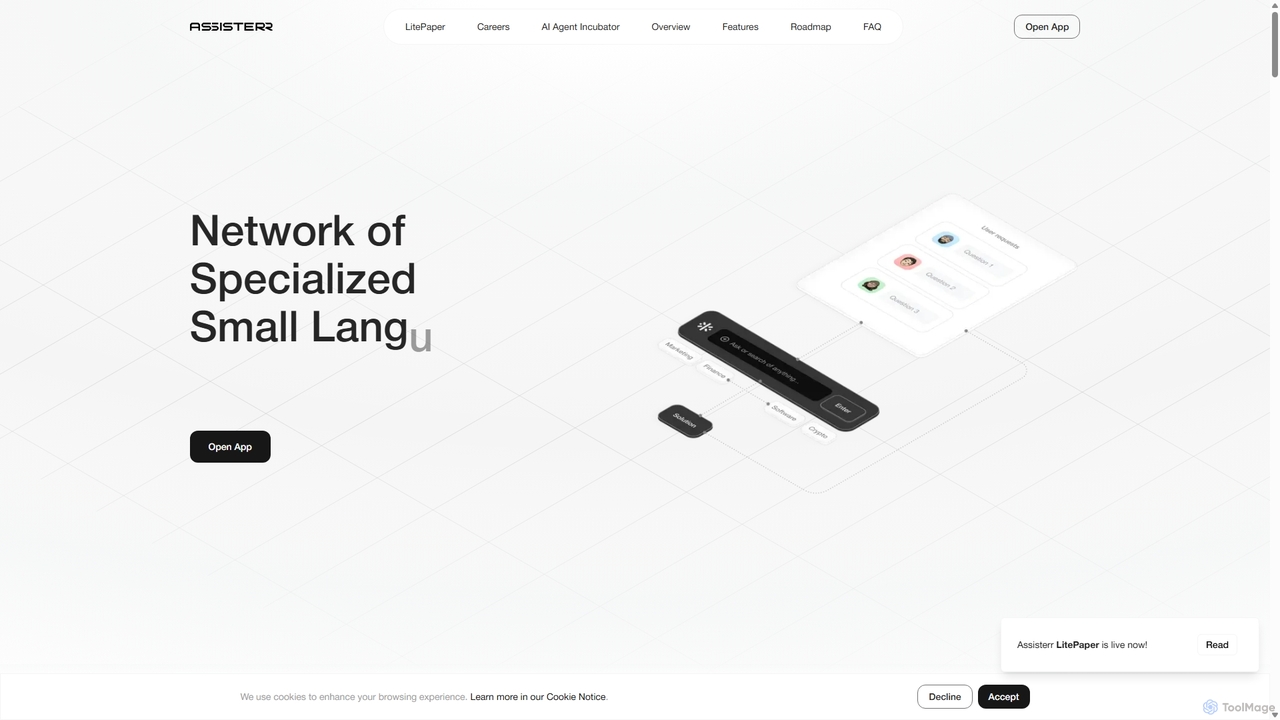
Assisterr AI

Assisterr AI

Assisterr AI is a decentralized platform that empowers users to create, own, and monetize specialized Small Language Models …

2.7K
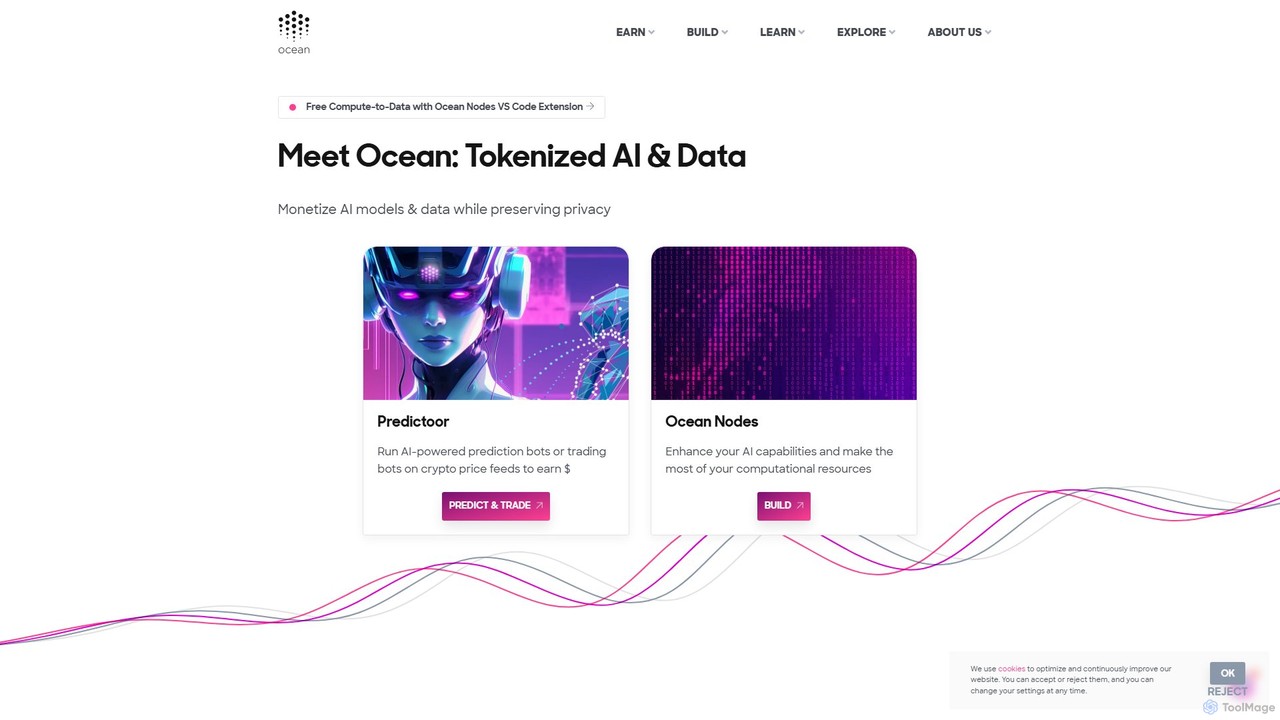
Ocean Protocol

Ocean Protocol

Ocean Protocol is a decentralized data exchange protocol that unlocks data for AI and research. It uses blockchain …

16.5K
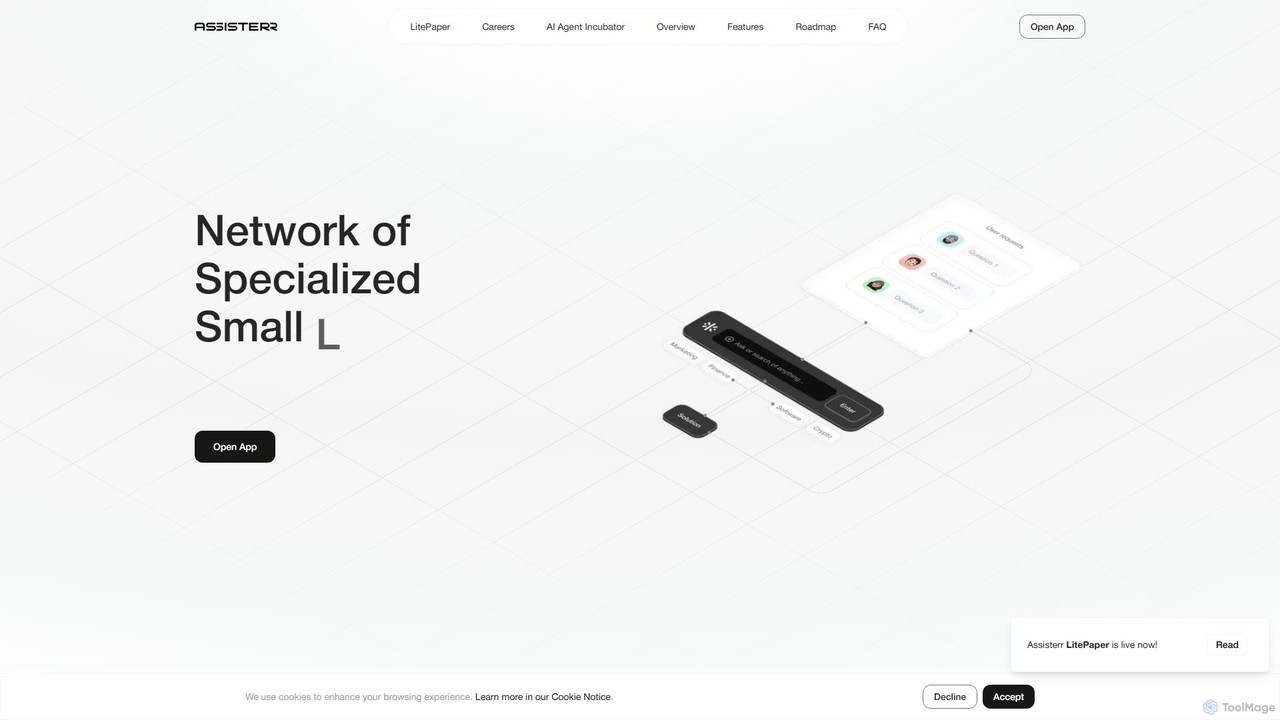
Assisterr

Assisterr

Assisterr is a decentralized platform for creating, owning, and monetizing specialized Small Language Models (SLMs) using no-code tools. …

16.7K
Alaya AI

Alaya AI

Alaya AI is a decentralized AI data platform that connects a global community with AI training tasks. It …

6.0K
Vana

Vana

Vana is a decentralized network for user-owned data. It empowers individuals to contribute their personal data to "Data …

23.3K

About Decentralized Ai

Decentralized AI refers to AI systems that operate on distributed networks, often leveraging blockchain technology, federated learning, or peer-to-peer computation. These tools enable AI models to be trained and deployed without relying on a single central authority, enhancing data privacy, transparency, and censorship resistance. By distributing control and processing, Decentralized AI fosters a more equitable and robust AI ecosystem, empowering users with greater ownership over their data and AI's development.

Core Features

  • Privacy-Preserving Training: Enables AI models to learn from data without centralizing sensitive information, often using techniques like federated learning.
  • Censorship Resistance: Operates on distributed ledgers or networks, making it difficult for any single entity to control, shut down, or manipulate AI services.
  • Transparency & Auditability: AI model updates, data contributions, and decision-making processes can be recorded on immutable ledgers, offering verifiable transparency.
  • Tokenized Incentives: Utilizes cryptocurrency tokens to reward participants for contributing computational resources, data, or model improvements.
  • Community Governance: Allows for collective decision-making and ownership over AI models and platforms, moving away from centralized corporate control.

Applicable Scenarios

Decentralized AI is particularly suited for applications requiring high data privacy, security, and resistance to single points of failure. It is ideal for industries handling sensitive information like healthcare and finance, where data cannot be easily centralized. Additionally, it supports collaborative AI development where multiple parties contribute without fully disclosing their proprietary data, fostering trust and shared innovation.

How to Choose

When selecting a Decentralized AI tool, consider its level of true decentralization and the underlying consensus mechanism. Evaluate its data privacy features, such as encryption and federated learning capabilities, to ensure sensitive information is protected. Assess the community governance model and tokenomics for sustainability and user participation. Finally, consider the scalability and performance of the distributed network to meet your application's demands.

Decentralized AiUse Cases

1

Secure Healthcare Data Analysis

Healthcare providers can use Decentralized AI to train diagnostic models on vast amounts of patient data without ever centralizing sensitive medical records. This allows for collaborative research and improved AI accuracy while strictly adhering to privacy regulations like HIPAA, as data remains on local servers and only aggregated model insights are shared.

2

Federated Financial Fraud Detection

Financial institutions can leverage Decentralized AI to collaboratively build more robust fraud detection models. Banks can train AI on their individual transaction datasets locally, then share only the model updates (not raw data) with a global model. This enhances fraud detection capabilities across the industry while maintaining competitive data privacy.

3

Censorship-Resistant Content Moderation

Decentralized AI can power content moderation systems for social platforms where decisions are made by a community consensus or smart contracts, rather than a single platform owner. This ensures that content policies are transparent, auditable, and resistant to arbitrary censorship, promoting free speech and platform neutrality.

4

Decentralized Supply Chain Optimization

Companies across a supply chain can use Decentralized AI to optimize logistics and inventory management. Each participant (manufacturers, distributors, retailers) can contribute their operational data to a shared, privacy-preserving AI model, improving efficiency and forecasting for the entire chain without revealing proprietary business intelligence to competitors.

5

Privacy-Preserving Personalization Engines

Developers can build AI-powered personalization engines (e.g., recommendation systems) that learn user preferences directly on their devices. Decentralized AI ensures that personal data never leaves the user's control, offering highly tailored experiences while upholding individual privacy, a significant advantage over centralized data collection models.

6

Crowdsourced AI Model Training & Development

Global communities can contribute their idle computational resources and specialized datasets to train complex AI models for public good or commercial projects. Through tokenized incentive mechanisms, participants are rewarded for their contributions, fostering a collaborative and open-source approach to AI development that is resilient and globally distributed.

Decentralized AiFrequently Asked Questions