Web3 Best in category 14 results Blockchain AI Tool

Popular AI tools in the Blockchain field of Web3 include nifty_nft、ChainGPT、Kingdom、SolidityScan、Orbofi、Chirpley、Joba、Ratio1、KOR Protocol、Layly, etc., helping you quickly improve efficiency.

Elentis

Elentis

Elentis is a Web3-powered learning and skill exchange platform. It utilizes AI to create personalized learning paths and …

2.4K
Chirpley

Chirpley

Chirpley is the world's first automated, peer-to-peer influencer marketplace leveraging AI and blockchain. It connects brands with high-engagement …

4.0K
Kingdom

Kingdom

Kingdom is a development platform for creating on-chain, sandbox MMORPGs and persistent virtual worlds with player-controlled economies. It …

87.0K
Joba

Joba

Joba is a decentralized job marketplace leveraging AI and blockchain to connect elite, pre-vetted talent with innovative companies. …

3.7K
ChainGPT

ChainGPT

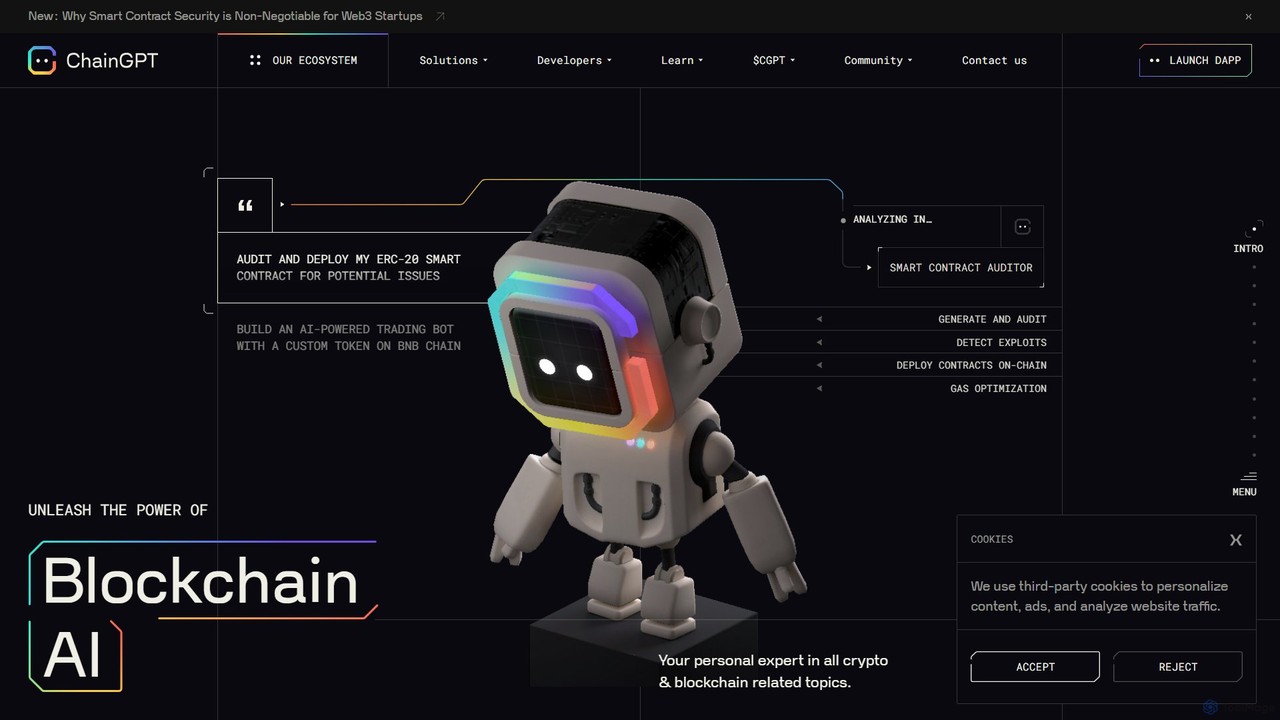
ChainGPT is an advanced AI infrastructure for the Web3, blockchain, and crypto space. It offers a suite of …

104.3K
nifty_nft

nifty_nft

An all-in-one AI-powered platform for creating, managing, and launching entire NFT collections. Generate unique art, automate metadata, and …

21.1M
SolidityScan

SolidityScan

SolidityScan is an AI-powered smart contract vulnerability scanner and auditing tool. It automates the security analysis of Solidity …

37.6K
SecuredAI

SecuredAI

SecuredAI is an AI-powered Web3 security platform that provides professional smart contract security audits in minutes. It offers …

2.4K
Layly

Layly

Layly is a Web3-based AI platform designed to combat misinformation by detecting AI-generated content. It analyzes images to …

2.4K
Ratio1

Ratio1

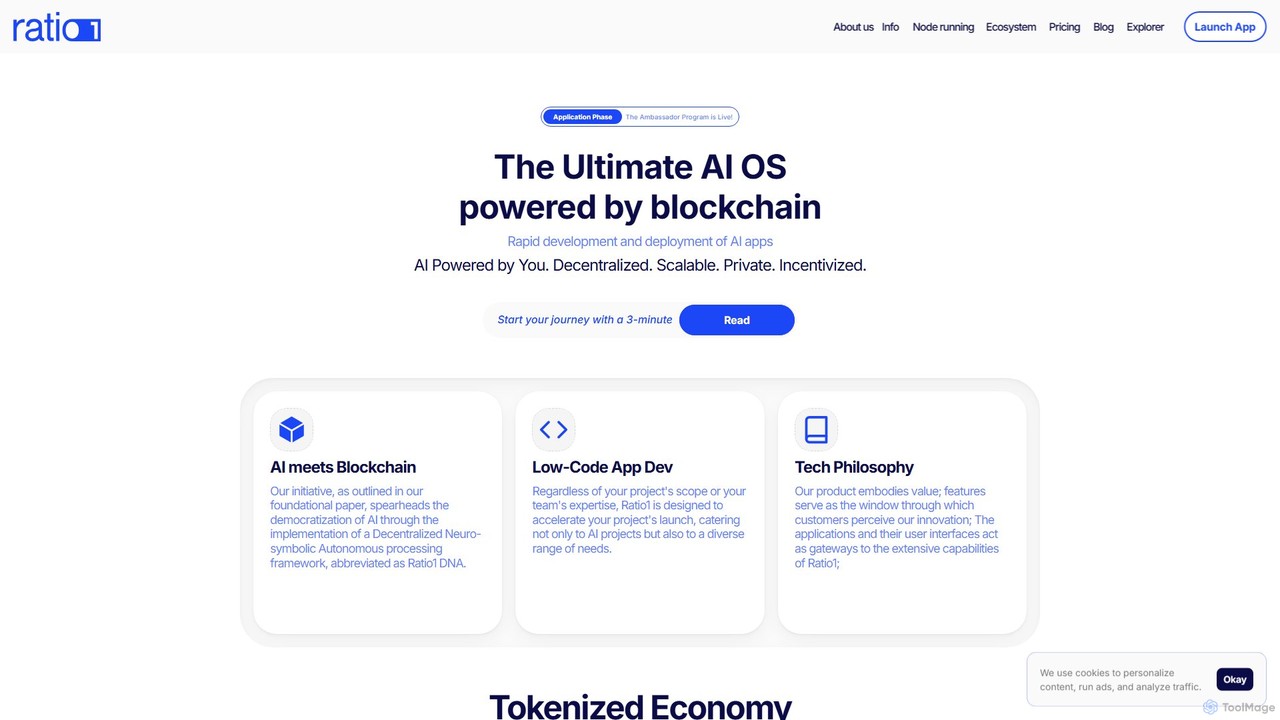
Ratio1 is a decentralized AI operating system powered by blockchain. It creates a global supercomputer by connecting idle …

2.8K
AiBlocks

AiBlocks

AiBlocks is an innovative AI art generator specializing in the creation of digital assets for the Web3 space. …

2.4K
Tearline

Tearline

Tearline is an AI-powered platform that simplifies Web3 interactions. It allows users to execute complex blockchain actions using …

2.4K
KOR Protocol

KOR Protocol

KOR Protocol is a Web3 infrastructure for AI-powered entertainment, empowering creators with on-chain IP protection, transparent licensing, and …

2.4K
Orbofi

Orbofi

Orbofi is a revolutionary platform for creating personalized AI agents and characters. Users can design, deploy, and even …

12.5K

About Blockchain

AI Blockchain tools are applications that integrate artificial intelligence to enhance the security, efficiency, and analytical capabilities of blockchain networks. These tools employ machine learning models to analyze on-chain data, audit smart contracts for vulnerabilities, and detect fraudulent activities in real-time. Their primary value lies in automating complex processes and providing predictive insights that are difficult to achieve through manual analysis, strengthening the integrity and performance of decentralized systems within the Web3 ecosystem.

Core Features

  • Smart Contract Auditing: Automatically scans smart contract code to identify security flaws, logical errors, and potential exploits before deployment.
  • On-Chain Data Analysis: Applies machine learning to transaction data to uncover patterns, predict market trends, and monitor network health.
  • Anomaly & Fraud Detection: Monitors network activity in real-time to flag suspicious transactions or behaviors associated with illicit activities like money laundering.
  • Predictive Modeling: Forecasts crypto asset prices, gas fees, or network congestion based on historical data and market sentiment.
  • AI-Powered Oracles: Provides secure and intelligent off-chain data feeds to smart contracts, verified and processed by AI algorithms.

Use Cases

These tools are primarily used by Web3 developers, DeFi protocol teams, cryptocurrency exchanges, and security auditing firms. For instance, a developer can use an AI auditor to secure their dApp, while an exchange can deploy an AI fraud detection system to protect its users' assets. Financial analysts also leverage these tools for advanced crypto market intelligence.

How to Choose

When selecting an AI Blockchain tool, consider the specific blockchain it supports (e.g., Ethereum, Solana). Evaluate the accuracy and reliability of its AI models, especially for security auditing. Assess its integration capabilities via APIs, its real-time processing speed, and whether its pricing model aligns with your project's scale and budget.

BlockchainUse Cases

1

Automated Smart Contract Security Auditing

A DeFi developer is preparing to launch a new lending protocol on the Ethereum blockchain. Before deployment, they use an AI-powered auditing tool to scan their Solidity code. The tool analyzes the code against a vast database of known vulnerabilities, such as reentrancy attacks, integer overflows, and access control issues. Within minutes, it generates a detailed report highlighting potential risks, suggesting code fixes, and assigning a security score. This process significantly reduces the risk of costly exploits and saves weeks of manual auditing time, allowing the team to deploy with greater confidence.

2

Real-Time On-Chain Fraud Detection

A compliance officer at a major cryptocurrency exchange is tasked with preventing money laundering. They implement an AI-powered transaction monitoring system. This system continuously analyzes all incoming and outgoing transactions, using machine learning to identify patterns indicative of illicit activities, such as rapid fund consolidation from multiple wallets into one (peel chain) or transactions linked to known sanctioned addresses. When a high-risk pattern is detected, the system automatically flags the transaction and alerts the compliance team for immediate review, enabling the exchange to proactively block suspicious funds and comply with regulations.

3

Predictive Crypto Market Analysis

A quantitative analyst at a crypto hedge fund uses an AI platform that specializes in on-chain intelligence. The tool ingests vast amounts of data, including transaction volumes, wallet activities (e.g., whale movements), token flows between exchanges, and smart contract interactions. By applying predictive models, the platform identifies early signals of market sentiment shifts or accumulation patterns that precede significant price movements. For example, it might detect a large outflow of a specific token from exchanges to private wallets, suggesting a bullish, long-term holding sentiment. This provides the analyst with actionable insights to inform their trading strategies.

4

Generating and Optimizing Smart Contracts

A Web3 developer is building a decentralized application (dApp) but is new to a specific blockchain protocol. They use an AI code assistant trained on blockchain development frameworks. The developer provides a natural language prompt describing the desired logic for a smart contract, such as 'create an ERC-721 token with a minting fee and a supply cap'. The AI generates the boilerplate code in Solidity or Rust, including necessary functions and security checks. It can also analyze existing code to suggest gas fee optimizations, helping the developer write more efficient and cost-effective smart contracts, thereby accelerating the development cycle.

5

NFT Authenticity and Valuation Analysis

An NFT collector is considering a high-value purchase on a marketplace. They use an AI-powered NFT analysis tool to assess the asset. The tool scrapes on-chain data to verify the NFT's provenance, transaction history, and smart contract integrity. It also uses machine learning to analyze its traits for rarity compared to others in the collection and scours social media for sentiment analysis. The AI provides a comprehensive report including a risk score for potential wash trading and an estimated valuation range based on historical sales of similar assets. This data-driven approach helps the collector make a more informed purchasing decision.

6

Optimizing Blockchain Network Performance

A validator node operator for a Proof-of-Stake (PoS) blockchain aims to maximize their rewards while ensuring network stability. They use an AI tool that analyzes real-time network data, such as transaction throughput, block validation times, and network latency. The AI model predicts periods of high congestion and recommends optimal adjustments to the node's operational parameters, like transaction prioritization strategies. This helps the operator process transactions more efficiently, reduce the risk of missed blocks (slashing), and ultimately increase their staking rewards, contributing to a more robust and performant network overall.

BlockchainFrequently Asked Questions