ToolMage
Sign in

Best 2 Decentralized Compute AI tools for Infrastructure

Popular Decentralized Compute AI tools in Infrastructure include Arbius and Ratio1, helping you work more efficiently.

Arbius
Paid

Arbius

Arbius is a decentralized peer-to-peer network for machine learning, creating a global marketplace for AI compute. It enables model creators to monetize their work and users to access AI models in a censorship-resistant environment, powered by its native token, AIUS, and a Proof-of-Useful-Work mechanism.

Api
Visits 5.2KFavorites 126Likes 125
Ratio1
Paid

Ratio1

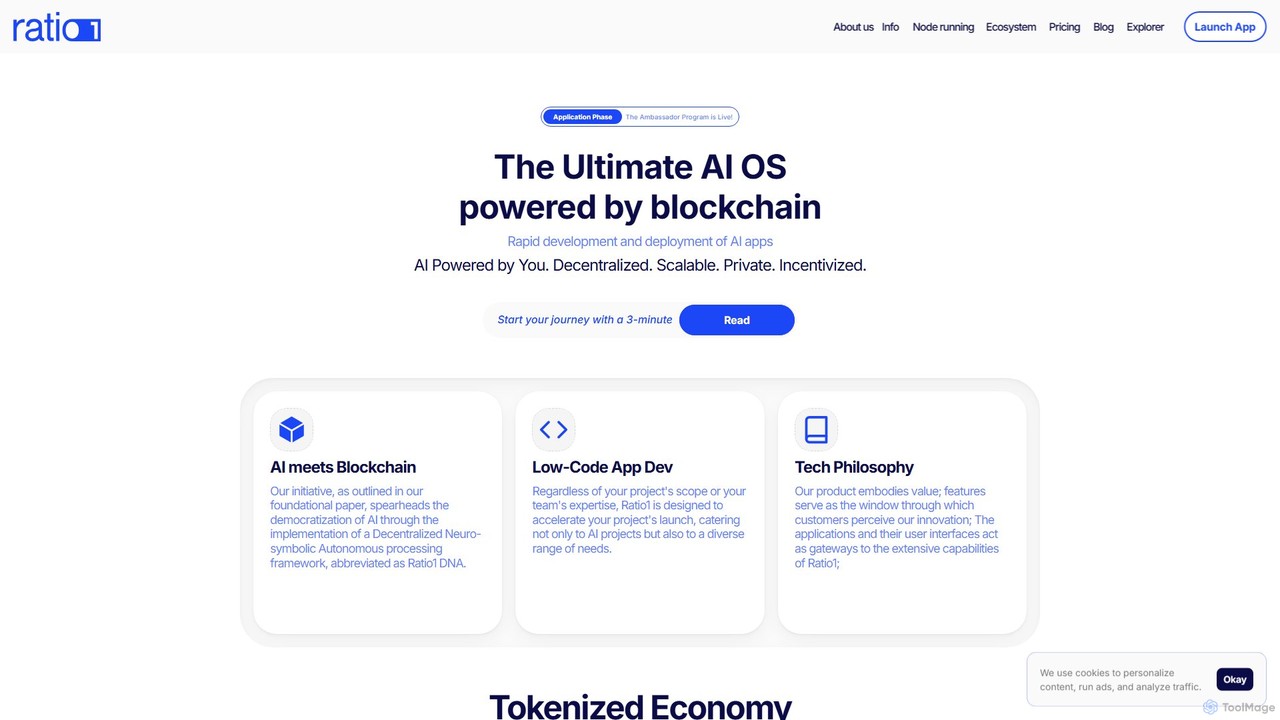
Ratio1 is a decentralized AI operating system powered by blockchain. It creates a global supercomputer by connecting idle devices, allowing users to monetize their hardware or access affordable, scalable GPU compute power for AI applications and development.

Gpu
Visits 4.8KFavorites 122Likes 132

About Decentralized Compute

Decentralized Compute platforms are a class of tools that provide access to a distributed, global network of computing resources like GPUs and CPUs. These platforms operate on peer-to-peer principles, often leveraging blockchain technology to create a marketplace where individuals and data centers can rent out their idle hardware. This approach allows users to access massive computational power for tasks like AI model training and scientific simulations, frequently at a lower cost than traditional centralized cloud providers. The core value lies in democratizing access to high-performance computing, enhancing censorship resistance, and creating a more efficient global market for computation.

Core Features

  • Distributed Resource Pooling: Aggregates computing power from a global network of independent providers, offering a wide variety of hardware.
  • Permissionless Access: Allows anyone to join the network to either supply or consume computational resources without approval from a central authority.
  • Cost-Effective Pricing: Utilizes market dynamics and idle capacity to offer compute resources at highly competitive, often lower, prices.
  • Verifiable Computation: Employs cryptographic methods to ensure that computational tasks are executed correctly and results are trustworthy.
  • Censorship Resistance: Reduces reliance on single corporate entities, making the infrastructure less susceptible to de-platforming or regional restrictions.

Use Cases

Decentralized Compute is particularly valuable for AI/ML developers, researchers, and startups who require significant, scalable GPU power for training large models. It's also used extensively in the media and entertainment industry for 3D rendering and visual effects, where tasks can be parallelized across many nodes. Additionally, scientific researchers leverage these networks for complex simulations in fields like bioinformatics and climate modeling.

How to Choose

When selecting a Decentralized Compute platform, first assess the availability of specific hardware, such as high-end GPUs (e.g., NVIDIA A100 or H100). Evaluate the platform's ease of use, including its documentation, SDKs, and integration with popular frameworks like PyTorch and TensorFlow. Consider the pricing model—whether it's pay-per-use, a bidding system, or token-based—and compare it to your budget. Finally, examine the network's reliability, security measures, and the size of its provider base to ensure stability for your workloads.


Decentralized Compute use cases

1

Training Large AI Models Cost-Effectively

An AI research startup needs to train a new generative language model but lacks the budget for long-term contracts with major cloud providers. Using a decentralized compute platform, they can access a vast pool of high-performance GPUs like NVIDIA A100s on demand. They deploy their training script in a containerized environment, distributing the workload across multiple nodes simultaneously. This parallel processing significantly reduces training time, and the pay-as-you-go, market-driven pricing results in a 50-70% cost saving compared to equivalent centralized services, allowing them to iterate on their model within a tight budget.

2

Accelerating 3D Rendering for Animation Studios

A small animation studio is working on a short film and faces a bottleneck with rendering times on their local machines. Instead of investing in an expensive in-house render farm, they use a decentralized compute network. They package their Blender or Maya project files and distribute individual frames as separate tasks across hundreds of nodes on the network. This massive parallelization turns a rendering job that would take weeks into one that can be completed overnight. The studio only pays for the exact compute time used, making it a flexible and affordable solution for project-based workloads.

3

Running Large-Scale Scientific Simulations

A university research group is studying climate change by running complex atmospheric simulations. Each simulation requires immense computational power and can take days to run on the university's shared cluster. By leveraging a decentralized compute network, the researchers can parallelize their simulations, running hundreds of variations with different parameters simultaneously. This approach drastically reduces the time to insight from months to weeks. The permissionless nature of the network also allows international collaborators to contribute to and access the computational jobs without complex institutional agreements, fostering open scientific collaboration.

4

Powering Decentralized Application (dApp) Backends

A developer is building a decentralized social media application where content moderation is handled by an AI model. To maintain the decentralized ethos of the application, they cannot rely on a centralized cloud provider for AI inference. They integrate their dApp with a decentralized compute network. When a user posts content, a request is sent to the network, which runs the moderation model and returns a result. This ensures that the application's backend logic is as censorship-resistant and distributed as its frontend, providing a truly decentralized user experience.

5

Batch Processing Large Datasets for Analysis

A data science team needs to perform a complex transformation on a terabyte-scale dataset. Running this task on a single powerful machine would be slow and expensive. They use a decentralized compute platform to parallelize the job. The dataset is split into thousands of smaller chunks, and a processing script is run on each chunk by a different node in the network. The results are then aggregated. This MapReduce-style approach allows the team to complete the data processing task in a fraction of the time and cost, accelerating their analytics workflow and enabling faster decision-making.

6

Fine-Tuning Open-Source Models for Specific Tasks

A developer wants to create a specialized image generation model by fine-tuning an open-source model like Stable Diffusion on a custom dataset. This process requires a powerful GPU for several hours but doesn't justify a monthly cloud subscription. They turn to a decentralized compute marketplace, where they can rent a high-end GPU (e.g., an RTX 4090) by the hour at a competitive rate. They can quickly set up their environment, run the fine-tuning job, and then release the machine, paying only for the precise duration of use. This provides an accessible and economical pathway for individuals and small teams to experiment with and build custom AI models.

Decentralized Compute FAQ

What is Decentralized Compute?

Decentralized Compute refers to a network of globally distributed, independently-owned computing resources (like GPUs and CPUs) that can be accessed on demand. Unlike traditional cloud services that rely on centralized data centers owned by a single company, these platforms create a peer-to-peer marketplace. Individuals or data centers contribute their idle compute power to the network, and users can rent it, often at a lower cost. This model promotes greater access to high-performance computing, enhances censorship resistance, and improves overall efficiency by utilizing underused hardware.

How does Decentralized Compute differ from traditional cloud computing (AWS, GCP, Azure)?

The primary difference lies in their architecture and ownership model. Traditional clouds are centralized, with all infrastructure owned and managed by a single corporation. Decentralized Compute is a distributed network of resources from many independent providers. Key distinctions include:

  • Cost: Decentralized platforms can be significantly cheaper by leveraging a competitive market of idle hardware.
  • Access: Access is typically permissionless, allowing anyone to participate without lengthy sign-up processes or corporate approval.
  • Censorship Resistance: With no central point of control, it is much harder for a single entity to shut down or restrict access to computation.
  • Hardware Variety: They often offer a wider, more diverse range of hardware, including consumer-grade GPUs, which can be ideal for specific tasks.

However, traditional clouds often provide a more integrated ecosystem of services, stricter SLAs (Service Level Agreements), and more consolidated support.

Who should use Decentralized Compute platforms?

Decentralized Compute platforms are ideal for a range of users who need flexible, scalable, and cost-effective computational resources. Key user groups include:

  • AI/ML Developers and Researchers: For training large models, running experiments, and performing inference without the high costs of traditional cloud providers.
  • 3D Artists and Animation Studios: To accelerate rendering times for visual effects and animated films by distributing the workload across many machines.
  • Scientific Researchers: For running complex, large-scale simulations in fields like physics, bioinformatics, and climate science.
  • Web3 and dApp Developers: To build truly decentralized applications where the backend computation is as distributed and censorship-resistant as the frontend.
  • Startups and Individuals: Anyone with a limited budget who needs access to high-performance computing on a short-term or intermittent basis.
Is it secure to run code and use data on a decentralized network?

Security is a critical consideration for decentralized compute platforms. While you are running code on hardware owned by others, platforms implement several layers of protection. Common security measures include:

  • Containerization: Your code and data are run in isolated environments (like Docker containers) to prevent them from accessing the host machine's system or data.
  • Encryption: Data is typically encrypted both in transit (while being sent to the node) and at rest (if stored temporarily on the node).
  • Reputation Systems: Providers are often rated based on their reliability and performance, helping users choose trustworthy nodes.
  • Verifiable Computation: Some platforms use cryptographic proofs to verify that the computation was performed correctly without errors or tampering.

While these measures provide strong security, users should still follow best practices and avoid processing highly sensitive, unencrypted data unless the platform explicitly supports confidential computing environments.

How do I choose the right Decentralized Compute platform?

Selecting the best platform depends on your specific needs. Consider the following factors:

  • Hardware Requirements: Check if the platform offers the specific type of GPUs or CPUs you need. Some specialize in high-end AI accelerators (like A100s), while others have a broader range of consumer hardware.
  • Developer Experience: Evaluate the ease of use. Look for clear documentation, user-friendly SDKs, pre-configured templates (like Jupyter notebooks), and integration with tools you already use (e.g., PyTorch, TensorFlow).
  • Pricing Model: Compare costs. Some platforms use a fixed hourly rate, while others have a dynamic spot market where prices fluctuate. Choose the model that best fits your budget and usage patterns.
  • Network Reliability and Size: A larger, more active network of providers generally means better availability, reliability, and more competitive pricing. Check community forums or network status pages for uptime information.