Heurist AI
Heurist AI is a full-stack, decentralized AI infrastructure designed for the on-chain economy. It provides developers with a …
Heurist AI is a full-stack, decentralized AI infrastructure designed for the on-chain economy. It provides developers with a unified API to access numerous AI models and a framework to build composable AI agents. By leveraging a Decentralized Physical Infrastructure Network (DePIN), Heurist connects GPU providers with AI developers, aiming to democratize access to AI computation and foster innovation in Web3.
MeshChain
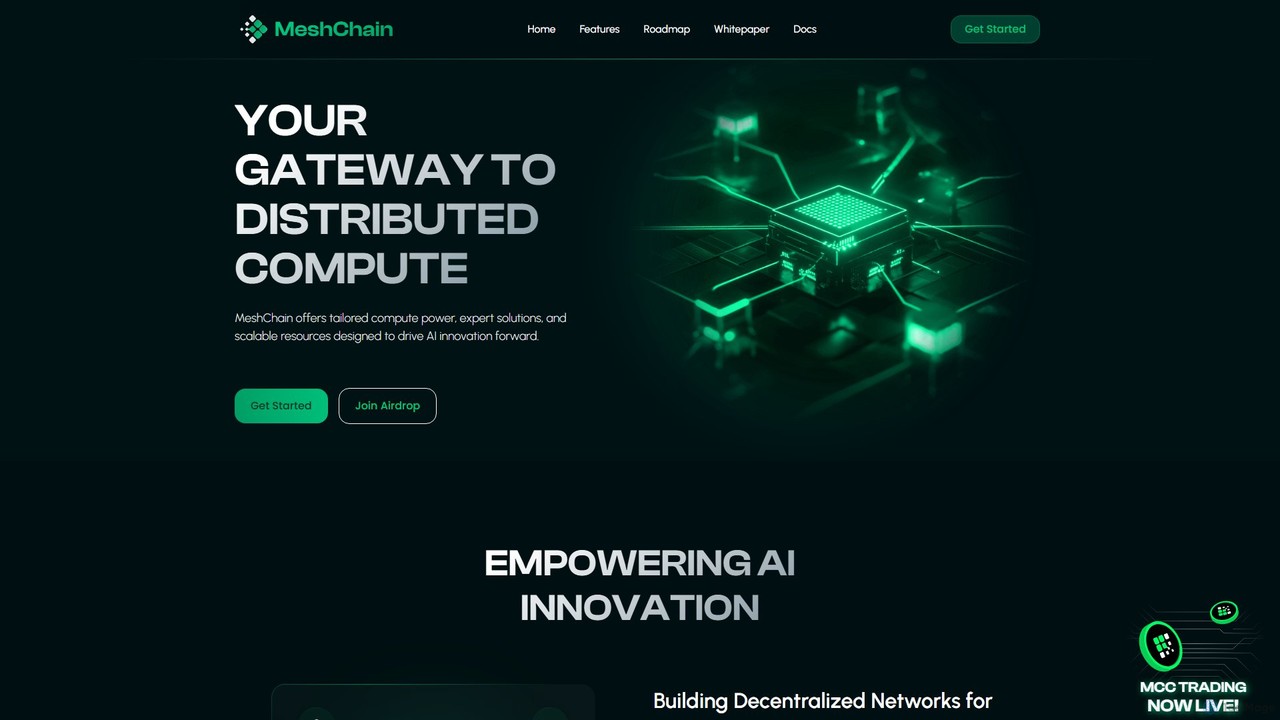
MeshChain is a decentralized compute network that provides scalable and cost-effective resources for AI training, inference, and gaming …
MeshChain is a decentralized compute network that provides scalable and cost-effective resources for AI training, inference, and gaming rendering. By leveraging a global network of distributed nodes, it significantly reduces infrastructure costs and accelerates computational tasks, making advanced technology more accessible to developers, businesses, and gamers.
About Depin
DePIN (Decentralized Physical Infrastructure Networks) refers to a revolutionary Web3 paradigm that leverages blockchain technology and token incentives to build, operate, and maintain real-world physical infrastructure. These networks empower individuals and communities to contribute resources like bandwidth, storage, or energy, fostering a more resilient and transparent infrastructure ecosystem. By decentralizing ownership and governance, DePIN offers a compelling alternative to traditional centralized infrastructure models, driving innovation across various sectors.
Core Features
- Token Incentives: Rewards participants (providers and users) with cryptocurrency tokens for contributing resources or using the network, aligning economic interests.
- Decentralized Governance: Network decisions are often made by token holders, ensuring community-driven development and transparency.
- Real-world Data Verification: Utilizes cryptographic proofs and consensus mechanisms to verify the integrity and availability of physical resources and data.
- Community Ownership: Infrastructure is owned and operated by a distributed network of participants rather than a single entity.
Applicable Scenarios
DePIN tools and platforms are transforming various industries by enabling decentralized alternatives. They are crucial for building community-owned wireless networks, facilitating peer-to-peer energy sharing grids, and creating robust decentralized data storage solutions. Furthermore, DePIN is vital for developing global sensor networks that collect and verify environmental or IoT data, offering transparent and tamper-proof information streams for smart cities and supply chains.
How to Choose
When selecting a DePIN project or tool, consider its underlying infrastructure type (e.g., wireless, storage, energy) and its maturity. Evaluate the tokenomics model for sustainability and incentive alignment, as well as the strength and activity of its community. Assess the technical requirements for participation, including necessary hardware or software, and the ease of integration with existing systems to ensure practical applicability.

DepinUse Cases
Building Community-Owned Wireless Networks
Individuals and local communities can deploy and operate wireless hotspots, contributing to a decentralized global network. Users earn tokens for providing coverage and data transfer services, offering an affordable and resilient alternative to traditional telecom providers. This empowers local control over internet access and fosters digital inclusion in underserved areas.
Decentralized Energy Grid Management
Homeowners with solar panels can sell surplus energy directly to neighbors through a DePIN-powered microgrid, bypassing centralized utilities. Smart meters record energy production and consumption on the blockchain, ensuring transparent transactions and incentivizing renewable energy adoption. This creates a more efficient and resilient local energy ecosystem.
Global Decentralized Data Storage
Developers and enterprises can store large volumes of data across a distributed network of storage providers, enhancing security, redundancy, and censorship resistance. Providers earn tokens for allocating their unused storage space, creating a cost-effective and robust alternative to centralized cloud storage solutions. This is ideal for sensitive data or long-term archiving.
IoT Sensor Data Collection & Verification
Companies can deploy DePIN-enabled IoT sensors to collect environmental data (e.g., air quality, temperature) or track supply chain assets. The data is timestamped and verified on the blockchain, ensuring its integrity and immutability. This provides trustworthy data for smart city initiatives, environmental monitoring, and transparent logistics.
Peer-to-Peer Content Delivery Networks (CDNs)
Content creators and streaming platforms can utilize DePIN to distribute their content more efficiently and cost-effectively. Users contribute their unused bandwidth and storage to cache and deliver content to nearby consumers, earning tokens in return. This reduces latency, improves streaming quality, and lowers operational costs for content providers.
Decentralized VPN Services
Individuals can contribute their internet bandwidth to a DePIN-powered VPN network, allowing others to route their traffic through their node. This creates a highly distributed and censorship-resistant VPN service, where no single entity controls the network. Providers earn tokens for their contribution, offering a more private and secure browsing experience.