ToolMage
Sign in

Best 1 Discovery Engine AI tools for Web3

Popular Discovery Engine AI tools in Web3 include Maester, helping you work more efficiently.

Maester
Free

Maester

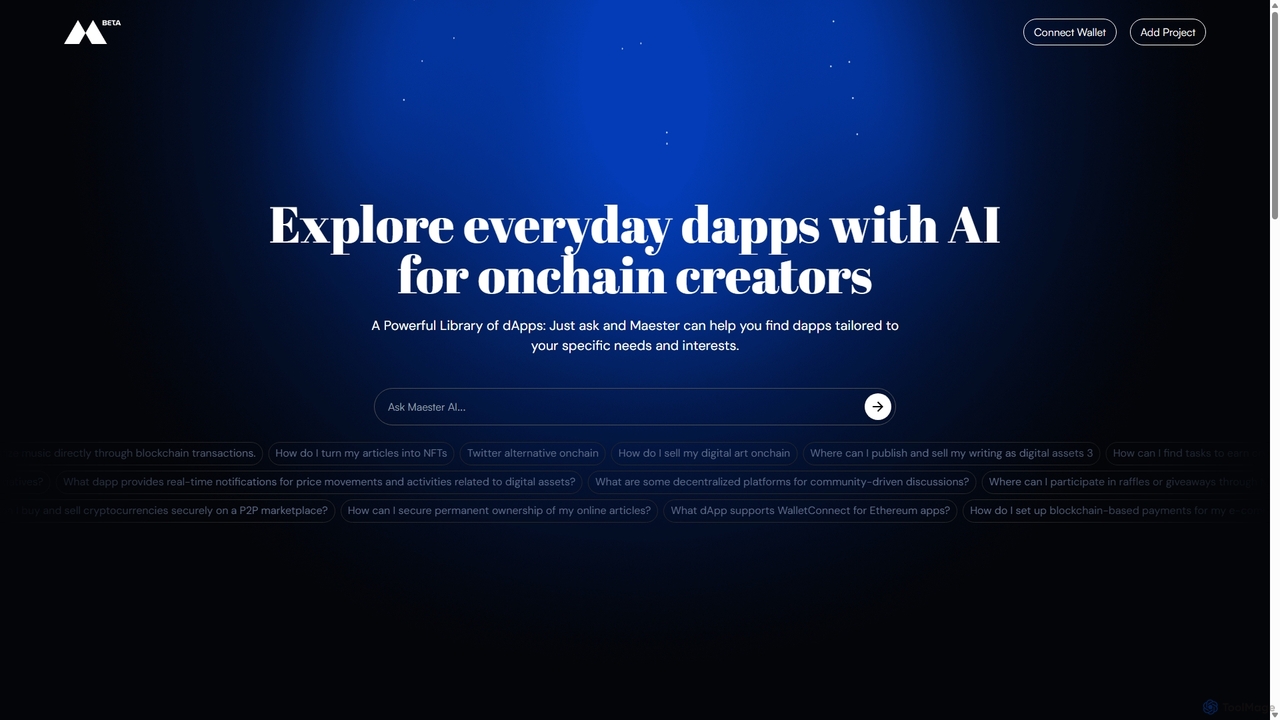
Maester is an AI-powered discovery platform for onchain creators. It uses a natural language interface to help you find the perfect decentralized applications (dApps) for your needs. Whether you're an artist minting NFTs, a writer tokenizing articles, or a developer exploring Web3 tools, Maester simplifies navigating the complex dApp ecosystem. Simply ask a question, and Maester provides tailored dApp recommendations to help you build, create, and monetize in the Web3 space.

Blockchain
Visits 3.4KFavorites 110Likes 117

About Discovery Engine

Discovery Engine in Web3 refers to AI-powered tools designed to help users navigate and find decentralized applications (dApps), NFTs, DAOs, Web3 projects, and information within the blockchain ecosystem. These engines leverage advanced indexing and semantic search capabilities to surface relevant decentralized content that traditional search engines often miss. They provide a crucial gateway for users to explore the vast and rapidly expanding landscape of the decentralized web, enhancing accessibility and participation.

Core Features

  • Decentralized Content Indexing: Scans and organizes data from various blockchains, IPFS, and other decentralized storage solutions.
  • Semantic Web3 Search: Understands user intent to find relevant dApps, NFTs, tokens, and projects based on complex queries.
  • Project & Asset Discovery: Identifies new and trending Web3 projects, NFT collections, and digital assets across multiple chains.
  • Community & Trend Analysis: Aggregates insights from Web3 communities and social platforms to highlight emerging trends and influential projects.
  • Personalized Recommendations: Offers tailored suggestions for dApps, content, or communities based on user activity and preferences.

Applicable Scenarios

Web3 Discovery Engines are essential for anyone looking to delve deeper into the decentralized world. They are used by dApp developers seeking protocols, NFT collectors finding rare art, DAO members researching governance, and investors tracking new projects. These tools streamline the process of finding specific decentralized solutions or exploring the broader Web3 landscape.

How to Choose

When selecting a Web3 Discovery Engine, consider the breadth of its indexed data (e.g., supported blockchains, asset types), the accuracy and relevance of its search results, and its user interface. Evaluate features like community integration, personalization options, and the transparency of its indexing methodology. Prioritize engines that align with your specific discovery needs and privacy preferences within the decentralized ecosystem.

Featured tool rankings

Discovery Engine use cases

1

Discovering Emerging NFT Collections

An NFT collector uses a Web3 Discovery Engine to find new and trending NFT collections across various blockchains. By inputting criteria like art style, rarity traits, or community engagement, the engine surfaces collections that align with their investment or aesthetic interests, helping them identify potential opportunities before they become mainstream and ensuring they don't miss out on valuable digital assets.

2

Researching Decentralized Autonomous Organizations (DAOs)

A Web3 enthusiast interested in decentralized governance uses a Discovery Engine to research active DAOs. They can filter by sector (e.g., DeFi, gaming, social), governance model, or treasury size. The engine provides summaries of DAO proposals, voting records, and community discussions, enabling the user to identify DAOs that align with their values and expertise for potential participation or investment, saving hours of manual research.

3

Identifying Promising Web3 Projects for Investment

A venture capitalist or angel investor uses a Web3 Discovery Engine to identify early-stage Web3 projects with high growth potential. The engine aggregates data on tokenomics, team backgrounds, community sentiment, and development roadmaps. This allows investors to quickly filter through hundreds of projects, conduct initial due diligence, and pinpoint those that meet their investment thesis, significantly reducing the time spent on market research.

4

Finding Specific dApps for Niche Use Cases

A user needs a dApp for a very specific task, such as a decentralized lending protocol for real estate tokens or a Web3-native identity verification service. Traditional search often yields irrelevant results. A Web3 Discovery Engine allows them to use precise keywords and filters to pinpoint dApps that offer these niche functionalities, connecting them directly with the tools they need without sifting through generic blockchain applications.

5

Monitoring Web3 Ecosystem Trends and News

A Web3 content creator or journalist uses a Discovery Engine to stay updated on the latest trends, news, and influential discussions within the decentralized space. The engine aggregates information from various sources, including blockchain explorers, social media, and community forums. This allows them to quickly identify hot topics, emerging narratives, and key opinion leaders, ensuring their content remains relevant and timely for their audience.

6

Onboarding New Users to the Web3 Ecosystem

New users to Web3 often feel overwhelmed by the sheer volume and complexity of decentralized applications and concepts. A Discovery Engine can serve as a guided entry point, offering curated lists of beginner-friendly dApps, educational resources, and explanations of core Web3 concepts. This helps reduce the learning curve, allowing new users to find relevant tools and communities more easily, fostering broader adoption of decentralized technologies.

Discovery Engine FAQ

What is a Web3 Discovery Engine?

A Web3 Discovery Engine is an AI-powered tool designed to help users find and navigate decentralized content within the blockchain ecosystem. Unlike traditional search engines, it indexes dApps, NFTs, DAOs, and other Web3 projects by understanding on-chain data and decentralized storage. Its core purpose is to make the vast and often complex decentralized web more accessible and discoverable for users.

How do Web3 Discovery Engines differ from traditional search engines?

Web3 Discovery Engines fundamentally differ from traditional search engines in their indexing methodology and scope. Traditional engines crawl centralized web pages (Web2), while Web3 engines focus on decentralized data sources like blockchains, smart contracts, and IPFS. They prioritize on-chain verifiable information and community-driven insights, offering a more native and relevant way to explore the permissionless, trustless nature of the decentralized web, which traditional search cannot effectively do.

What are the key benefits of using a Discovery Engine in Web3?

The primary benefits of using a Web3 Discovery Engine include enhanced accessibility to decentralized content, improved relevance of search results for Web3-specific queries, and the ability to uncover emerging projects and trends. These engines help users navigate the complex Web3 landscape more efficiently, reduce information overload, and foster greater participation in the decentralized ecosystem by making it easier to find and engage with dApps, NFTs, and DAOs.

How can I choose the best Web3 Discovery Engine for my needs?

To choose the best Web3 Discovery Engine, consider its indexing coverage (which blockchains and asset types it supports), the accuracy and relevance of its search results, and its user interface for ease of use. Evaluate features like personalization options, community integration, and the transparency of its data sources. Prioritize engines that align with your specific interests, whether you're looking for dApps, NFTs, DAOs, or general Web3 insights, and offer a robust, user-friendly experience.

What types of content or assets can I discover using these engines?

Web3 Discovery Engines allow you to discover a wide array of decentralized content and assets. This includes various dApps across categories like DeFi, gaming, social media, and utilities; diverse NFT collections from art to collectibles; Decentralized Autonomous Organizations (DAOs) for governance and community participation; and emerging Web3 projects, tokens, and protocols. They also help in finding educational resources, community discussions, and market trends relevant to the decentralized ecosystem.