Talent Protocol
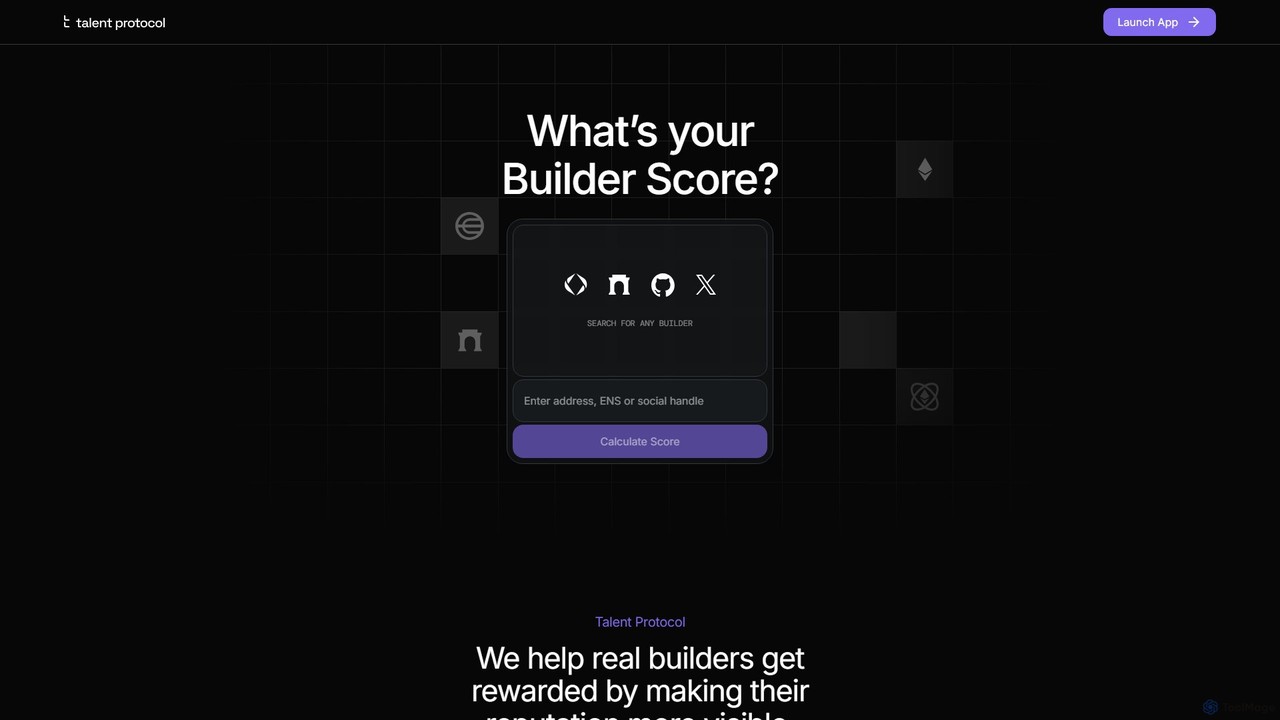
Talent Protocol is a decentralized reputation platform for the new internet. It helps builders and developers make their …
Talent Protocol is a decentralized reputation platform for the new internet. It helps builders and developers make their professional reputation visible and verifiable through a 'Builder Score', unlocking new opportunities and rewards in the Web3 ecosystem.
About Identity
AI Identity tools are a class of Web3 solutions for creating, managing, and verifying digital identities in a decentralized manner. They combine blockchain principles like Decentralized Identifiers (DIDs) and Verifiable Credentials (VCs) with artificial intelligence to enhance security and user control. This approach enables Self-Sovereign Identity (SSI), allowing users to own and manage their personal data without relying on centralized authorities. AI is typically used for fraud detection, biometric verification, and analyzing on-chain behavior to build trust and reputation.
Core Features
- Decentralized Identifier (DID) Management: Create and control unique, globally resolvable digital identifiers independent of any central registry.
- Verifiable Credential (VC) Handling: Issue, hold, and verify tamper-proof digital credentials, such as diplomas, licenses, or certificates.
- AI-Powered Security: Employ machine learning algorithms to detect suspicious activities, prevent Sybil attacks, and perform liveness checks for biometric verification.
- Privacy-Preserving Verification: Utilize technologies like zero-knowledge proofs to prove eligibility or attributes without revealing underlying sensitive data.
- Reputation Systems: Aggregate on-chain and off-chain data to build portable, context-specific reputation scores for users or entities.
Use Cases
These tools are crucial for developers building decentralized applications (dApps), DAOs, and metaverse platforms that require robust user verification. They are used in DeFi for compliant KYC/AML processes, in Web3 gaming for portable player profiles, and in decentralized social media to establish 'proof of humanity' and combat bots.
How to Choose
When selecting an AI Identity tool, consider its blockchain compatibility (e.g., EVM, Solana), the types of credentials it supports, and the sophistication of its AI security features. Also, evaluate the developer experience, including the availability of SDKs and APIs for easy integration, and review its security audits and community trust.
IdentityUse Cases
Secure Onboarding for DeFi Platforms
A DeFi protocol needs to comply with KYC/AML regulations without creating a centralized database of user data. They integrate an AI Identity tool that allows users to generate a Verifiable Credential of their identity. Users submit their documents to the identity provider, where AI algorithms scan for authenticity and perform a liveness check. The user then receives a signed credential they can present to the DeFi platform to prove their verified status, without the platform ever storing their personal ID documents, thus enhancing both security and privacy.
Creating a Portable Web3 Gaming Reputation
A gamer wants to carry their achievements and reputation across multiple blockchain-based games and metaverses. Using an AI Identity tool, they create a master Decentralized Identifier (DID). As they unlock achievements or build a positive community reputation in one game, the game issues Verifiable Credentials to their DID. When joining a new game, they can present these credentials to gain access to exclusive content or guilds, proving their status without linking all their accounts to a single, centralized service like Steam or Google.
Bot Prevention in Decentralized Social Media
A decentralized social media platform wants to ensure its users are real humans to prevent spam and manipulation. It uses an AI Identity service for 'proof of humanity'. New users must complete a quick, AI-driven liveness check (e.g., turning their head) which is cryptographically linked to their new DID. This process issues a credential attesting they are a unique human without storing any biometric data. The platform can then grant posting privileges only to DIDs holding this credential, significantly reducing the impact of bot networks.
Token-Gated Access for Exclusive Communities
A DAO wants to create a private communication channel exclusively for holders of its governance token. Instead of requiring users to connect their wallet and sign a message each time (which can be a security risk), they use an identity system. Users link their wallet to their DID once in a secure environment. The identity tool then issues a time-limited Verifiable Credential confirming token ownership. Users can present this credential to access the private channel, proving ownership without repeatedly exposing their wallet to the application.
Verifying Professional Credentials for DAOs
A developer wants to join a high-profile DAO that requires contributors to have specific technical skills. Instead of a manual resume review, the developer uses an identity wallet to present Verifiable Credentials. One credential, issued by a coding bootcamp, proves their graduation. Another, issued by a previous project's multi-sig wallet, attests to their contribution to a specific smart contract. The DAO can instantly and cryptographically verify these credentials, streamlining the vetting process and ensuring a high standard of contributors without relying on subjective resumes.
Privacy-Preserving Airdrop Eligibility
A new Web3 project wants to airdrop tokens to early adopters of a related protocol, but doesn't want users to publicly link their wallets. They use an AI Identity tool that supports zero-knowledge proofs. Users can generate a proof that their wallet address performed a specific action (e.g., 'swapped on Uniswap before 2021') without revealing the address itself. The AI component can help analyze on-chain data to define fair eligibility criteria. Users submit this proof to claim the airdrop, maintaining their financial privacy while still being rewarded for their participation.