ToolMage
Sign in

Best 1 Nft Generator for Web3

Popular Nft Generator in Web3 include deckee, helping you work more efficiently.

deckee
Freemium

deckee

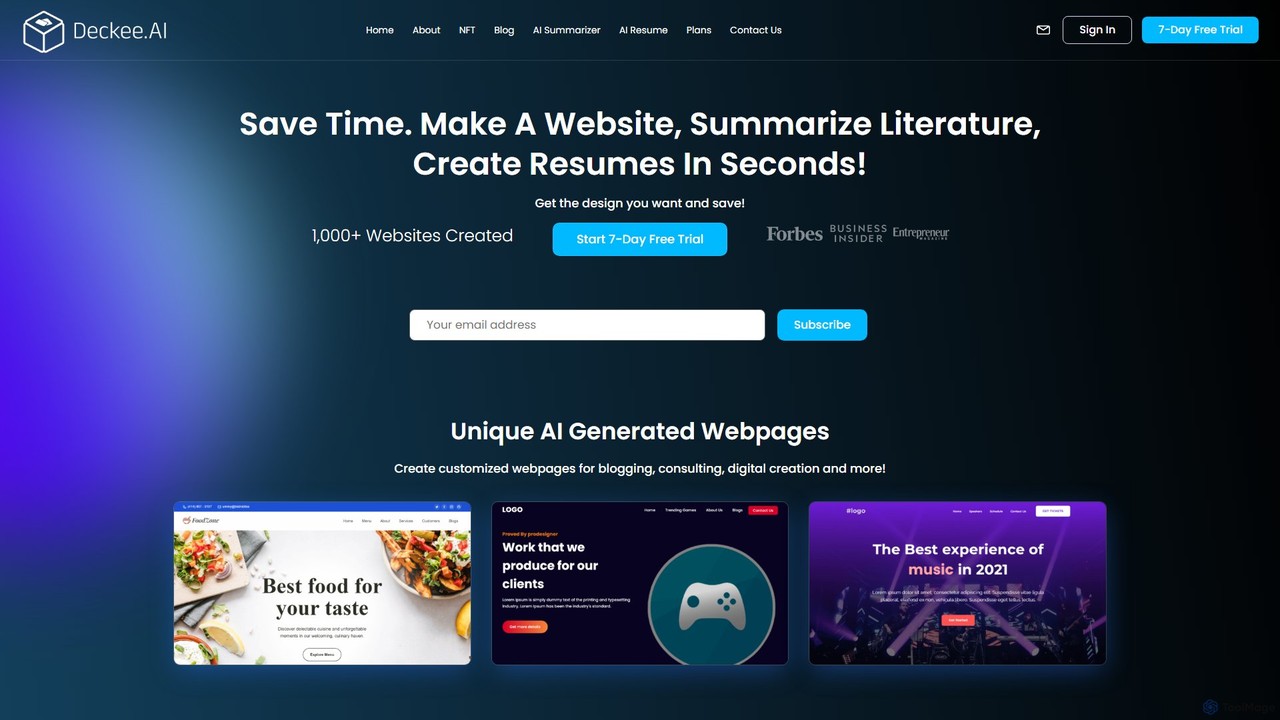
deckee is an AI-powered website builder that enables users to create professional websites, landing pages, and even Web3 marketplaces in seconds. It's designed for small businesses, influencers, and creators, offering features like AI-generated content and imagery, custom domains, and unique NFT/digital collectible creation without needing to code.

Landing Page Builder
Visits 4.2KFavorites 112Likes 105

About Nft Generator

NFT Generator tools leverage artificial intelligence to create unique digital artworks and collections, specifically designed for minting as Non-Fungible Tokens on blockchain platforms. These AI-powered platforms enable users, regardless of artistic skill, to generate diverse visual assets, from abstract art to character profiles, by simply providing text prompts or base images. They streamline the creation process of digital collectibles, making it accessible for artists, brands, and enthusiasts within the burgeoning Web3 space.

Core Features

  • AI Art Generation: Utilizes advanced AI models (e.g., text-to-image) to produce unique visual assets based on user input.
  • Attribute & Rarity Management: Allows defining various traits and their rarity levels for generating large, distinct NFT collections.
  • Batch Generation: Capable of creating hundreds or thousands of unique NFT images and their corresponding metadata simultaneously.
  • Style Customization: Offers extensive options to control artistic styles, color palettes, and visual elements of the generated art.

Applicable Scenarios

NFT Generators are invaluable for digital artists seeking to scale their collections, brands launching unique digital merchandise, and game developers creating distinct in-game assets. They also empower crypto enthusiasts to experiment with personal NFT art creation and community builders to design unique profile picture (PFP) collections for their members.

How to Choose

When selecting an NFT Generator, consider the quality and versatility of its AI art generation models, the extent of customization options for attributes and styles, and its batch generation capabilities. Evaluate its metadata export features for compatibility with major NFT marketplaces and assess the user interface for ease of use, especially for non-technical creators. Pricing models and community support are also important factors.

Featured tool rankings

Nft Generator use cases

1

Rapidly Generate NFT Art Collections

Digital artists and creators can use NFT Generators to quickly produce a large volume of unique artworks for their collections. By inputting a base concept or theme, the AI can generate hundreds or thousands of variations with different attributes, styles, and rarities. This significantly reduces the manual effort and time required to build extensive NFT series, allowing artists to focus more on conceptual design and curation rather than repetitive creation.

2

Create Unique Branded NFTs for Marketing

Brands and marketing agencies can leverage NFT Generators to create distinctive digital assets for promotional campaigns, loyalty programs, or exclusive merchandise. Instead of commissioning individual artists for each piece, they can use AI to generate a consistent collection of branded NFTs that resonate with their audience. This approach offers scalability and cost-effectiveness, enabling brands to engage with customers in innovative Web3 ways and build stronger digital communities.

3

Design Unique In-Game Assets and Characters

Game developers can utilize NFT Generators to create a vast array of unique in-game items, characters, or environmental elements that can be tokenized as NFTs. This allows for true digital ownership for players and opens up new monetization models within blockchain-based games. The AI can generate diverse visual assets based on specific game lore or aesthetic requirements, ensuring consistency while providing endless variations for a dynamic gaming experience.

4

Personalized Profile Picture (PFP) Collections

Individuals and community managers can use NFT Generators to create personalized Profile Picture (PFP) collections for social media or online communities. Users can input specific themes, colors, or attributes to generate a series of unique avatars that reflect their identity or community branding. This fosters a sense of belonging and uniqueness among members, providing them with distinct digital identities that can be owned and traded on the blockchain.

5

Experiment with AI Art Styles for Digital Collectibles

Artists and enthusiasts can use NFT Generators as a creative sandbox to experiment with various AI art styles and algorithms without extensive technical knowledge. By tweaking prompts, parameters, and base images, they can explore different aesthetic outcomes and discover new artistic directions for digital collectibles. This iterative process allows for rapid prototyping and visualization of concepts, fostering innovation in the creation of unique, AI-generated NFTs.

6

Educational Tool for Blockchain and AI Art

NFT Generators serve as an excellent educational tool for individuals interested in understanding the intersection of blockchain technology and artificial intelligence in art creation. Users can learn about NFT attributes, metadata, and the process of generating unique digital assets without needing to write complex code. This hands-on experience demystifies the technical aspects of NFT creation, making it an accessible entry point into the Web3 and AI art landscape for students, educators, and curious minds.

Nft Generator FAQ

What is an NFT Generator?

An NFT Generator is an AI-powered tool that creates unique digital art or collections for Non-Fungible Tokens. It uses algorithms to generate diverse visual assets based on user inputs like text prompts or style preferences. These tools streamline the process of producing large quantities of distinct digital collectibles, making NFT creation more accessible to a wider audience, from artists to brands, within the Web3 ecosystem.

How do I choose the right NFT Generator for my needs?

To choose the right NFT Generator, consider several factors. First, evaluate the quality and versatility of its AI art generation capabilities, including the range of styles and customization options. Second, assess its batch generation features and metadata export compatibility with major NFT marketplaces. Third, look for user-friendliness, especially if you're not technically inclined. Finally, compare pricing models, community support, and any unique features that align with your specific project goals, such as smart contract integration or advanced rarity settings.

What kind of NFTs can AI generators create?

AI NFT generators can create a wide variety of digital collectibles. This includes unique profile picture (PFP) collections with diverse traits, abstract art pieces, generative art based on specific algorithms, and even stylized characters or objects for games and metaverses. The output largely depends on the AI model's capabilities and the user's input, allowing for everything from photorealistic renders to highly stylized, fantastical creations. Many tools also support generating variations of existing images.

How do NFT Generators fit into the broader Web3 ecosystem?

NFT Generators play a crucial role in the Web3 ecosystem by democratizing the creation of digital assets. They act as a bridge, allowing more individuals and entities to participate in the ownership economy by easily generating unique digital content that can be tokenized on blockchains. This facilitates the growth of decentralized applications (dApps), metaverses, and digital marketplaces, contributing to a more vibrant and accessible digital economy where users have greater control over their digital creations and identities.

Do I need coding skills to use an NFT Generator?

Generally, no. Most modern NFT Generators are designed with user-friendliness in mind, offering intuitive graphical interfaces that allow creators to generate NFTs without writing any code. You typically interact with the tool by providing text prompts, uploading base images, or selecting attributes from predefined lists. While some advanced features, like custom smart contract deployment, might benefit from a basic understanding of blockchain, the core generation process is usually accessible to non-technical users, democratizing NFT creation.