OpenUp
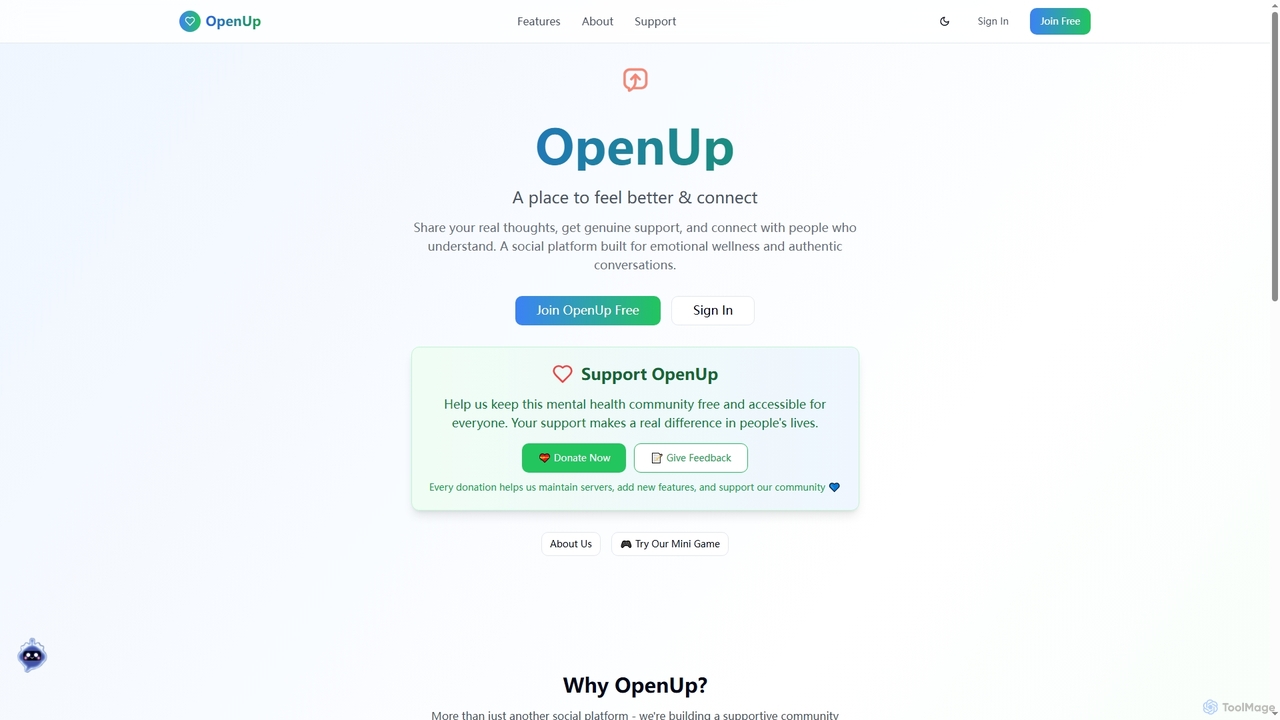
OpenUp is a social platform designed for emotional wellness and authentic conversations, providing a safe space to share …
OpenUp is a social platform designed for emotional wellness and authentic conversations, providing a safe space to share real thoughts, receive genuine support, and connect with understanding individuals. It integrates AI assistance and various wellness tools to foster a supportive community.
Freudly
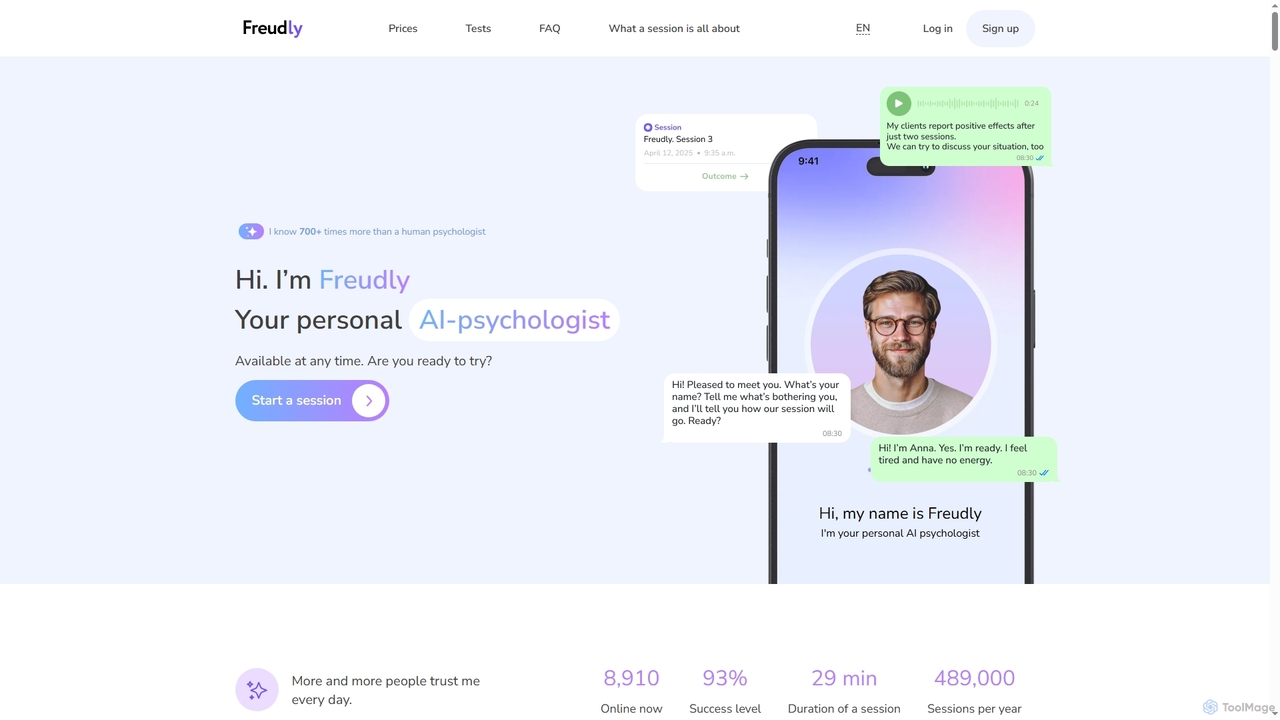
Freudly is an AI-powered personal psychologist offering 24/7 anonymous mental health support. It provides evidence-based therapy sessions, psychological …
Freudly is an AI-powered personal psychologist offering 24/7 anonymous mental health support. It provides evidence-based therapy sessions, psychological tests, emotion journaling, and personalized growth plans to help users understand emotions, manage stress, anxiety, and improve overall well-being.
About Self Improvement
Self Improvement AI tools are a category of applications designed to empower individuals in enhancing their personal growth, productivity, and overall well-being. These tools leverage artificial intelligence to analyze user data, provide personalized insights, and offer adaptive guidance across various aspects of life. They help users set and achieve goals, develop new habits, manage stress, and optimize their daily routines for a more fulfilling life.
Core Features
- Personalized Goal Setting: AI assists in defining realistic and achievable personal and professional goals, breaking them down into actionable steps.
- Habit Tracking & Coaching: Monitors habit formation, provides nudges, and offers data-driven feedback to reinforce positive behaviors.
- Emotional Intelligence Support: Analyzes mood patterns and provides techniques or resources for stress management, mindfulness, and emotional regulation.
- Productivity Optimization: Identifies time-wasting patterns and suggests strategies or tools to enhance focus, task management, and efficiency.
- Skill Development Pathways: Recommends learning resources and tracks progress for acquiring new skills or improving existing ones.
Use Cases
Individuals seeking to proactively manage their personal development often utilize Self Improvement AI tools. For instance, a professional aiming to improve public speaking skills might use an AI coach for practice and feedback. Similarly, someone struggling with procrastination can leverage these tools to identify triggers and implement effective time management strategies. They are also valuable for those looking to build consistent healthy habits, such as regular exercise or meditation, by providing structured support and motivation.
How to Choose
When selecting a Self Improvement AI tool, consider its core focus—whether it's habit formation, productivity, emotional well-being, or skill development—to match your primary need. Evaluate the level of personalization and adaptive learning offered, as more sophisticated AI can provide richer, more relevant insights. Check for data privacy policies, user interface intuitiveness, and integration capabilities with other apps you use. Finally, assess the pricing model and the availability of a free trial to ensure it aligns with your budget and allows for initial testing.

Self ImprovementUse Cases
Cultivating Consistent Healthy Habits
An individual aiming to establish a routine of daily meditation and exercise can use a Self Improvement AI tool to track their progress, receive gentle reminders, and get personalized feedback on their consistency. The AI analyzes their patterns, suggests optimal times, and provides motivational insights, helping them overcome common barriers and solidify new, beneficial behaviors over time.
Enhancing Professional Skill Acquisition
A professional seeking to master a new programming language or improve their leadership skills can leverage AI-powered platforms. These tools recommend tailored learning paths, provide interactive exercises, and track skill development milestones. The AI can identify knowledge gaps and suggest specific resources or practice scenarios, accelerating the learning process and ensuring practical application.
Optimizing Daily Productivity & Focus
Someone struggling with distractions and time management can employ a Self Improvement AI tool to analyze their work patterns and identify peak productivity times. The AI can then suggest personalized focus techniques, block distracting websites during deep work sessions, and help structure daily tasks. This leads to improved concentration, efficient task completion, and reduced procrastination.
Managing Stress and Improving Emotional Well-being
Individuals experiencing high stress levels or seeking better emotional regulation can use AI tools that monitor mood, offer guided meditation, and provide cognitive behavioral therapy (CBT) exercises. The AI learns individual triggers and responses, offering timely interventions, breathing exercises, or journaling prompts to help users process emotions and develop healthier coping mechanisms.
Achieving Personal Financial Goals
An individual aiming to save for a down payment or manage debt can utilize AI-driven financial self-improvement tools. These tools analyze spending habits, create personalized budgets, and offer insights into potential savings. They can set automated savings goals, track progress, and provide nudges or educational content to foster better financial discipline and accelerate goal achievement.
Improving Communication and Social Skills
Someone looking to enhance their interpersonal communication or public speaking abilities can use AI tools that provide real-time feedback. These tools might analyze speech patterns, tone, body language (via webcam), and vocabulary. They offer suggestions for improvement, simulate conversation scenarios, and help users practice and refine their social interactions for greater confidence and effectiveness.