
Freemium
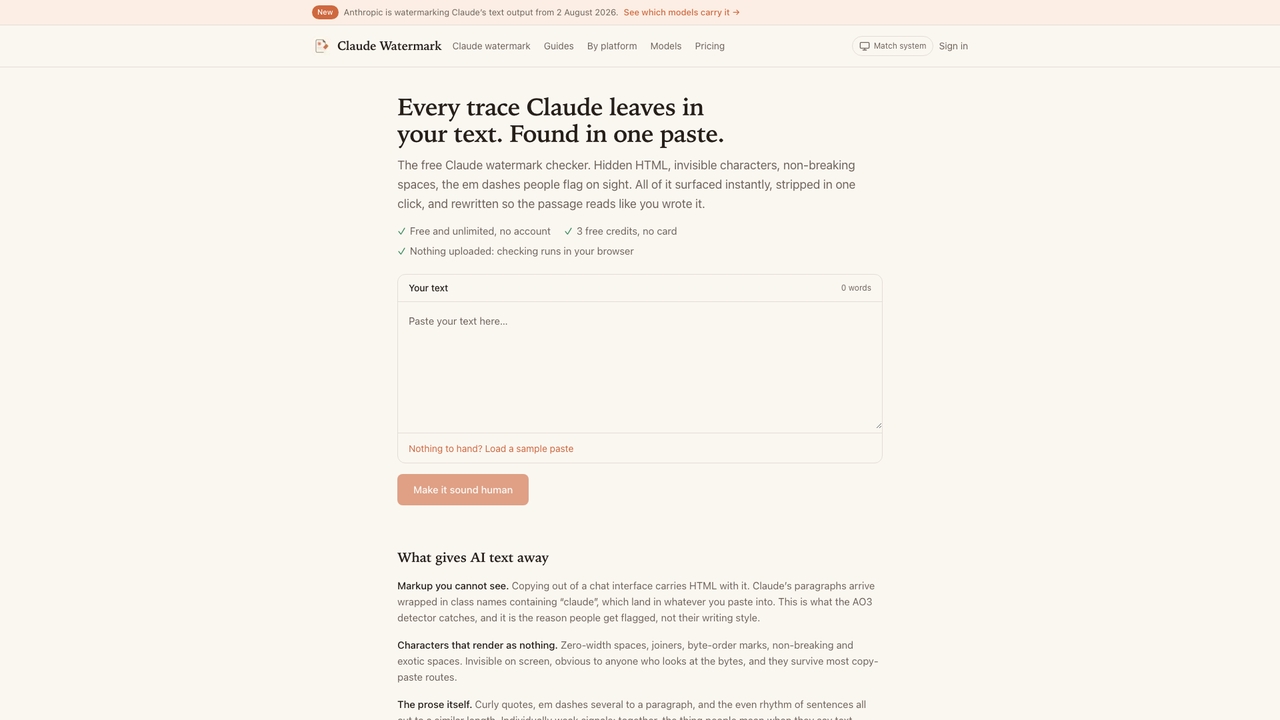
ClaudeWatermark
Free Claude watermark checker that detects hidden HTML, invisible characters, and AI writing traces in one paste. Clean instantly, rewrite naturally. No account needed.
WritingVisits 3.7KFavorites 34Likes 35
Popular Content Analysis AI tools in Writing include Skeptic Reader and ClaudeWatermark, helping you work more efficiently.
Free Claude watermark checker that detects hidden HTML, invisible characters, and AI writing traces in one paste. Clean instantly, rewrite naturally. No account needed.
Writing
Skeptic Reader is a free AI-powered browser extension for Chrome and Firefox that detects biases and logical fallacies in real-time. It analyzes web articles and YouTube transcripts, providing content scores, counter-arguments, and summaries to promote critical thinking and informed online reading.
Fact CheckingContent Analysis tools are AI-powered applications designed to evaluate, interpret, and extract deep insights from textual and multimedia content. These tools leverage advanced natural language processing (NLP) and machine learning to go beyond surface-level checks, identifying patterns, sentiments, and key themes. They help content creators, marketers, and researchers understand the effectiveness and impact of their content, optimizing it for better reach, engagement, and strategic alignment within the broader Writing category.
Content Analysis tools are indispensable for professionals seeking to refine their communication strategies. Content marketers use them to pre-publish optimize blog posts for SEO and readability. Researchers apply them to large datasets to uncover trends and validate hypotheses. Social media managers leverage these tools to understand audience sentiment towards campaigns and refine messaging for maximum impact.
When selecting a Content Analysis tool, consider its analysis depth and the range of metrics offered, ensuring they align with your specific goals (e.g., sentiment, SEO, readability). Evaluate its support for various content types (text, audio transcripts, video captions) and languages. Look for robust integration capabilities with your existing content management or marketing platforms, and assess the flexibility of its reporting and visualization features for actionable insights.
Content marketers utilize AI content analysis tools to meticulously evaluate blog post drafts before publication. By analyzing readability scores, keyword density, sentiment, and topic relevance, they can refine the content to improve search engine rankings, enhance user engagement, and ensure the message resonates effectively with the target audience, ultimately boosting organic traffic and conversions.
Product managers and customer service teams deploy content analysis to process vast amounts of customer reviews, survey responses, and support tickets. These tools identify recurring themes, sentiment trends (positive, negative, neutral), and common pain points, providing actionable insights for product development, service improvements, and enhancing overall customer satisfaction.
Marketing strategists leverage content analysis to dissect competitor articles, advertisements, and social media campaigns. By understanding their tone, key messages, content structure, and engagement drivers, businesses can identify gaps in their own strategy, uncover new content opportunities, and develop more effective campaigns that stand out in the market.
Academic researchers use content analysis tools to ensure their papers maintain a consistent academic tone, identify key themes, and verify originality. This helps in refining arguments, ensuring clarity, and enhancing the overall quality and credibility of their scholarly work, making it more impactful and publishable.
Social media managers employ content analysis to optimize their posts for maximum audience interaction. By analyzing factors like optimal length, keyword usage, emotional appeal, and trending topics, they can predict which content types will resonate most, leading to higher likes, shares, comments, and overall brand visibility across platforms.
Public relations professionals and brand managers monitor online mentions of their brand, products, or campaigns using content analysis. This allows them to quickly gauge public perception, identify positive or negative sentiment trends, and respond proactively to manage reputation, address concerns, or amplify positive feedback across various digital channels.
AI Content Analysis tools are advanced software applications that use artificial intelligence, particularly natural language processing (NLP) and machine learning, to automatically examine and interpret various forms of content. They go beyond basic spell-checking to extract deeper insights such as sentiment, readability, key topics, and audience engagement potential, helping users understand and optimize their written or multimedia material.
While grammar checkers primarily focus on correcting linguistic errors like spelling, punctuation, and syntax, Content Analysis tools offer a much broader and deeper evaluation. They analyze the meaning, tone, structure, and strategic effectiveness of content, providing insights into aspects like sentiment, topic relevance, readability for specific audiences, and SEO performance, rather than just grammatical correctness.
A wide range of professionals can benefit, including content marketers who optimize blog posts for SEO and engagement, social media managers who refine messaging based on sentiment, academic researchers who analyze large text datasets, and customer service teams who identify common customer pain points from feedback. Essentially, anyone needing to understand and improve the impact of their content will find these tools valuable.
Content Analysis tools commonly provide metrics such as Sentiment Score (positive, negative, neutral tone), Readability Index (e.g., Flesch-Kincaid grade level), Keyword Density and Relevance, Topic Clusters, and Engagement Predictors (likelihood of shares, comments). Some also offer Plagiarism Scores, Tone of Voice analysis, and competitive benchmarking data to give a comprehensive overview of content performance.
Absolutely. Content Analysis tools significantly aid SEO by identifying relevant keywords and suggesting optimal placement, assessing content readability for both users and search engine algorithms, and ensuring topic relevance. They can also benchmark your content against top-ranking competitors, highlight areas for improvement, and help structure content to meet search intent, ultimately boosting organic visibility and rankings.