AIDetector
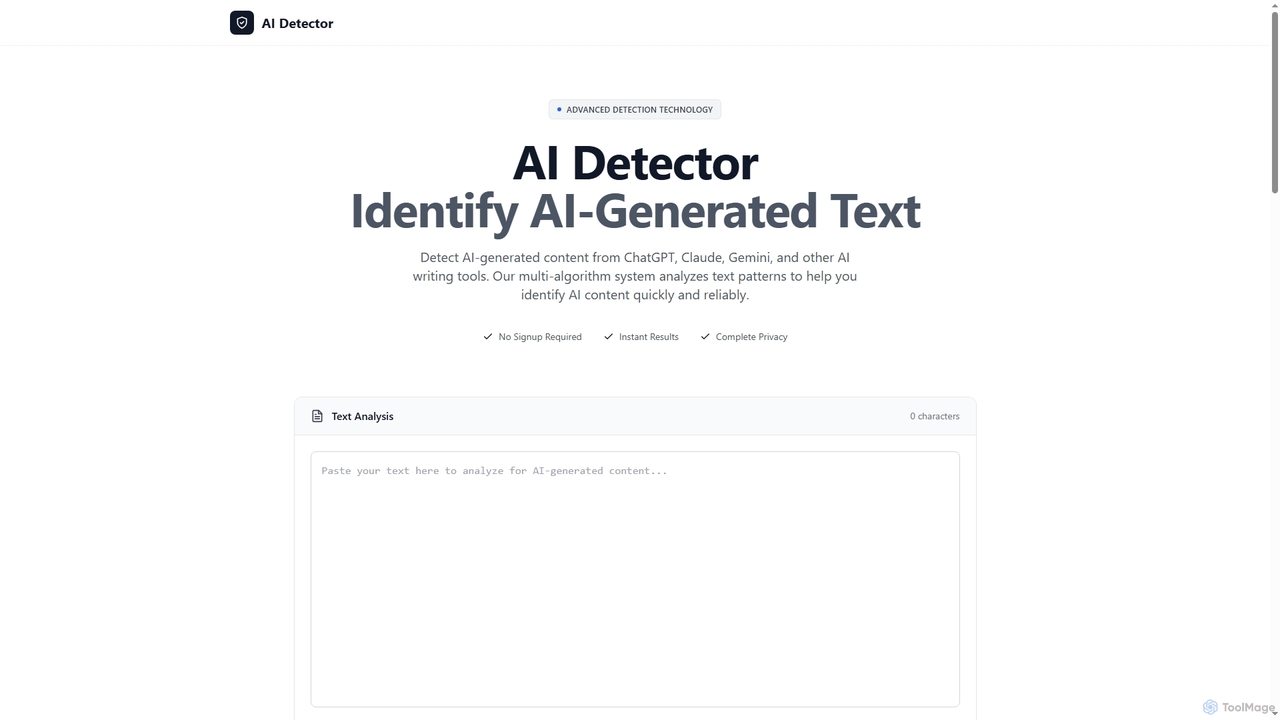
AIDetector is an advanced, multi-algorithm AI content detection tool designed to accurately identify text generated by leading AI …
AIDetector is an advanced, multi-algorithm AI content detection tool designed to accurately identify text generated by leading AI models like ChatGPT, Claude, and Gemini. It offers instant results, ensures complete user privacy, and provides detailed, reliable analysis without requiring any signup.
About Content Verification
Content Verification tools are AI-powered solutions designed to assess the authenticity, originality, and factual accuracy of written content, serving as a critical component within the broader writing and publishing workflow. These tools leverage advanced natural language processing (NLP) and machine learning algorithms to analyze text against vast databases, identifying potential issues such as plagiarism, factual inaccuracies, and even distinguishing between human-written and AI-generated text. Their primary value lies in safeguarding integrity, enhancing credibility, and ensuring the reliability of information across various domains, from academic research to digital marketing.
Core Features
- Plagiarism Detection: Identifies copied or uncredited content by comparing text against billions of web pages, academic papers, and databases.
- AI Content Detection: Analyzes linguistic patterns and stylistic nuances to determine the likelihood of content being generated by artificial intelligence models.
- Fact-Checking & Source Verification: Cross-references claims and data points with reputable sources to flag potential misinformation or unsupported assertions.
- Grammar & Style Consistency: While primarily focused on authenticity, some tools also ensure consistent language use, which indirectly supports content credibility.
- Brand Voice Compliance: Verifies that content adheres to established brand guidelines and tone, crucial for maintaining a consistent corporate image.
Use Cases
Content Verification tools are indispensable for professionals across various sectors. Educators use them to ensure academic integrity in student submissions, while journalists and researchers rely on them to validate sources and fact-check reports before publication. Content marketers and publishers employ these tools to maintain originality, avoid copyright issues, and ensure the factual accuracy of their materials, thereby protecting brand reputation and fostering reader trust. Legal professionals also utilize them for due diligence in document review.
How to Choose
When selecting a Content Verification tool, consider its accuracy and comprehensiveness in detecting various forms of non-original or inaccurate content, including plagiarism and AI-generated text. Evaluate the breadth of its database for comparison, its language support, and the clarity of its reporting features. Integration capabilities with existing writing platforms or content management systems are also crucial for a seamless workflow. Finally, assess the pricing model and the level of customer support offered to ensure it aligns with your budget and operational needs.

Content VerificationUse Cases
Verifying Academic Papers for Originality
University professors and academic institutions utilize content verification tools to scan student essays, theses, and research papers. By comparing submissions against a vast repository of academic works and online sources, these tools identify instances of plagiarism, ensuring academic integrity and promoting original thought among students. This process helps maintain the credibility of educational programs and research output.
Fact-Checking News Articles and Reports
Journalists and news organizations employ content verification tools to rigorously fact-check articles, investigative reports, and breaking news before publication. These tools help cross-reference claims, statistics, and quotes with credible sources, flagging potential misinformation or unsupported statements. This ensures the accuracy and trustworthiness of journalistic content, upholding editorial standards and public confidence.
Detecting AI-Generated Marketing Copy
Marketing agencies and content teams use content verification tools to identify whether marketing copy, blog posts, or social media updates have been generated by AI. This is crucial for maintaining a human touch, ensuring brand authenticity, and avoiding potential penalties from search engines that may de-prioritize purely AI-generated content. It helps balance efficiency with genuine engagement.
Ensuring Brand Consistency Across Content
Large enterprises and content publishers leverage verification tools to ensure that all published content, from website copy to press releases, adheres to established brand guidelines, tone of voice, and factual accuracy. This helps maintain a unified brand image, prevents the spread of inconsistent messaging, and reinforces brand credibility across diverse communication channels and content creators.
Validating Research Data and Sources
Researchers and analysts in scientific, medical, or market research fields use content verification to validate the integrity of data presented in reports and studies. These tools can help confirm the existence and credibility of cited sources, identify potential data manipulation, or flag inconsistencies in reported findings. This is vital for ensuring the reliability and reproducibility of research outcomes.
Preventing Copyright Infringement in Creative Works
Creative professionals, including authors, musicians, and digital artists, use content verification tools to check their works for unintentional similarities or potential copyright infringements before public release. While primarily text-focused, some tools can analyze textual descriptions of creative concepts. This proactive step helps protect intellectual property, avoid legal disputes, and ensure the originality of their creative output.