Sourcer AI
Sourcer AI is a browser extension that provides instant analysis of news articles. It assesses credibility, detects political …
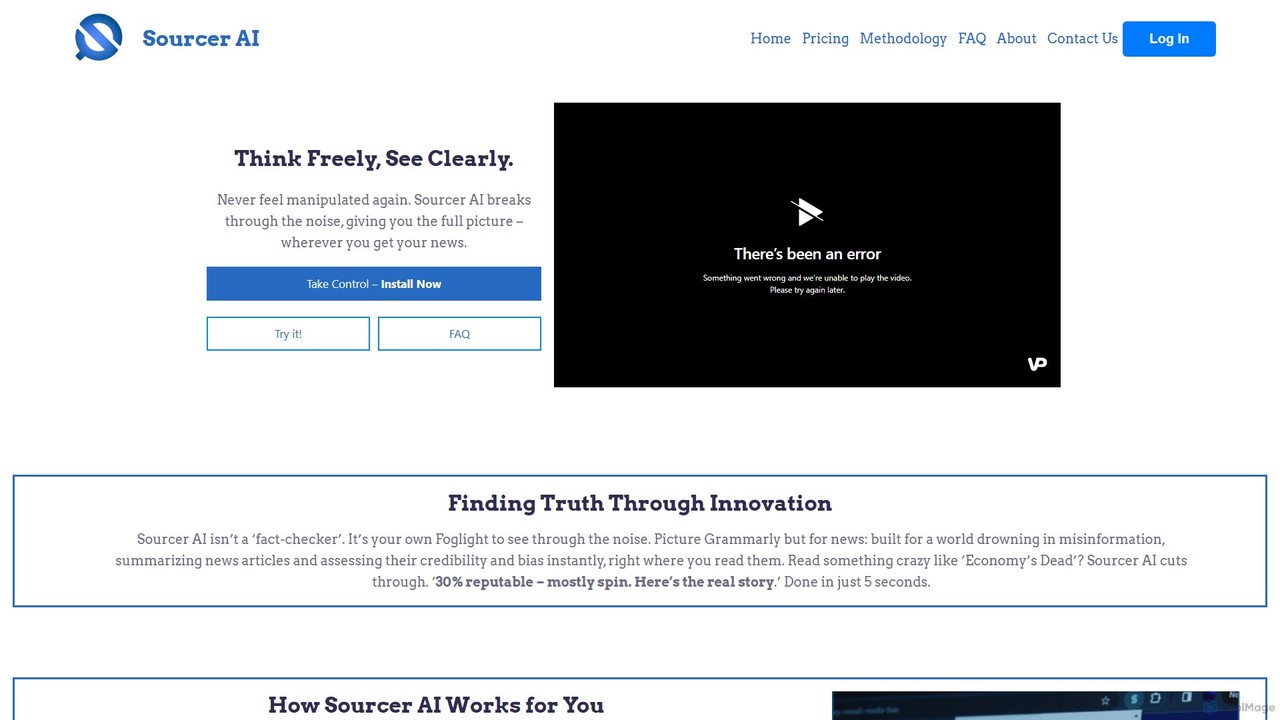
Sourcer AI is a browser extension that provides instant analysis of news articles. It assesses credibility, detects political bias, and generates summaries to help you see through misinformation and understand the full picture, right where you read.
About Fact Checking
AI Fact Checking tools are specialized applications that automatically verify the accuracy of claims and data within written content. Leveraging natural language processing (NLP), these tools scan text to identify verifiable statements and compare them against vast databases of credible sources, such as academic journals, news archives, and official reports. This process is crucial for journalists, researchers, and content creators who need to ensure the integrity and credibility of their work. Unlike general search engines, these tools provide structured verification results, often highlighting specific claims and linking directly to supporting or conflicting evidence.
Core Features
- Claim Detection: Automatically identifies factual statements, statistics, and quotes within a text that require verification.
- Source Cross-Referencing: Compares detected claims against a large index of reliable online sources and databases.
- Credibility Scoring: Provides a confidence score or rating for each claim based on the quality and consensus of the evidence found.
- Evidence Reporting: Visually marks claims and provides direct links to supporting or contradictory sources for transparent review.
- Bias Analysis: Some advanced tools can analyze source language to detect potential political, commercial, or ideological bias.
Use Cases
These tools are essential in professional writing and research environments. Journalists use them to validate sources before publication, academic researchers check the accuracy of data in their papers, and marketing teams ensure statistics in white papers are correct. They are also valuable for students aiming to improve the quality of their assignments and for the general public to assess the reliability of online information.
How to Choose
When selecting an AI Fact Checking tool, consider the breadth and quality of its source database—does it cover academic, journalistic, and scientific sources relevant to you? Evaluate its integration capabilities, such as browser extensions or API access. Assess the clarity of its reports and its ability to handle nuanced or complex claims. Finally, consider the user interface and ease of use for your specific workflow.

Fact CheckingUse Cases
Verifying News Articles Before Publication
A journalist has written an investigative report containing multiple statistics and quotes. Before publishing, the editorial team uses an AI fact-checking tool to ensure every claim is accurate. The tool scans the article, flags verifiable claims like 'GDP grew by 3.1%', and cross-references them with government reports and reputable news archives. The editor receives a report highlighting confirmed, conflicting, or unverified claims, reducing manual verification time by over 70% and minimizing the risk of publishing misinformation.
Enhancing Academic Research Paper Integrity
An academic researcher is writing a thesis with dozens of citations. To ensure the integrity of their work, they use an AI fact-checker to scan the draft. The tool verifies the accuracy of cited statistics, historical dates, and scientific data against its database of scholarly articles and journals. It also helps identify if a source has been retracted or disputed. This process strengthens the overall quality and credibility of the research, ensuring the foundational claims are well-supported and accurate.
Validating Marketing Content and White Papers
A marketing team is creating a white paper on industry trends, filled with market data and growth projections. Publishing inaccurate data could damage the company's reputation. The content is run through a fact-checking tool that identifies all numerical data and industry claims, then searches for corroborating evidence from market research firms and financial reports. The final white paper is published with verified data points, building trust with customers and establishing the company as an authority.
Debunking Misinformation on Social Media
A brand's reputation manager notices false claims about their product spreading online. To quickly rebut this misinformation, they use an AI fact-checker to analyze the claims. The tool rapidly finds authoritative sources, such as third-party lab results or official company statements, that contradict the false narratives. This allows the manager to craft evidence-based responses, effectively neutralizing the negative campaign and protecting the brand's reputation with verifiable proof.
Streamlining Legal and Compliance Document Review
A compliance officer is reviewing a new corporate policy that references specific laws and regulations. Any inaccuracy could have serious legal consequences. The document is processed by a specialized AI fact-checking tool trained on legal databases. The tool verifies case law citations, regulatory code numbers, and financial data against official sources. This accelerates the review process and significantly reduces the risk of human error, ensuring the document meets all legal and compliance standards.
Personal Research and Combating Fake News
An individual reads a compelling but suspicious article online and wants to determine its validity before sharing. They use a browser extension or a simple fact-checking web app to analyze the article's URL or text. The AI tool assesses the source's reputation and verifies key claims against known fact-checking sites and reputable news agencies. This provides an instant credibility assessment, helping the user become a more discerning consumer of information and avoid contributing to the spread of fake news.