ToolMage
Sign in

Best 1 Lyric Generation AI tools for Writing

Popular Lyric Generation AI tools in Writing include Aisong, helping you work more efficiently.

Aisong
Freemium

Aisong

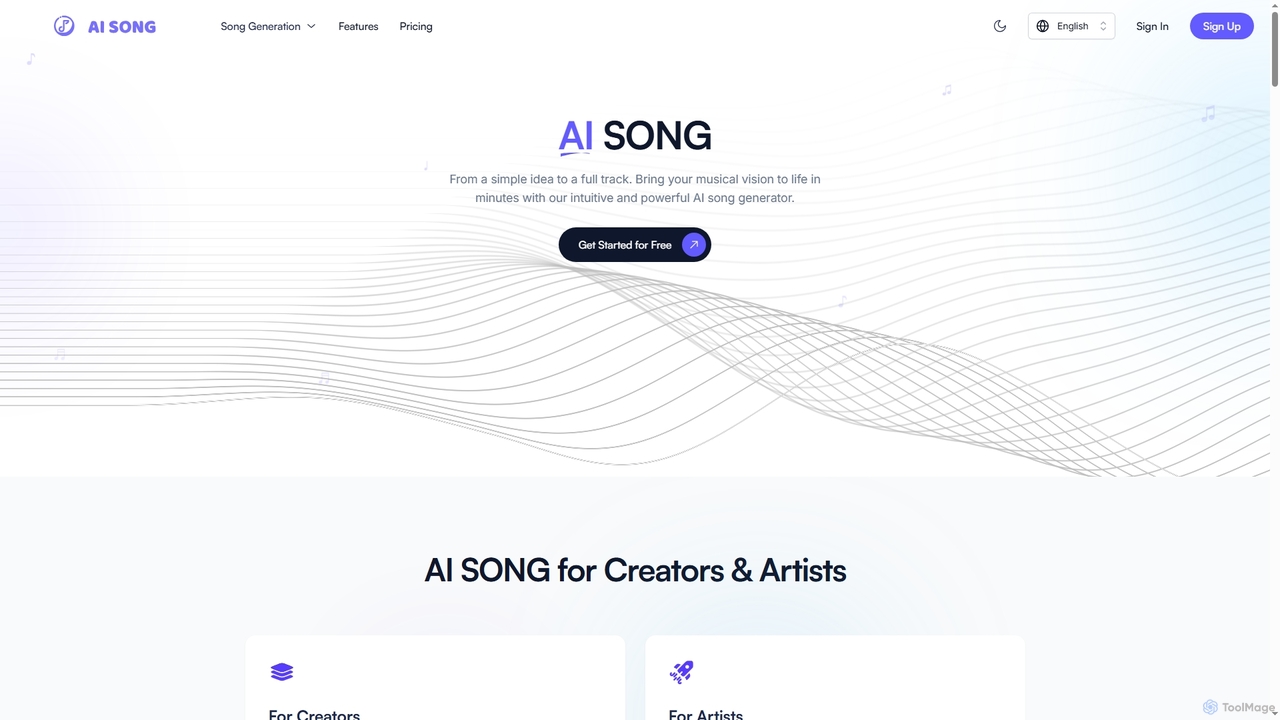
Aisong is an intuitive AI song generator and music production toolkit designed for creators and artists. It enables users to transform simple ideas into full tracks, generate lyrics, remove vocals, and even create music videos, all with the power of artificial intelligence.

Vocal Removal
Visits 5.6KFavorites 107Likes 101

About Lyric Generation

Lyric Generation tools are a specialized class of AI writing assistants designed to create original song lyrics. These tools leverage large language models trained on vast datasets of music, poetry, and literature to understand rhythm, rhyme, and thematic structure. They serve as a creative partner for songwriters, musicians, and producers, helping to overcome writer's block, explore new ideas, and accelerate the songwriting process. Their key advantage lies in the ability to generate context-aware lyrics tailored to specific genres, moods, and structural requirements.

Core Features

  • Genre and Mood Specification: Generate lyrics that match specific musical styles (e.g., Pop, Rock, Hip-Hop) and emotional tones (e.g., happy, melancholic, romantic).
  • Rhyme and Meter Control: Define rhyming schemes (like AABB or ABAB) and syllable counts per line to fit a pre-existing melody or rhythm.
  • Thematic Idea Expansion: Provide a core theme, keyword, or story prompt, and the AI will build a complete lyrical narrative around it.
  • Structural Generation: Automatically create standard song components, including verses, choruses, bridges, and outros, ensuring a coherent structure.
  • Collaborative Refinement: Suggest alternative words, rephrase lines, and offer different creative directions to help polish generated lyrics.

Use Cases

These tools are primarily used by professional songwriters, music producers, hobbyist musicians, and marketing teams. For instance, a pop artist can rapidly prototype chorus ideas, a film composer can generate thematic lyrics for a soundtrack, or an advertising agency can create catchy jingles for a campaign.

How to Choose

When selecting a Lyric Generation tool, consider its genre versatility and whether it supports your style. Evaluate the level of customization for rhyme, meter, and structure. Check for integrations with music production software (DAWs) if needed, and assess the overall quality and creativity of the lyrical output to ensure it aligns with your artistic vision.

Lyric Generation use cases

1

Overcoming Songwriter's Block

A solo musician is struggling to write the second verse for their new song, feeling uninspired. They input the existing chorus and the song's theme ('a bittersweet memory') into an AI lyric generator. The tool provides several verse options in the same rhyming scheme and emotional tone. One of the generated lines sparks a new narrative direction, allowing the musician to break through their creative block and complete the song in under an hour, saving days of frustration.

2

Rapid Prototyping for Music Producers

A music producer has a tight deadline to deliver a demo track to a pop artist. The melody and instrumental are complete, but they need placeholder lyrics for a guide vocal. Using a lyric generator, they input the song's tempo, key, and a theme of 'summer romance'. Within minutes, they have a full set of structured lyrics (verse-chorus-verse-chorus-bridge-chorus) that fit the song's rhythm. This allows them to record a compelling demo immediately, without waiting for a professional lyricist.

3

Creating Jingles for Advertising

A marketing agency is tasked with creating a short, catchy jingle for a new energy drink brand. The key messages are 'natural ingredients' and 'all-day energy'. The team uses an AI lyric generator, specifying a 'Pop' genre and an 'upbeat' mood. They input the key messages as prompts. The tool generates dozens of short, rhyming options. The team selects the most memorable one, slightly refines it, and presents a ready-to-produce jingle to the client, reducing brainstorming time by over 80%.

4

Educational Tool for Music Students

A music theory teacher wants to demonstrate different song structures to their class. Instead of just explaining concepts like AABA or Verse-Chorus-Bridge, they use a lyric generator live in the classroom. They ask students for a theme, like 'first day of school', and then instruct the AI to generate lyrics in each specific structure. This provides an immediate, tangible example of how structure shapes a song's narrative, making a complex topic more engaging and easier for students to understand and apply in their own compositions.

5

Personalized Songs for Special Occasions

A user wants to create a unique and heartfelt gift for their partner's anniversary. They are not a musician but have many shared memories. They use a lyric generator and input key details: the city where they met, an inside joke about a 'singing cat', and the feeling of 'growing together'. The AI weaves these specific elements into a coherent, rhyming song in a 'Folk Ballad' style. The user can then read these lyrics as a poem or even commission a musician to set them to music, creating a deeply personal and unforgettable gift.

6

Generating Content for Social Media

A social media content creator wants to produce a short, viral video for platforms like TikTok or Instagram Reels. They need a catchy, rhyming sound to go with their video concept. They use a lyric generator, inputting trendy keywords like 'main character energy' and 'summer vibe'. The tool generates multiple 15-second lyrical hooks. The creator selects the best one, records a simple audio track, and builds their video around it. This process allows for rapid creation of original audio content, increasing the potential for their video to become a trend.

Lyric Generation FAQ

What is AI Lyric Generation?

AI Lyric Generation refers to the use of artificial intelligence tools to create original song lyrics. These tools are powered by large language models (LLMs) that have been trained on extensive databases of songs, poetry, and literature. They can understand and replicate elements like rhyme schemes, meter, song structure, and thematic development. Unlike general writing tools, they are specifically designed for musical creativity, helping users generate ideas, write verses, or craft entire songs from a simple prompt.

How to choose the right AI lyric generator?

Choosing the right tool depends on your specific needs. Consider the following factors:

  • Genre Specialization: Does the tool excel in the genres you work with, such as pop, hip-hop, or rock? Some are generalists, while others are fine-tuned for specific styles.
  • Level of Control: Look for features that allow you to control rhyme scheme, syllable count, and song structure. More control is better for fitting lyrics to an existing melody.
  • Creative Quality: Test the tool to see if its output is creative and avoids clichés. The best tools act as a co-writer, offering surprising and inspiring ideas.
  • Ease of Use: The interface should be intuitive and facilitate a creative workflow, not hinder it with technical complexity.
What's the difference between a lyric generator and a general AI writer?

The primary difference lies in their training data and specialized features. A general AI writer (like ChatGPT) is trained on a vast range of text from the internet and is a jack-of-all-trades. A dedicated AI lyric generator is a specialist. It is fine-tuned on a dataset heavily focused on song lyrics, poetry, and music theory. This specialization allows it to offer specific controls crucial for songwriting, such as setting rhymes, controlling meter (syllables per line), and generating content in song structures like 'verse' or 'chorus', which general AI writers typically lack.

Can AI-generated lyrics be copyrighted?

The copyright status of AI-generated content is a complex and evolving legal area. In many jurisdictions, including the United States, copyright protection is typically granted only to works created by humans. Purely AI-generated lyrics with no human creative input may not be eligible for copyright. However, if a human significantly modifies, arranges, or curates the AI's output, the resulting work might be copyrightable. It is crucial to check the terms of service of the specific AI tool you use, as some may claim ownership of the output. For commercial use, consulting with a legal professional is recommended.

Who can benefit from using AI lyric generators?

A wide range of creators can benefit from these tools. This includes:

  • Professional Songwriters: To quickly brainstorm ideas, overcome writer's block, and explore new lyrical directions.
  • Music Producers: To create placeholder lyrics for demo tracks, allowing vocalists to record guide tracks without delay.
  • Hobbyist Musicians: For individuals who are skilled with instruments but less confident in their lyric-writing abilities.
  • Marketing Professionals: To generate catchy jingles and slogans for advertising campaigns.
  • Educators and Students: As a teaching aid to demonstrate song structures and lyrical techniques in a practical way.