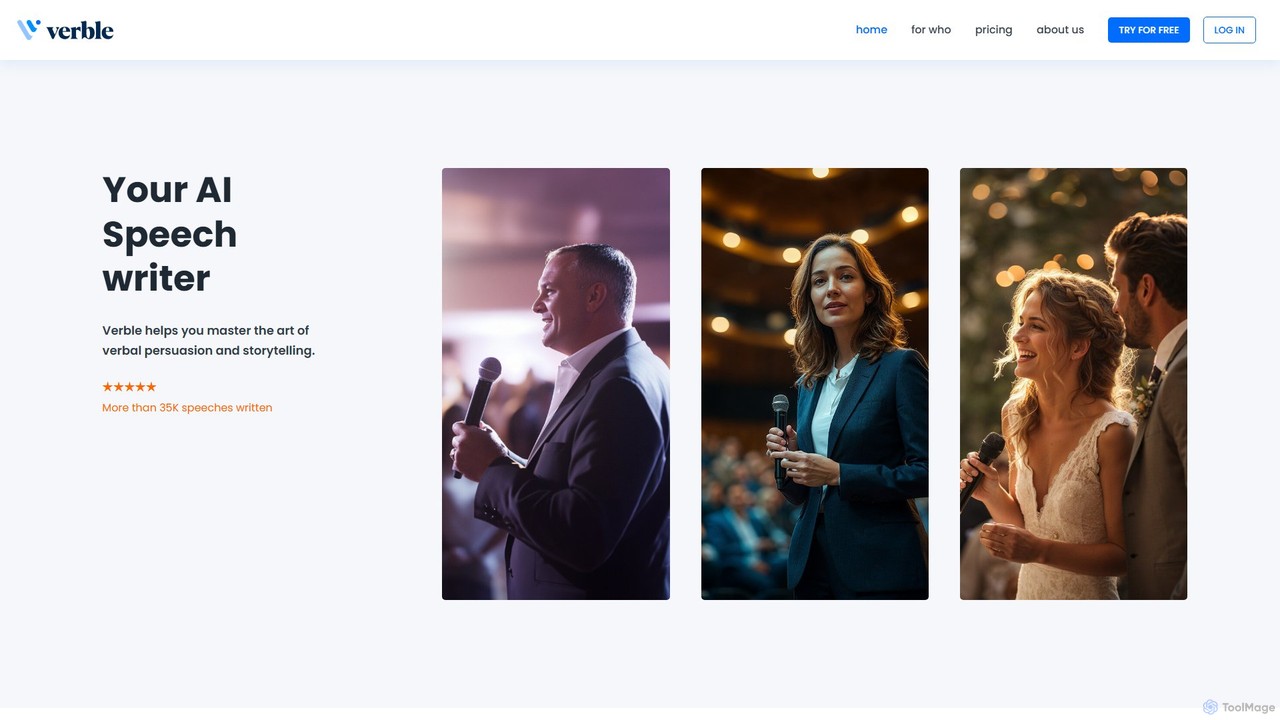
AI Speechwriting tools are specialized applications designed to generate, structure, and refine compelling speeches for oral delivery. They utilize advanced natural language processing and rhetorical models to analyze audience characteristics, desired tone, and core messages, transforming basic ideas into coherent and persuasive narratives. These tools are highly effective for crafting impactful presentations for various occasions, from corporate keynotes to personal toasts, by ensuring clarity, emotional resonance, and logical flow. They distinguish themselves from general writing tools by incorporating features like pacing suggestions and persuasive frameworks tailored for public speaking.
Core Features
- Audience Adaptation: Analyzes audience demographics and context to tailor language, complexity, and relevant examples.
- Rhetorical Structuring: Generates speeches using classic persuasive structures like problem-solution, Monroe's Motivated Sequence, or chronological narratives.
- Tone and Style Customization: Allows users to set a specific tone (e.g., inspirational, humorous, formal) and refines the language to match.
- Delivery Assistance: Provides suggestions for pauses, emphasis, and estimated speaking time to improve oral delivery.
- Content Augmentation: Suggests relevant quotes, statistics, or anecdotes to strengthen key arguments and engage listeners.
Use Cases
These tools are widely used by business executives for investor pitches and all-hands meetings, politicians for campaign rallies, and students for debates or presentations. They are also valuable for individuals preparing for special events such as wedding toasts, eulogies, or award acceptance speeches, helping to articulate thoughts clearly and emotionally.
How to Choose
When selecting an AI speechwriting tool, evaluate its ability to customize content for different audiences and tones. Consider the variety of rhetorical structures and templates it offers. Assess the quality of its delivery aids, such as timing estimates and pacing cues. Also, check for language support and review the data privacy policy, especially if dealing with sensitive or confidential speech topics.