ToolMage
Sign in

Best 1 Story Teller AI tools for Writing

Popular Story Teller AI tools in Writing include iChatbook, helping you work more efficiently.

iChatbook
Freemium

iChatbook

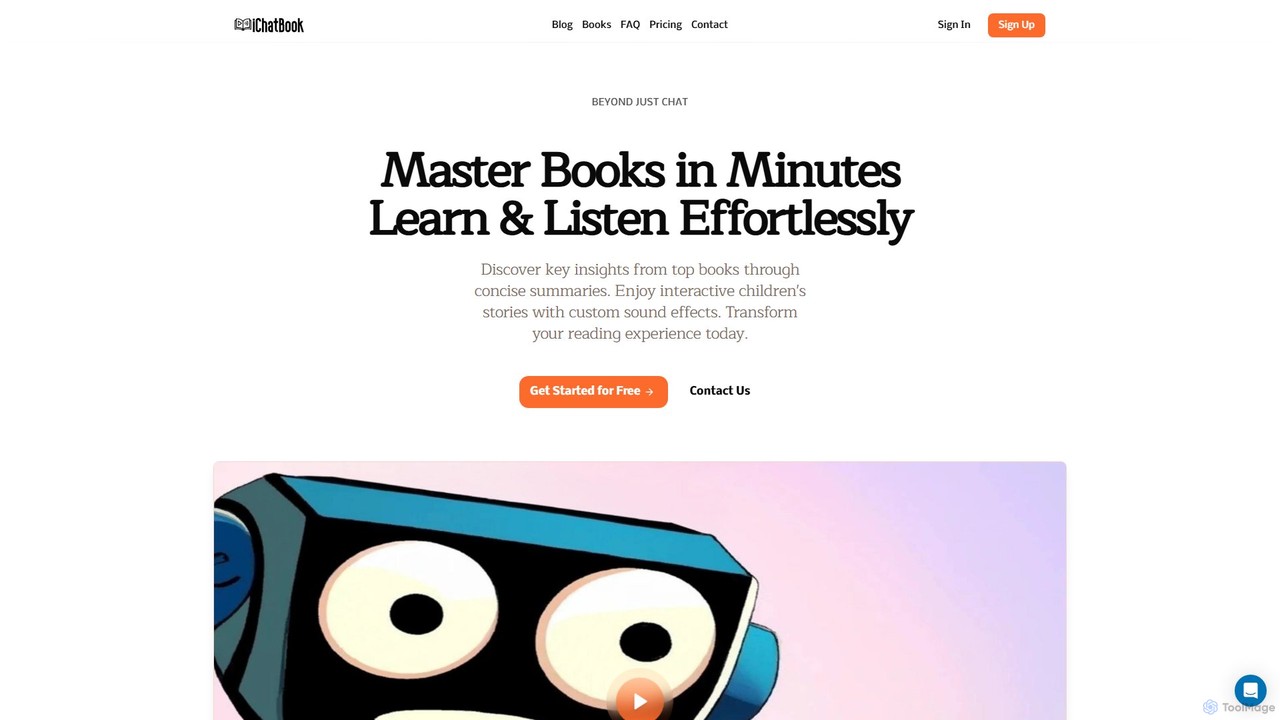
iChatbook is an AI-powered learning companion that transforms books and texts into concise, interactive summaries. It creates engaging audio summaries, customizable children's stories with sound effects, and allows users to deepen their understanding through interactive Q&A. Ideal for busy professionals, students, and families.

Text To Speech
Visits 5.5KFavorites 184Likes 195

About Story Teller

AI Story Teller tools are a specialized class of writing assistants designed to generate compelling narratives, from plot outlines to complete scenes. They leverage large language models trained on vast libraries of literature and screenplays to understand story structure, character development, and pacing. These tools serve as creative partners, helping users overcome writer's block, explore new plot directions, and build intricate fictional worlds. Their primary value lies in automating the foundational elements of storytelling, allowing creators to focus on refining the narrative voice and emotional depth.

Core Features

  • Plot Generation: Creates structured story outlines, key plot points, and unexpected twists based on user prompts.
  • Character Development: Generates detailed character profiles, including backstories, motivations, and personality traits.
  • World-Building: Assists in creating immersive settings, establishing lore, and defining the rules of a fictional universe.
  • Dialogue Crafting: Writes natural-sounding and character-appropriate conversations for scenes.
  • Narrative Expansion: Takes a simple idea or scene and elaborates on it, adding descriptive detail and advancing the plot.

Applicable Scenarios

These tools are widely used by novelists and authors to brainstorm ideas and break through creative blocks. Narrative designers in the gaming industry use them to generate questlines and branching dialogues. Screenwriters employ them to structure scripts and develop character arcs, while marketers use them to craft engaging brand stories for campaigns.

Selection Criteria

When choosing an AI Story Teller, consider the tool's specialization in specific genres (e.g., fantasy, sci-fi). Evaluate the level of user control it offers, from high-level plotting to detailed prose generation. Also, check for compatibility with different output formats (e.g., novel manuscript, screenplay format) and assess its collaboration features if working in a team.

Story Teller use cases

1

Overcoming Writer's Block for Novelists

An author working on a fantasy novel finds themselves stuck on a major plot point, unable to create a satisfying twist. Using an AI Story Teller, they input the current story context, character motivations, and desired tone. The tool generates several potential plot developments, including a betrayal by a trusted ally and the discovery of a hidden prophecy. This provides the author with fresh, unexpected ideas, allowing them to break through their creative block and write a more compelling chapter. The process saves hours of frustrating brainstorming and revitalizes the narrative direction.

2

Creating Branching Narratives for Video Games

A narrative designer for an RPG needs to create a complex quest with multiple player choices and outcomes. They use an AI Story Teller to outline the main quest path. Then, for each decision point, they prompt the AI to generate different consequences and dialogue trees. For example, if the player chooses to spare an enemy, the AI generates a future encounter where that enemy returns as an ally. This automates the creation of intricate branching paths, ensuring a rich, reactive storyline without the need to manually write every single variation from scratch.

3

Developing Character Backstories for Screenplays

A screenwriter is developing a new TV series and needs to create deep, multi-dimensional characters. To ensure consistency and depth, they use an AI Story Teller's character development feature. For each main character, they input a core concept (e.g., 'a cynical detective with a hidden past'). The AI then generates a detailed backstory, including formative childhood events, key relationships, and a defining traumatic experience. This provides a rich foundation for the screenwriter to draw upon when writing dialogue and plotting character arcs, making the characters feel more authentic and relatable to the audience.

4

Crafting Campaigns for Tabletop RPGs

A Dungeon Master (DM) for a Dungeons & Dragons game wants to create a unique homebrew campaign. Using an AI Story Teller, they set the genre to 'high fantasy' and input key elements like 'a forgotten kingdom' and 'a corrupting magical plague'. The tool generates a campaign outline, complete with major plot hooks, non-player characters (NPCs) with distinct personalities, and descriptions of key locations like a ruined city. The DM can then use these generated elements as a foundation, saving significant preparation time and allowing them to focus on running the game and improvising during sessions.

5

Generating Brand Stories for Marketing

A content marketer for a sustainable fashion brand needs to create a compelling 'About Us' page. They use an AI Story Teller to craft a narrative. They input key brand values like 'eco-friendly materials', 'ethical production', and 'timeless design'. The AI generates a story about the brand's founders on a journey to change the fashion industry, weaving in the brand's core values as key plot points. The marketer then refines this draft, adding specific details and a human touch. The result is a powerful brand narrative that connects with customers on an emotional level, far more engaging than a simple list of facts.

6

Creating Personalized Children's Stories

A parent wants to create a unique bedtime story for their child that teaches a lesson about sharing. They use an AI Story Teller, inputting the child's name as the main character, their favorite animal as a sidekick, and the theme 'the joy of sharing'. The tool generates a short, age-appropriate story where the main character learns to share their favorite toy with their animal friend, leading to a fun new game they can play together. The parent can even regenerate the story with slight variations each night, providing a limitless supply of personalized, educational content that captivates the child's imagination.

Story Teller FAQ

What is an AI Story Teller?

An AI Story Teller is a specialized AI writing tool focused on creating narrative content. Unlike general AI writers that handle various text formats, these tools are designed to understand and generate core story elements like plot structure, character arcs, world-building, and dialogue. They act as a creative partner for authors, screenwriters, and game developers, helping to brainstorm ideas, develop outlines, and write entire scenes. Their strength lies in their ability to generate coherent and structured narratives based on user prompts and genre conventions.

How to choose the right AI Story Teller tool?

Choosing the right AI Story Teller depends on your specific creative needs. Consider the following factors:

  • Genre Specialization: Some tools excel at specific genres like fantasy or sci-fi, offering more relevant tropes and vocabulary. Check if the tool aligns with your project's genre.
  • Level of Control: Determine if you need a tool for high-level brainstorming (plot points, character ideas) or one that can generate detailed, polished prose.
  • Output Formats: Ensure the tool can export in formats you need, such as standard manuscript, screenplay format, or even code for interactive fiction.
  • User Interface and Ease of Use: A good tool should have an intuitive interface that facilitates creativity rather than hindering it. Look for features like story outlining and character management.
What's the difference between an AI Story Teller and a general AI Writer?

The primary difference lies in their focus and underlying training. A general AI Writer (like those in the 'Writing' parent category) is a versatile tool designed for a wide range of tasks, such as writing emails, articles, marketing copy, and summarizing text. An AI Story Teller is a specialized subset of these tools. It is specifically trained on narrative structures, literary devices, and character archetypes. While a general writer can produce a paragraph of a story, a Story Teller is built to understand and generate entire plots, manage character consistency, and create structured scenes, making it far more effective for creative, long-form narrative projects.

Can AI Story Tellers write a complete novel?

Currently, AI Story Tellers are best used as powerful assistants rather than autonomous authors. They excel at generating ideas, creating detailed outlines, drafting scenes, and overcoming writer's block. While some advanced tools can produce long passages of coherent text, they typically lack the unique voice, emotional nuance, and overarching thematic consistency that a human author provides. The most effective workflow involves a collaboration where the AI generates the foundational material and options, and the human writer refines, edits, and infuses the work with their personal style and deeper meaning.

Who can benefit from using AI Story Teller tools?

A wide range of creators can benefit from AI Story Tellers. Key users include:

  • Authors and Novelists: For brainstorming plot twists, developing characters, and drafting scenes to overcome writer's block.
  • Screenwriters: To structure scripts, create character arcs, and generate dialogue variations.
  • Game Developers and Narrative Designers: For creating questlines, writing NPC dialogues, and building immersive world lore.
  • Marketers and Brand Strategists: To craft compelling brand narratives and storytelling campaigns.
  • Hobbyists and TTRPG Game Masters: For creating personal stories, fan fiction, or detailed campaigns for games like Dungeons & Dragons.