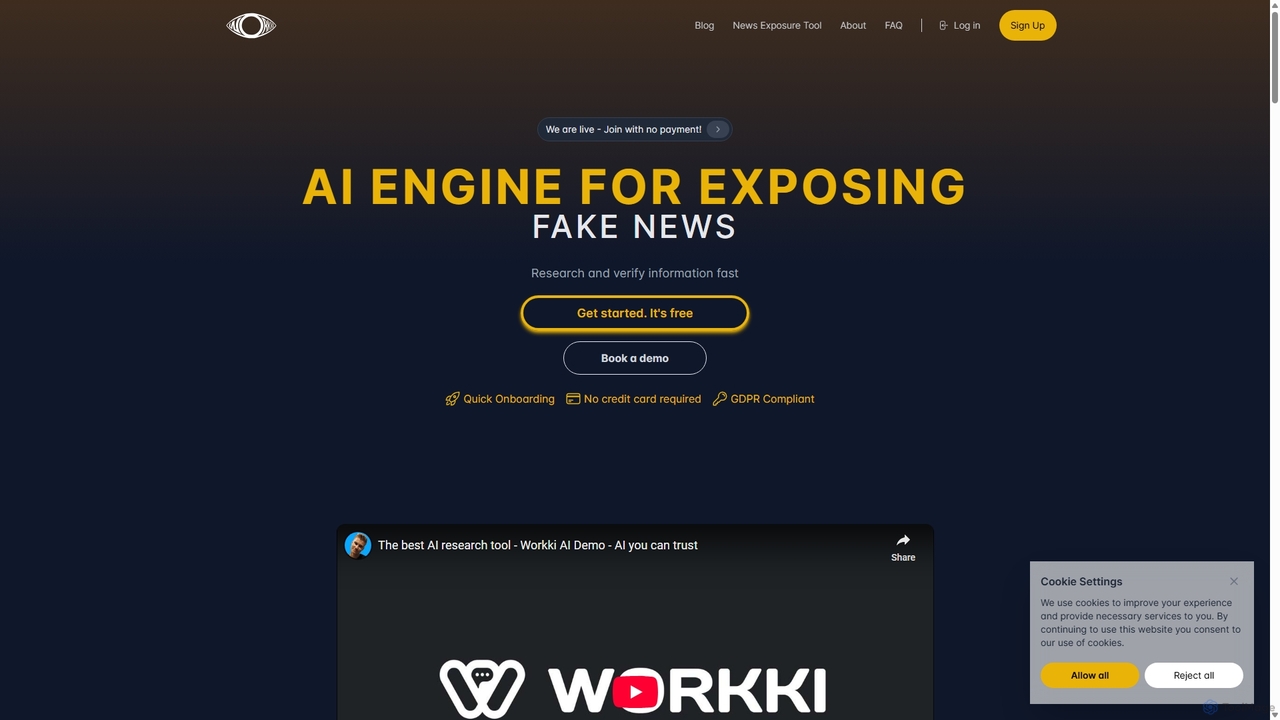
Workki AI
Workki AI is an advanced AI-powered engine designed to expose fake news and verify information. It helps users …
Workki AI is an advanced AI-powered engine designed to expose fake news and verify information. It helps users quickly fact-check texts, analyze source credibility, detect bias, and generate comprehensive reliability reports. Ideal for journalists, researchers, financial analysts, and students.
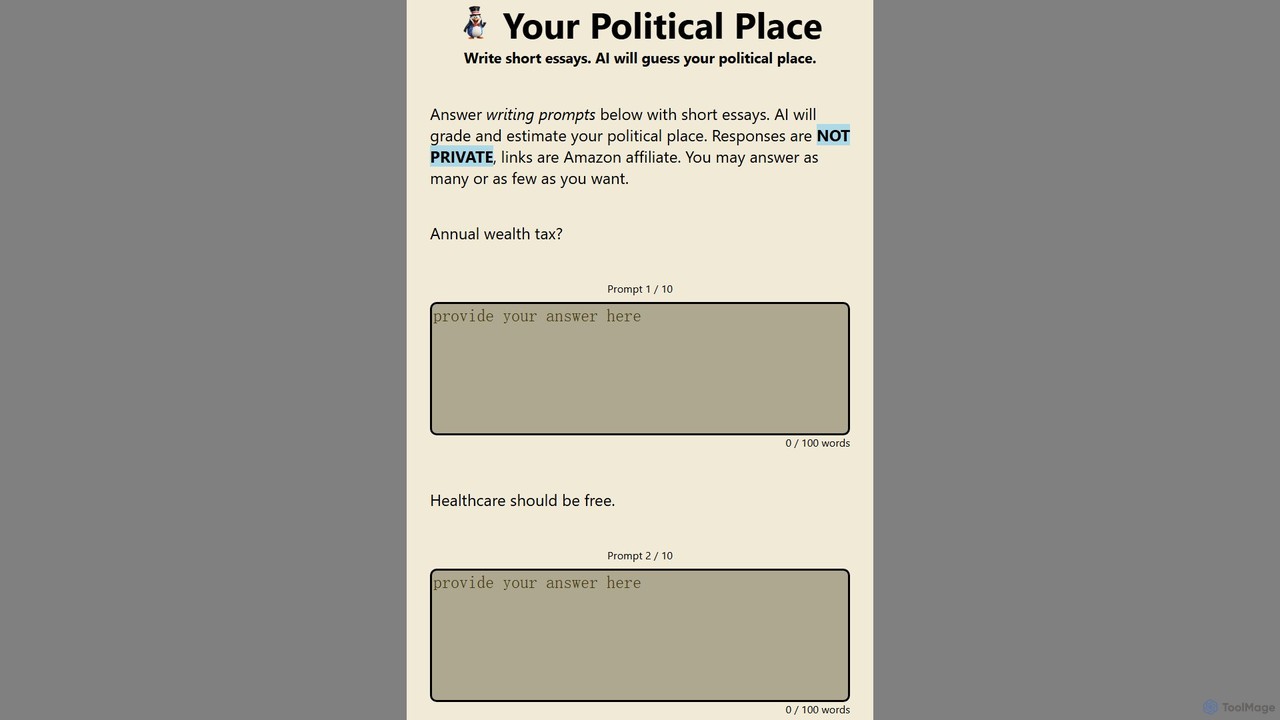
Your Political Place
An AI-powered tool that analyzes your political leanings. Users write short essays on various political topics, and the …
An AI-powered tool that analyzes your political leanings. Users write short essays on various political topics, and the AI evaluates the text to estimate their position on the political spectrum. It's an engaging way to explore and understand political perspectives through written expression.
About Text Analysis
Text Analysis tools are a category of AI-powered solutions designed to process, understand, and extract meaningful insights from large volumes of textual data. Leveraging advanced Natural Language Processing (NLP) and machine learning, these tools can identify patterns, sentiments, and key information within text. They are invaluable for businesses and researchers seeking to make data-driven decisions from unstructured text, complementing broader AI writing applications by providing deep understanding of content.
Core Features
- Sentiment Analysis: Identifies the emotional tone (positive, negative, neutral) of text.
- Keyword Extraction: Automatically pulls out the most important words and phrases from documents.
- Topic Modeling: Discovers abstract "topics" that occur in a collection of documents.
- Entity Recognition: Locates and classifies named entities (people, organizations, locations) in text.
- Text Summarization: Generates concise summaries of longer texts while retaining key information.
Applicable Scenarios
Text analysis tools are widely used across various sectors. Marketing teams utilize them to gauge public opinion on products from social media comments, while customer service departments analyze feedback to identify common issues and improve service quality. Researchers and journalists employ these tools to quickly sift through vast archives of documents, extracting relevant information and trends for their work.
How to Choose
When selecting a text analysis tool, consider the specific types of analysis you need (e.g., sentiment, entity, summarization) and the volume of data you'll process. Evaluate its accuracy for your language and domain, integration capabilities with existing systems, and the user-friendliness of its interface. Scalability and pricing models are also crucial factors for long-term use.
Text AnalysisUse Cases
Analyzing Customer Feedback at Scale
Customer support teams can use text analysis tools to automatically process thousands of customer reviews, emails, and chat logs. By performing sentiment analysis and keyword extraction, they can quickly identify recurring issues, common complaints, and areas for improvement in products or services, leading to faster problem resolution and enhanced customer satisfaction.
Monitoring Brand Reputation and Mentions
Marketing and PR professionals leverage text analysis to track mentions of their brand across social media, news articles, and forums. These tools perform sentiment analysis to understand public perception and identify potential crises early, allowing for proactive reputation management and targeted communication strategies.
Content Research and Curation Efficiency
Content creators and researchers can employ text analysis to rapidly sift through vast amounts of articles, academic papers, or web pages. Tools can extract key topics, summarize lengthy documents, and identify relevant entities, significantly speeding up the research process and helping to curate highly relevant content for their audience.
Automating Document Classification and Routing
Legal firms or administrative departments can use text analysis to automatically categorize incoming documents, such as contracts, invoices, or legal briefs. By classifying documents based on their content, these tools streamline workflow, ensure proper routing, and improve information retrieval efficiency, reducing manual sorting efforts.
Identifying Market Trends and Insights
Business analysts and product managers utilize text analysis to scan industry reports, competitor reviews, and market news. By identifying emerging keywords, trending topics, and shifts in sentiment, they can gain valuable insights into market dynamics, inform product development, and refine business strategies to stay competitive.
Enhancing SEO and Content Strategy
SEO specialists and content strategists use text analysis to understand what topics and keywords are most prevalent in top-ranking content. By analyzing competitor articles and search results, they can identify content gaps, optimize existing content for better relevance, and develop new content ideas that align with user search intent and improve organic visibility.