ToolMage
Sign in

Best 1 Unfiltered Content AI tools for Writing

Popular Unfiltered Content AI tools in Writing include Uncensored AI, helping you work more efficiently.

Uncensored AI
Paid

Uncensored AI

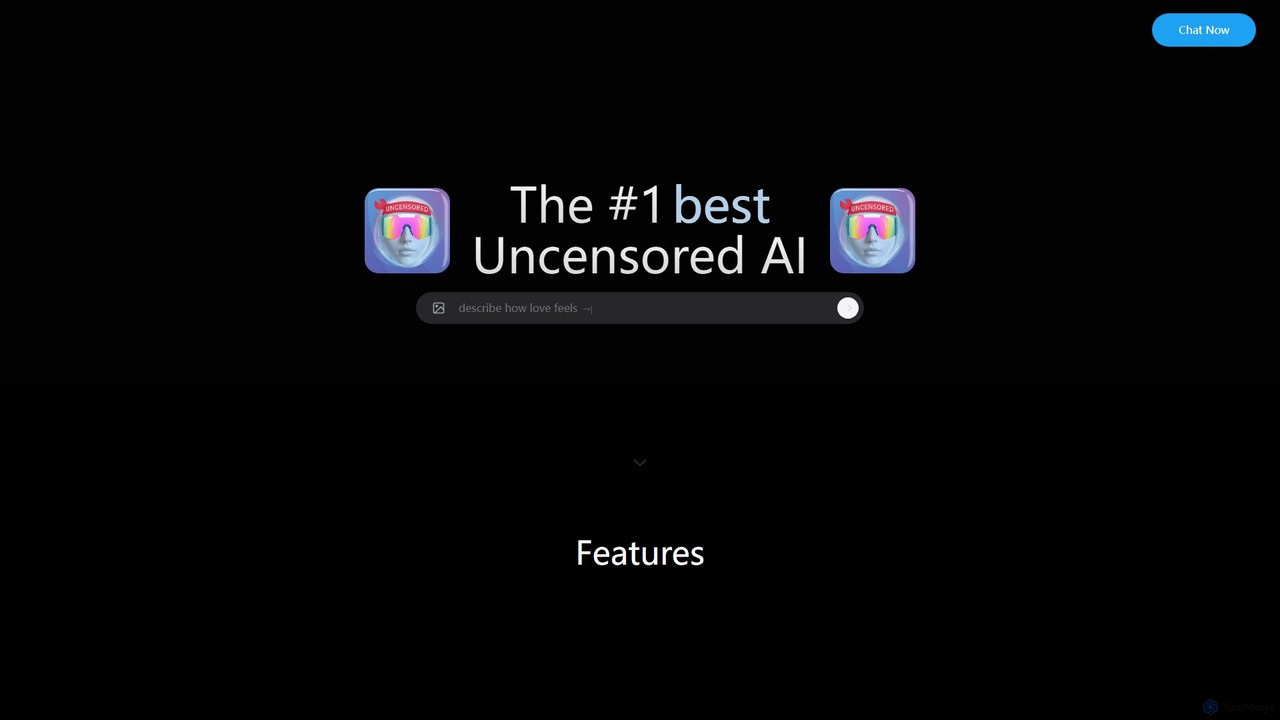
Uncensored AI is a powerful chatbot platform designed for unfiltered, direct, and open conversations. It bypasses the moral policing and censorship of mainstream AIs, allowing users to explore controversial topics, dark humor, and complex ideas freely. Featuring multiple AI models, voice and vision capabilities, it provides a space for raw, intelligent dialogue.

Conversation
Visits 1.9MFavorites 131Likes 117

About Unfiltered Content

Unfiltered Content tools are a specialized category of AI writing assistants designed to generate text with minimal to no content moderation or safety filters. These tools operate on language models that prioritize direct adherence to user prompts over conforming to conventional ethical guidelines. This results in raw, unrestricted, and highly creative output, enabling exploration of topics and styles that standard AI writers might block. They are particularly valued for their ability to produce nuanced, unconventional, or provocative content for specific creative and research purposes.

Core Features

  • Minimal Filtering: Generates content on a vast range of subjects, including sensitive or controversial ones, without automated censorship.
  • High Prompt Adherence: Follows complex and nuanced user instructions with high fidelity, capturing specific tones, styles, and personas.
  • Creative Freedom: Empowers writers and creators to explore mature themes, complex characters, and unconventional narratives without restriction.
  • Raw Model Access: Provides a more direct interaction with the base language model's capabilities, useful for research and development.

Use Cases

These tools are primarily used by fiction authors, screenwriters, and game developers for creating complex characters and exploring mature themes. Researchers and developers also use them to study the raw capabilities and inherent biases of AI models. Additionally, marketers may use them for brainstorming edgy or provocative campaign ideas in a controlled environment.

How to Choose

When selecting an Unfiltered Content tool, consider the underlying language model's power and sophistication. Evaluate the platform's privacy policy, especially regarding data usage and storage, as you may be handling sensitive inputs. Also, assess the user interface—whether you need a simple chat, a structured writing environment, or an API for integration. Finally, compare pricing models to find one that aligns with your usage frequency and budget.

Unfiltered Content use cases

1

Creative Writing for Mature Themes

A novelist writing a psychological thriller needs to explore a character's dark motivations and internal conflicts. Using an Unfiltered Content tool, they can generate dialogue and narrative passages that delve into sensitive topics like moral ambiguity and psychological distress without triggering content filters. This allows for a more authentic and unflinching portrayal of the character, enabling the author to draft scenes that are emotionally complex and true to their creative vision, which might be restricted by standard AI writing assistants.

2

Developing In-depth Character Dialogue for Games

A game developer is creating a complex antagonist for a role-playing game (RPG). The character needs to have a cynical worldview and use provocative language. By using an Unfiltered Content tool, the developer can prompt the AI with the character's detailed backstory and personality traits to generate a wide range of dialogue options. The tool can produce lines that are sarcastic, morally gray, or even offensive, providing a rich pool of authentic-sounding dialogue that captures the character's essence without the AI refusing the prompts due to their nature.

3

Researching AI Model Biases and Capabilities

An AI researcher is studying the inherent biases within a large language model. To do this effectively, they need to test the model's raw output without the interference of safety layers. Using an Unfiltered Content tool, the researcher can submit prompts designed to elicit biased or problematic responses on various topics. This allows them to systematically document the model's behavior, identify patterns of bias, and publish findings that contribute to the development of more equitable and robust AI systems. This type of research is often impossible with standard, filtered AI interfaces.

4

Brainstorming Edgy and Unconventional Marketing Angles

A marketing team for a streetwear brand wants to create a campaign that challenges industry norms. They use an Unfiltered Content tool for a brainstorming session, prompting it to generate slogans, ad copy, and social media concepts with a provocative or satirical tone. The tool produces a wide spectrum of ideas, from mildly edgy to highly controversial. While many ideas are discarded, the process uncovers unique angles and phrasing that a standard, brand-safe AI would never suggest, providing the team with raw creative material to refine into a bold and memorable campaign.

5

Simulating Complex Negotiation and Conflict Scenarios

A corporate trainer is designing a workshop on advanced negotiation tactics. To create realistic role-playing exercises, they use an Unfiltered Content tool to act as a difficult negotiation partner. The trainer can set the AI's persona to be aggressive, deceptive, or irrational. The AI then generates responses and counter-offers that simulate high-pressure, unpredictable situations. This provides trainees with a challenging and safe environment to practice their skills against a wide variety of negotiation styles that a more constrained AI would be unable to replicate effectively.

6

Scriptwriting for Unconventional Plots and Dialogue

A screenwriter is working on an experimental film script that features surreal situations and philosophically charged dialogue. Standard AI tools often default to conventional narrative structures and sanitized language. By using an Unfiltered Content tool, the screenwriter can generate bizarre scene descriptions, abstract conversations, and dialogue that pushes boundaries. This serves as a powerful brainstorming partner, helping the writer break free from clichés and explore truly original narrative territory, accelerating the creation of a unique and thought-provoking script.

Unfiltered Content FAQ

What are Unfiltered Content AI tools?

Unfiltered Content AI tools are a type of generative AI, typically for writing, that operates with minimal or no safety filters, content moderation, or ethical guardrails. Unlike mainstream AI assistants that are designed to avoid generating potentially sensitive, controversial, or harmful content, these tools prioritize following the user's prompt as closely as possible. This allows them to produce a wider range of outputs, making them suitable for specific use cases like creative writing with mature themes, AI safety research, and exploring unconventional ideas without censorship.

How do unfiltered AI writers differ from standard ones like ChatGPT?

The primary difference lies in content filtering and adherence to safety guidelines. Standard AI writers (like ChatGPT, Claude) have robust safety layers to prevent the generation of harmful, unethical, or explicit content. Unfiltered AI writers intentionally remove or minimize these layers. Key differences include:

  • Content Policy: Standard AIs have strict policies against a wide range of topics; unfiltered AIs have very lenient or no policies.
  • Prompt Adherence: Unfiltered AIs will attempt to follow a prompt literally, even if it's controversial, whereas standard AIs may refuse or reframe the request.
  • Output Predictability: Standard AIs provide more predictable and 'safe' responses. Unfiltered AIs can be more volatile and unpredictable, but also more creatively unrestrained.

What are the risks of using Unfiltered Content AI?

Using Unfiltered Content AI tools comes with significant responsibilities and risks. Because they lack safety guardrails, they can potentially generate inaccurate, biased, offensive, or harmful content. Users must be prepared to critically evaluate all output. Key risks include:

  • Misinformation: The AI can generate convincing but false information without any warnings.
  • Exposure to Offensive Content: The model may produce text that is hateful, discriminatory, or explicit.
  • Reinforcement of Biases: The tool may reflect and amplify societal biases present in its training data.
  • Ethical Concerns: The generated content could be used for malicious purposes if not handled responsibly.
Users should approach these tools with caution and a clear understanding of their purpose.

How should I choose an Unfiltered Content tool?

Choosing the right Unfiltered Content tool depends on your specific needs. Consider these factors:

  • Underlying Model: Research the base language model the tool uses. More powerful models (like fine-tuned versions of open-source giants) often provide more coherent and creative outputs.
  • Privacy Policy: Since you might be exploring sensitive topics, carefully review how the service handles your data. Look for services that do not use your inputs for training and offer data deletion options.
  • Interface and Features: Do you need a simple chat interface, a long-form editor with advanced controls, or an API for integration into your own applications?
  • Community and Support: Check if there's an active community or reliable customer support, which can be helpful for troubleshooting and sharing best practices.
  • Cost: Compare pricing structures, such as pay-per-use credits versus monthly subscriptions, to find what best fits your budget and expected usage.

Who are the primary users of Unfiltered Content tools?

Unfiltered Content tools serve a niche but diverse audience that requires creative freedom or raw model access. The primary users include:

  • Creative Writers: Novelists, screenwriters, and hobbyists who write fiction involving complex, mature, or controversial themes that might be blocked by standard AIs.
  • Game Developers and Role-players: Individuals creating intricate characters, dialogues, and world-building scenarios that require a wide emotional and ethical range.
  • AI Researchers and Developers: Professionals studying model behavior, alignment, safety, and biases need access to the model's unfiltered output for accurate analysis.
  • Marketers and Strategists: Teams using these tools in controlled brainstorming sessions to generate edgy or unconventional ideas that push creative boundaries.