

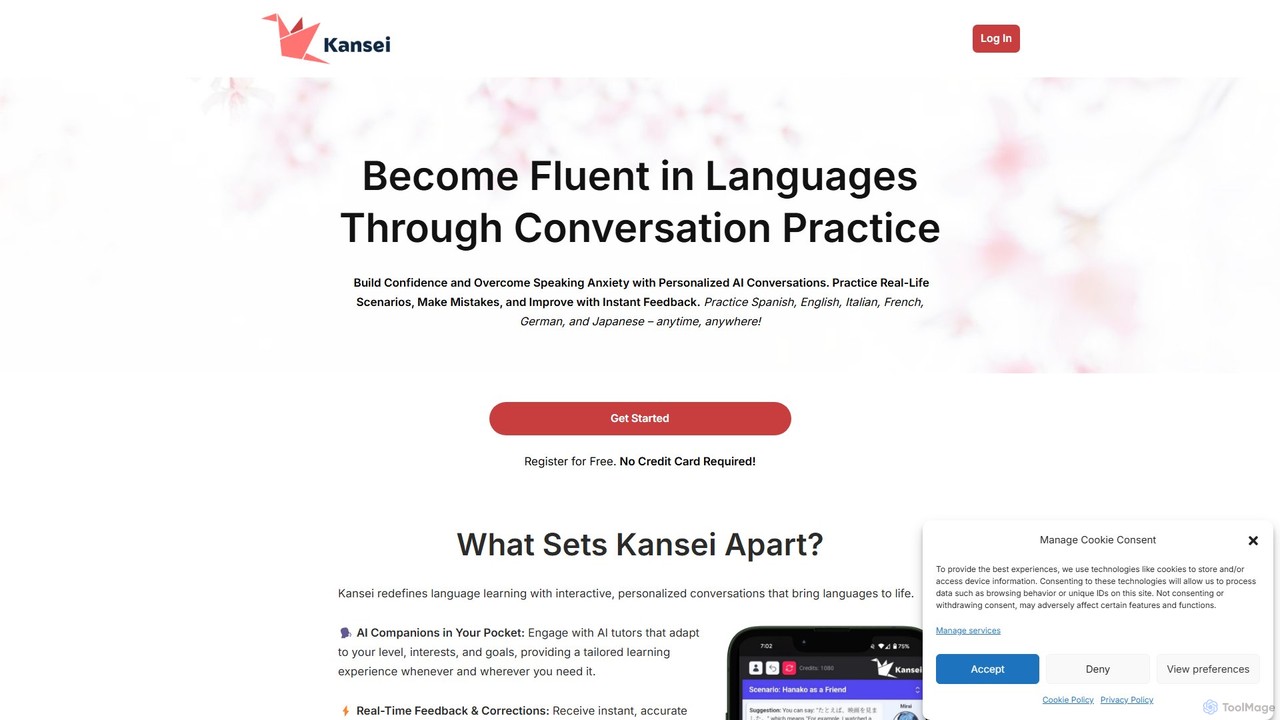
kansei Overview
kansei is a sophisticated AI-driven research platform that transforms the way product teams, UX researchers, and designers understand their users. It specializes in analyzing unstructured qualitative data, such as user interviews, survey responses, app reviews, and customer support conversations. By leveraging advanced Natural Language Processing (NLP), kansei automates the time-consuming process of sifting through thousands of pieces of feedback, allowing teams to quickly identify key themes, emerging trends, and critical user pain points.
The platform acts as a central repository for all your qualitative data, providing powerful tools to not only store but also make sense of it. It moves beyond simple keyword searching by understanding the context and sentiment behind user comments. This enables organizations to make more informed, data-driven decisions, align product roadmaps with genuine user needs, and ultimately build better products that resonate with their audience.
How to use kansei
Using kansei is a streamlined process designed for efficiency. First, users consolidate their qualitative data by importing it into the platform. This can be done by uploading files (like CSVs or text documents) or connecting directly with other services like Zendesk, Intercom, or survey tools. Once the data is imported, kansei's AI engine automatically begins processing it. It analyzes the text, performs sentiment analysis, and starts clustering related feedback into thematic groups. Users can then explore these AI-generated insights through an intuitive dashboard. They can filter data by theme, sentiment, or data source, dive deep into specific pieces of feedback, and validate the AI's findings. Finally, users can generate and share reports, charts, and summaries to communicate key insights to stakeholders and drive action across the organization.
Core Features of kansei
- AI-Powered Thematic Analysis: Automatically identifies and groups similar pieces of feedback into coherent themes, saving hundreds of hours of manual work.
- Sentiment Analysis: Gauges the emotional tone (positive, negative, neutral) of user feedback to understand how users truly feel.
- Centralized Feedback Hub: Consolidates data from various sources like interviews, surveys, app reviews, and support tickets into a single, searchable repository.
- Insight Discovery: Proactively surfaces emerging trends, hidden opportunities, and critical pain points that might otherwise be missed.
- Powerful Search and Filtering: Allows users to instantly search across all their data and filter by theme, sentiment, date, customer segment, and more.
- Data Visualization: Presents complex data in easy-to-understand formats, such as charts, graphs, and tag clouds, for clear communication.
- Collaborative Workspace: Enables team members to collaborate on analysis, tag insights, and share findings to ensure everyone is aligned.
Use Cases for kansei
kansei is versatile and valuable for various roles. Product Managers use it to validate hypotheses, prioritize features on their roadmap based on direct user evidence, and track sentiment after a new release. UX Researchers leverage it to rapidly synthesize findings from dozens of user interviews and usability tests, freeing them up to focus on strategic thinking. Designers can gain a deeper empathy for users by understanding their frustrations and desires in their own words. Customer Support Managers can identify the root causes of recurring support tickets and work with the product team to fix them. Marketers can analyze customer feedback to refine brand messaging and understand the voice of the customer.
Advantages of kansei
The primary advantage of kansei is its ability to dramatically increase efficiency and reduce the manual labor associated with qualitative research. It transforms a process that took weeks into one that takes hours. By providing an objective, AI-driven analysis, it helps reduce human bias in research synthesis. The platform makes qualitative data scalable, allowing teams to analyze feedback from thousands of users, not just a small sample. This leads to more robust, evidence-based decision-making, ensuring that product development is closely aligned with what users actually want and need, ultimately leading to higher user satisfaction and retention.
Pricing and Plans
kansei likely operates on a freemium or tiered subscription model, designed to scale with the needs of different teams. While specific pricing should be confirmed on the official website, a typical structure would include:
- Free Plan: A limited-feature plan for individuals or small projects to try the platform, with restrictions on the amount of data that can be analyzed.
- Pro/Team Plan: A paid monthly or annual subscription for small to medium-sized teams, offering more data processing, advanced features, and collaborative tools.
- Enterprise Plan: A custom-priced plan for large organizations, providing unlimited data analysis, enhanced security features, API access, and dedicated support.
Traffic
Latest traffic
Status
Monthly traffic trend
- 2025-9: 5.2K
- 2026-1: 1.8K
- 2026-2: 629
- 2026-3: 1.8K
- 2026-4: 71
- 2026-5: 1.4K
Geography
Top 5 countries / regions
- 🇺🇸United States100.0%
Top keywords
| Keyword | Cost per click |
|---|---|
| english dominance helps cultures exchange | $0.00 |
| japanese grammar | $1.55 |
| kanji | $0.80 |
| kansei | $1.30 |
| linguistic relativity hypothesis | $2.67 |
kansei Alternatives
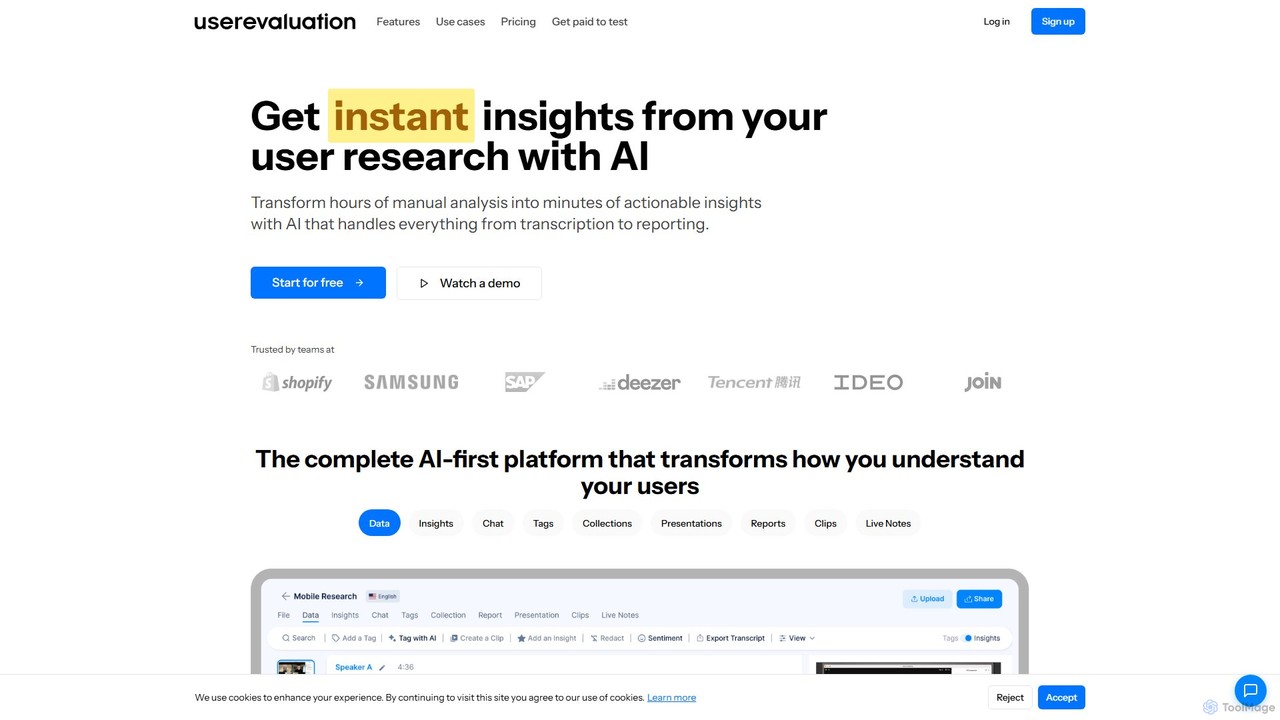
User Evaluation
User Evaluation is an AI-first user research platform designed to transform qualitative and quantitative data into actionable insights. It automates transcription, analysis, and reporting from audio, video, and text, enabling teams to understand their users faster and make data-driven decisions with confidence.
Customer Support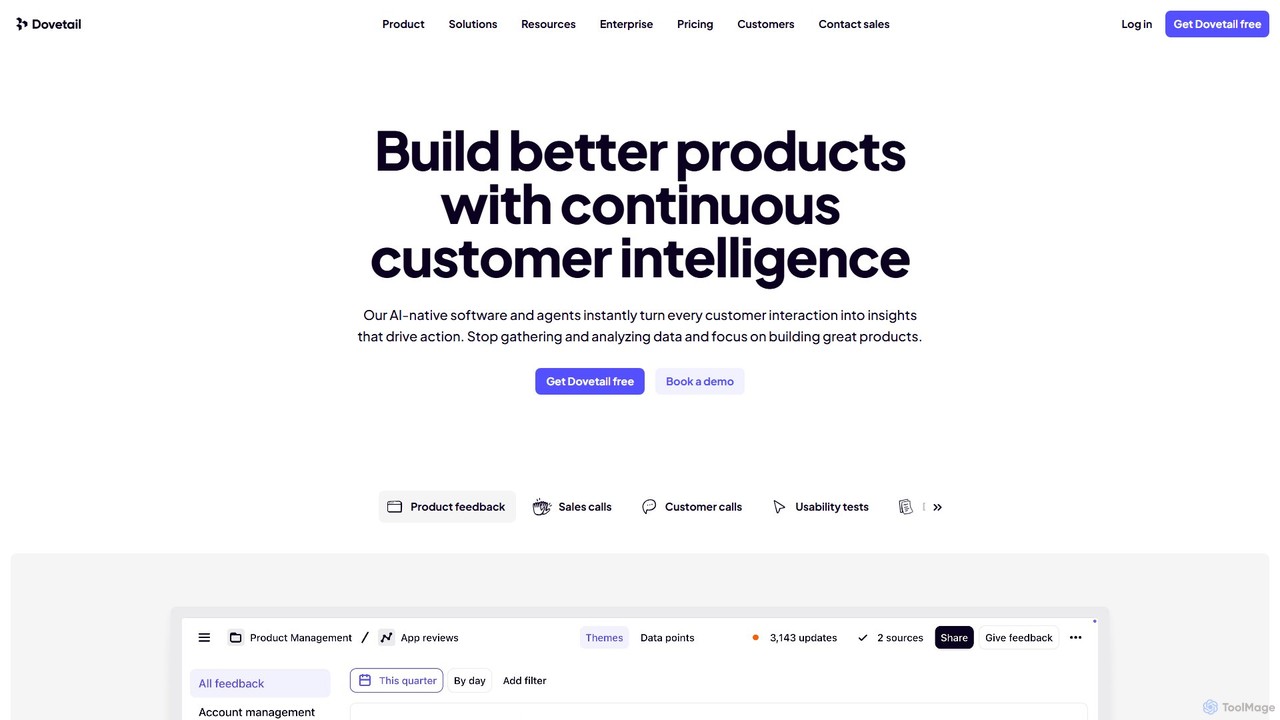
Dovetail
Dovetail is an AI-native customer insights hub designed to help teams build better products. It centralizes and analyzes all customer interactions—from sales calls and support tickets to surveys and usability tests. Using powerful AI, it automatically transcribes, summarizes, and identifies key themes, turning raw data into actionable intelligence. This allows product, research, and design teams to make faster, evidence-backed decisions and foster a truly customer-centric culture.
Customer Support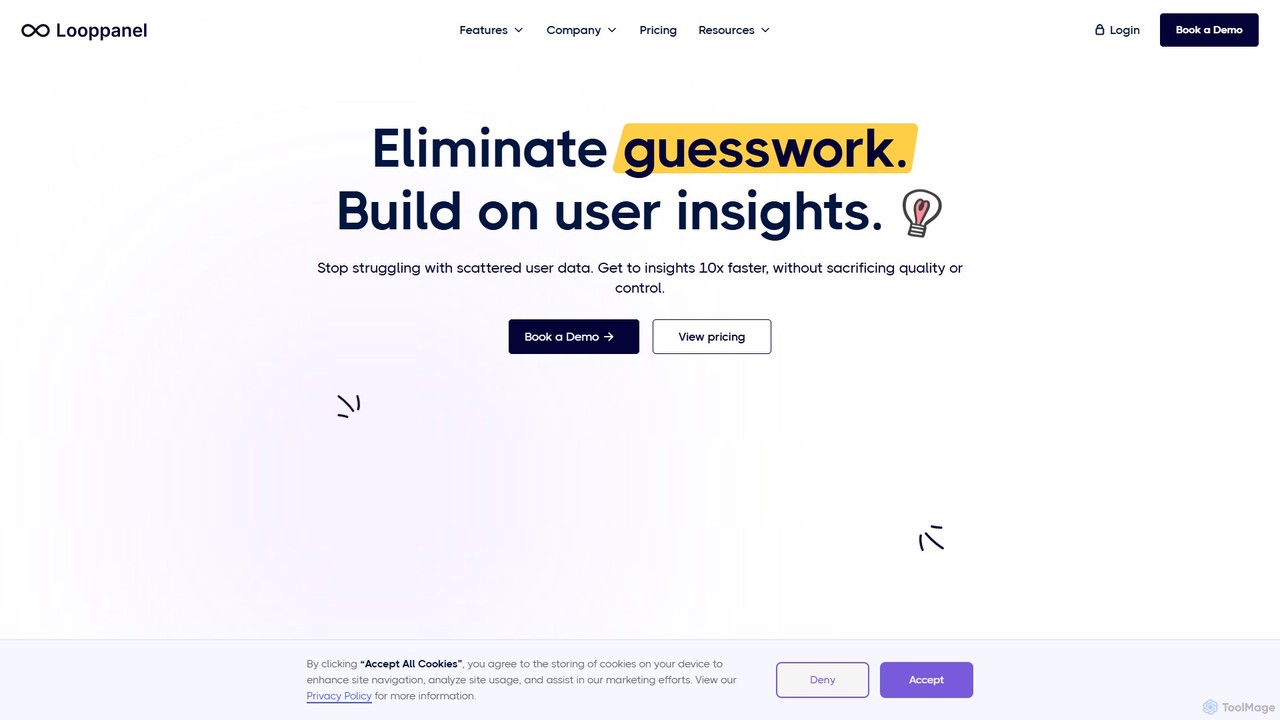
Looppanel
Looppanel is an AI-powered platform for UX researchers and product teams to analyze qualitative data 10x faster. It automates transcription, note-taking, and thematic analysis from user interviews, helping you uncover actionable insights, build a centralized research repository, and make data-driven product decisions with ease.
Customer Support
Condens
Condens is an AI-powered user research platform that centralizes all customer insights. It helps teams store, analyze, and share research data like interviews, feedback, and notes. With features like AI transcription, sentiment analysis, and collaborative tagging, Condens streamlines the qualitative analysis process, making it faster to uncover actionable insights and foster a customer-centric culture.
Customer Support
Notably
Notably is an AI-powered synthesis platform designed for user research. It helps teams of all sizes transform hours of qualitative data, such as interviews and feedback, into actionable customer insights instantly. With its AI research assistant, Posty, it automates transcription, tagging, and thematic analysis, streamlining the entire research workflow.
Customer Supportkansei Categories
kansei Embed Widget
Copy this embed code to place the badge on your blog, article, or product site and send readers directly to this ToolMage detail page.

Related AI tools
User Evaluation
User Evaluation is an AI-first user research platform designed to transform qualitative and quantitative data into actionable insights. It automates transcription, analysis, and reporting from audio, video, and text, enabling teams to understand their users faster and make data-driven decisions with confidence.
Customer Support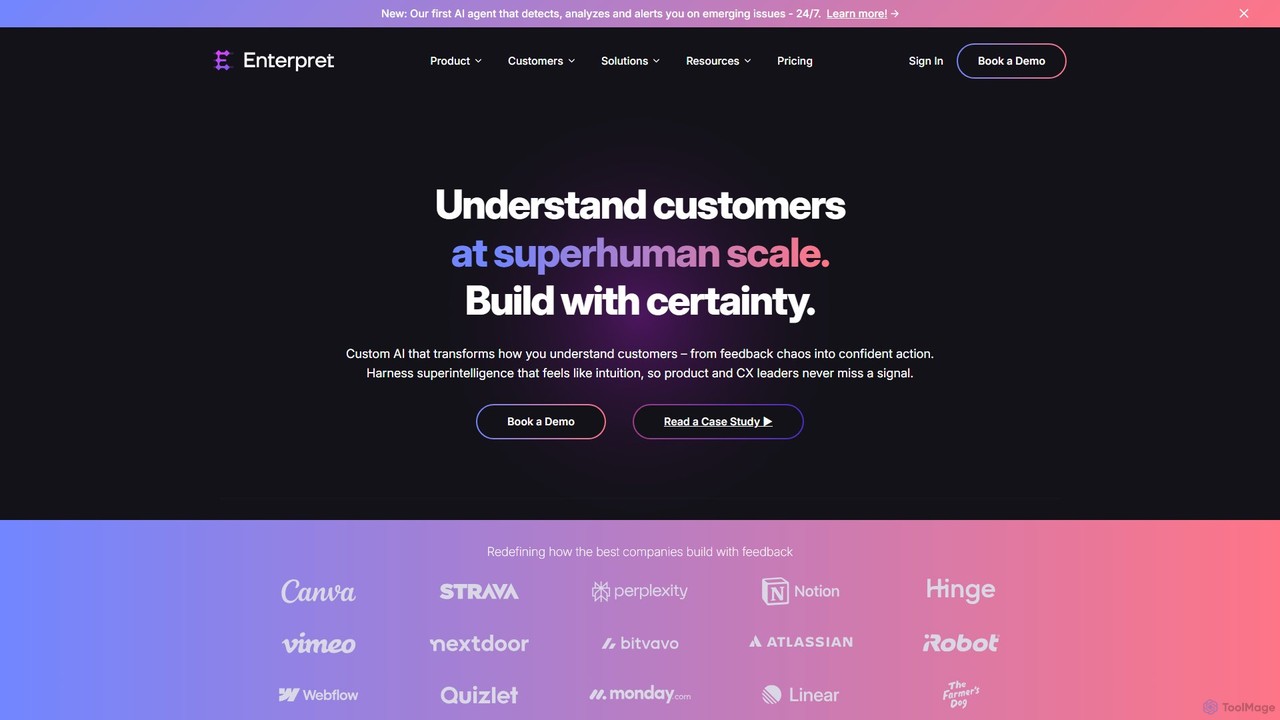
Enterpret
Enterpret is an AI-powered customer feedback intelligence platform that unifies feedback from all channels. It helps product and CX teams analyze qualitative data at scale, uncover actionable insights, and build products with certainty by understanding the true voice of the customer.
Customer Support
decio
Decio is an AI-powered platform for qualitative data analysis. It automates the process of analyzing unstructured text from interviews, surveys, and customer feedback to rapidly uncover key themes, sentiments, and actionable insights, empowering data-driven decisions.
Summarizer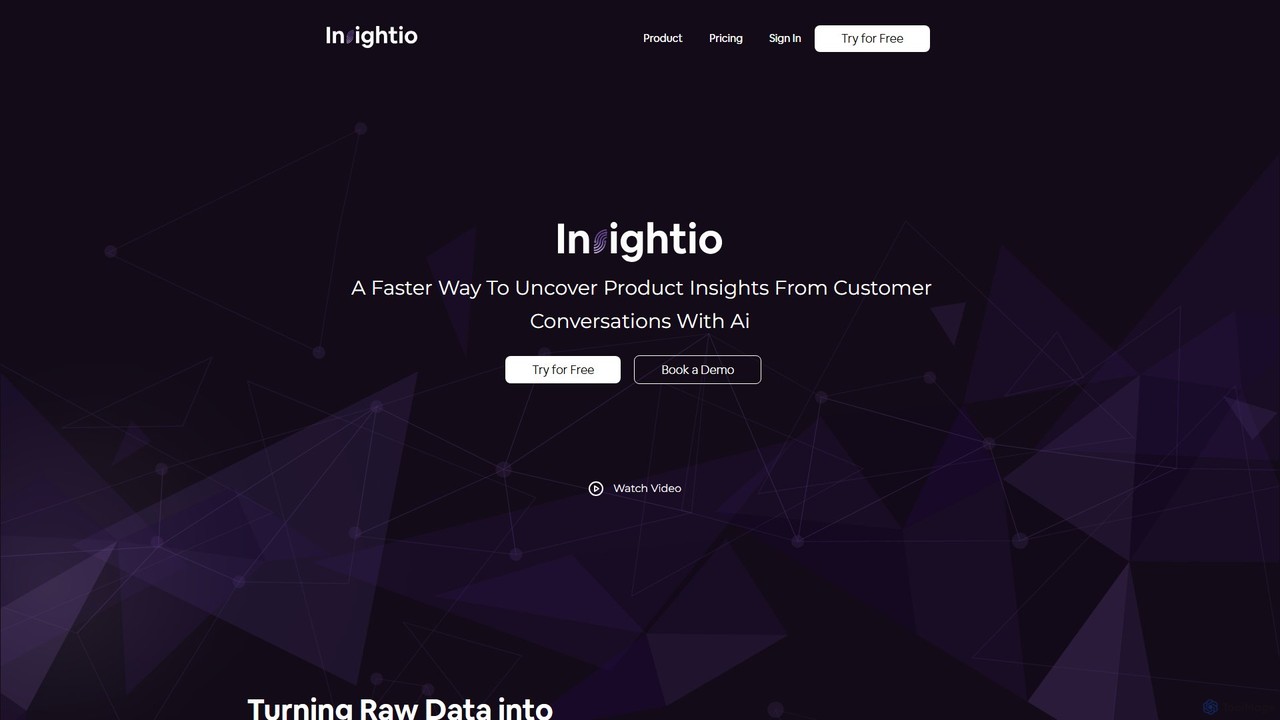
Insightio
Insightio is an AI-powered platform that analyzes customer conversations from audio, video, or text to uncover actionable product insights. It automates transcription and analysis, helping teams quickly identify user pain points, needs, and opportunities to build better products.
Customer FeedbackDovetail
Dovetail is an AI-native customer insights hub designed to help teams build better products. It centralizes and analyzes all customer interactions—from sales calls and support tickets to surveys and usability tests. Using powerful AI, it automatically transcribes, summarizes, and identifies key themes, turning raw data into actionable intelligence. This allows product, research, and design teams to make faster, evidence-backed decisions and foster a truly customer-centric culture.
Customer SupportLooppanel
Looppanel is an AI-powered platform for UX researchers and product teams to analyze qualitative data 10x faster. It automates transcription, note-taking, and thematic analysis from user interviews, helping you uncover actionable insights, build a centralized research repository, and make data-driven product decisions with ease.
Customer Support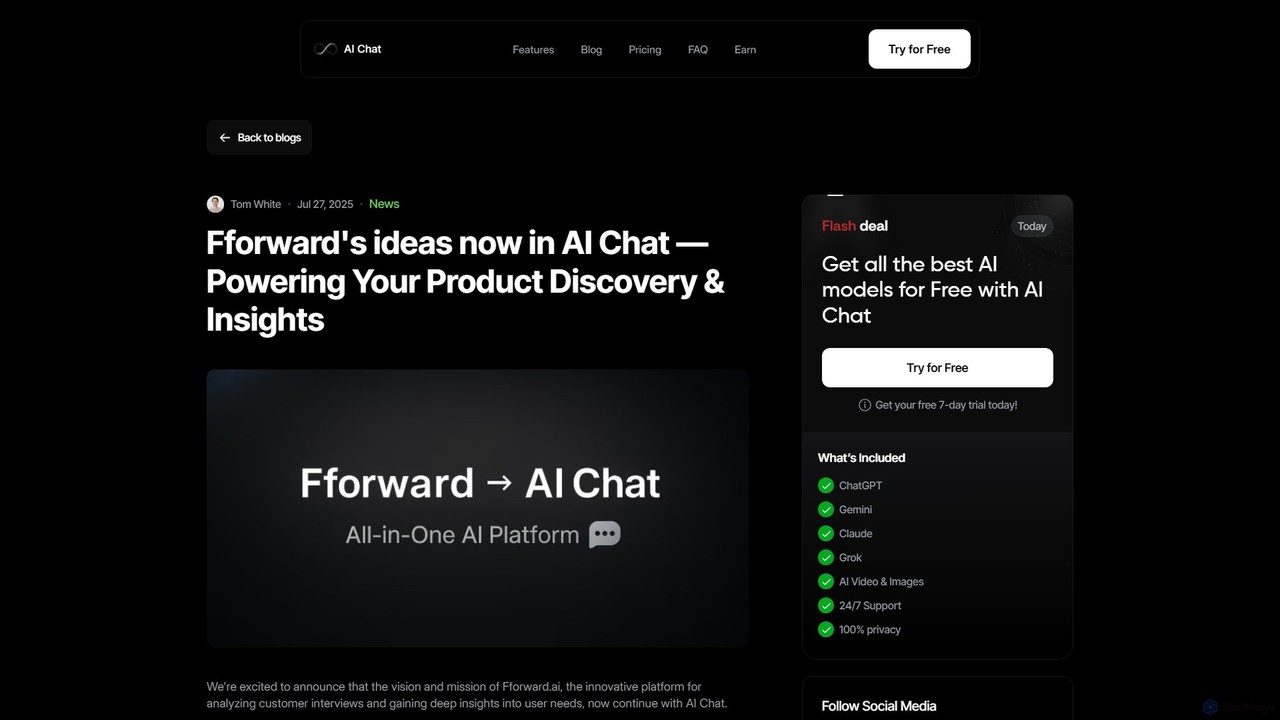
Fforward
Fforward is an advanced AI-powered platform designed for product managers, UX researchers, and founders to analyze customer interviews, uncover deep user insights, and accelerate product discovery. It automates the synthesis of qualitative data to identify key needs, themes, and actionable opportunities.
Customer Support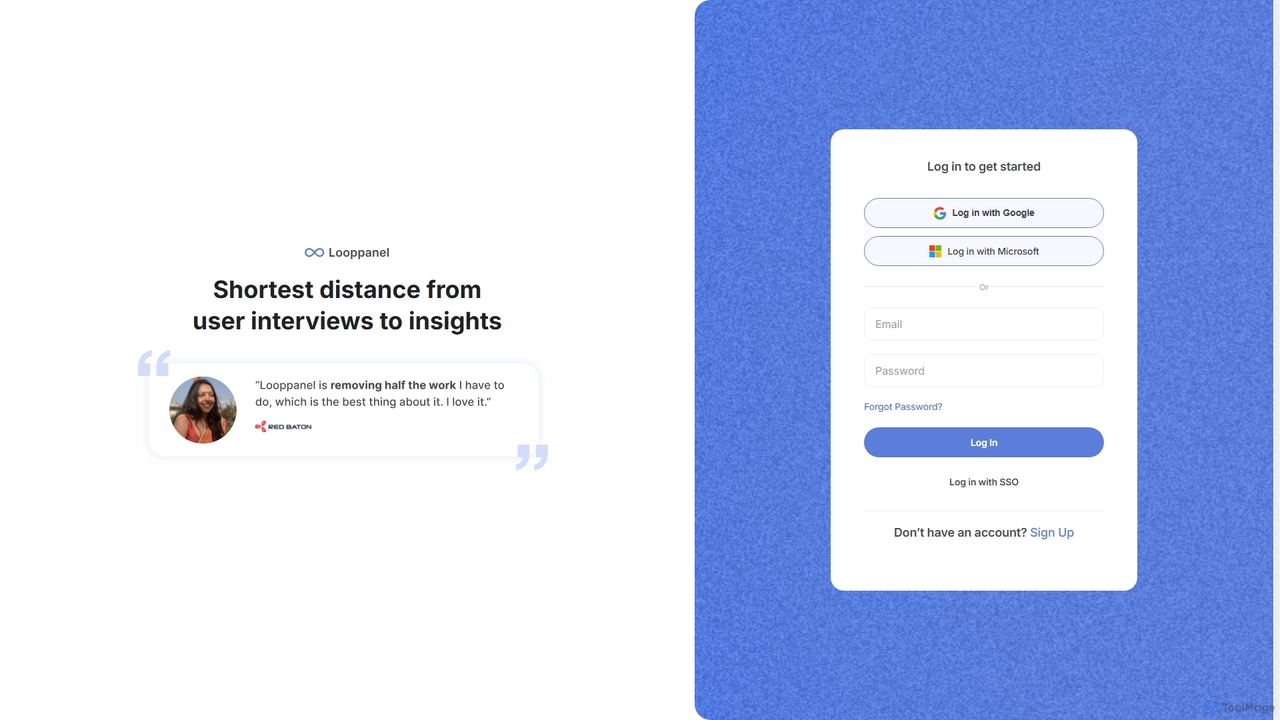
Looppanel
Looppanel is an AI-powered platform designed to streamline the user research process. It helps product teams and UX researchers transform raw user interviews into actionable insights rapidly. By automating transcription, analysis, and synthesis, Looppanel eliminates hours of manual work, allowing teams to focus on making data-driven decisions and building better products.
Transcription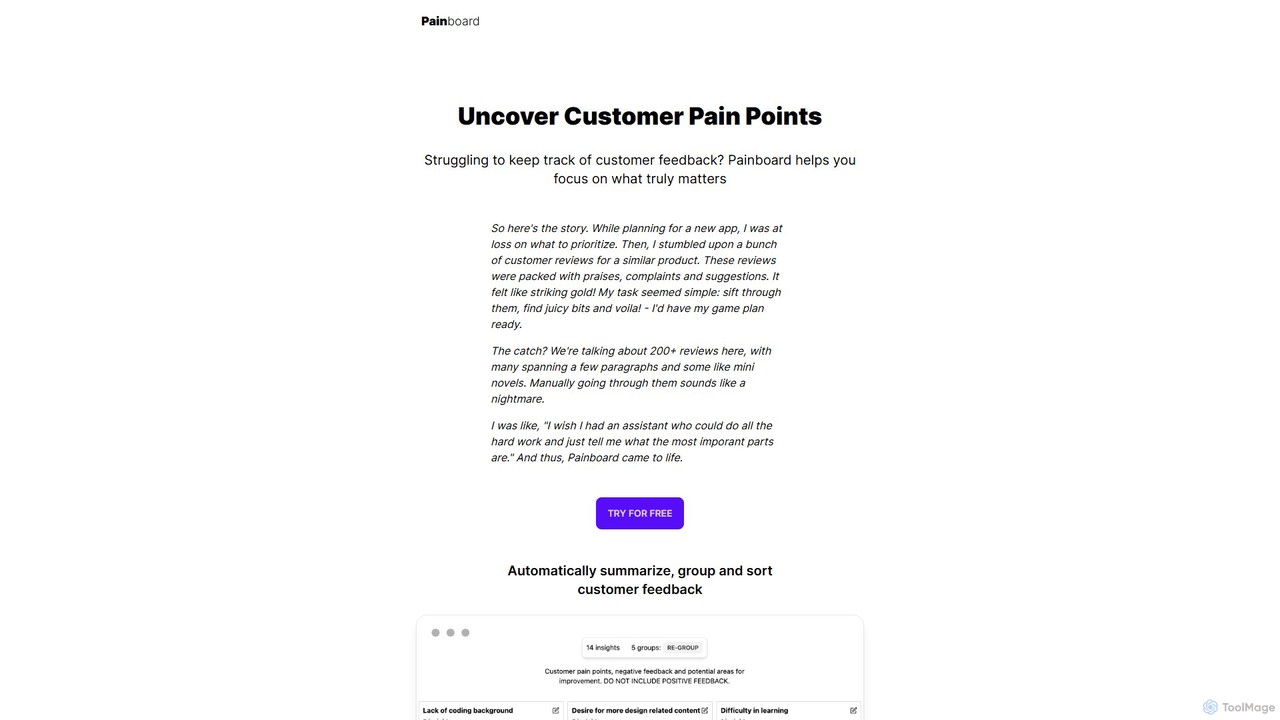
Painboard
Painboard is an AI-powered tool designed to help businesses uncover customer pain points by automatically analyzing feedback. It summarizes, groups, and sorts reviews, support tickets, and surveys to provide actionable insights. This helps product managers, marketers, and founders prioritize features, refine messaging, and build a user-centric roadmap without manually sifting through mountains of data.
Customer Support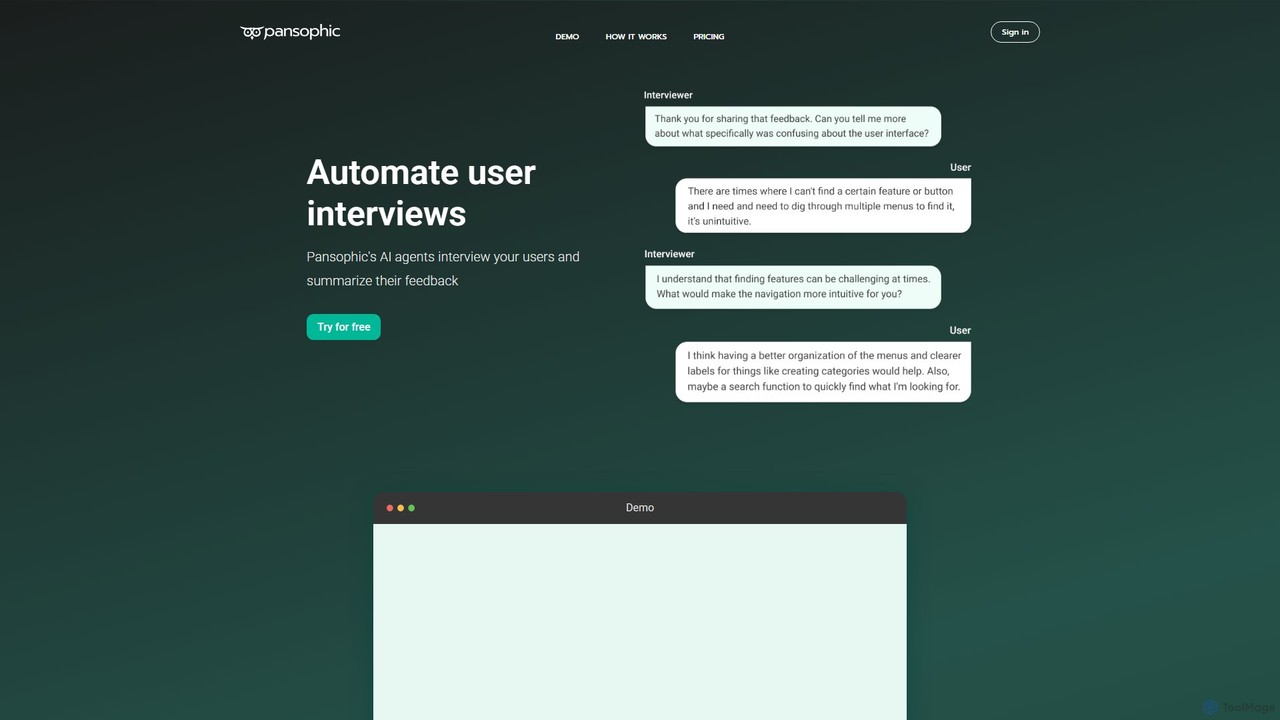
Pansophic
Pansophic is an AI-powered platform that automates user interviews. Its AI agents conduct 24/7, multilingual conversations with your users, then automatically analyze and summarize the feedback to provide actionable insights, sentiment analysis, and key themes, streamlining the entire user research process.
Data Analysis
Jyek
Jyek is an AI agent platform that understands objectives, creates execution plans, uses tools, and delivers verifiable results for complex, multi-step tasks.
Automation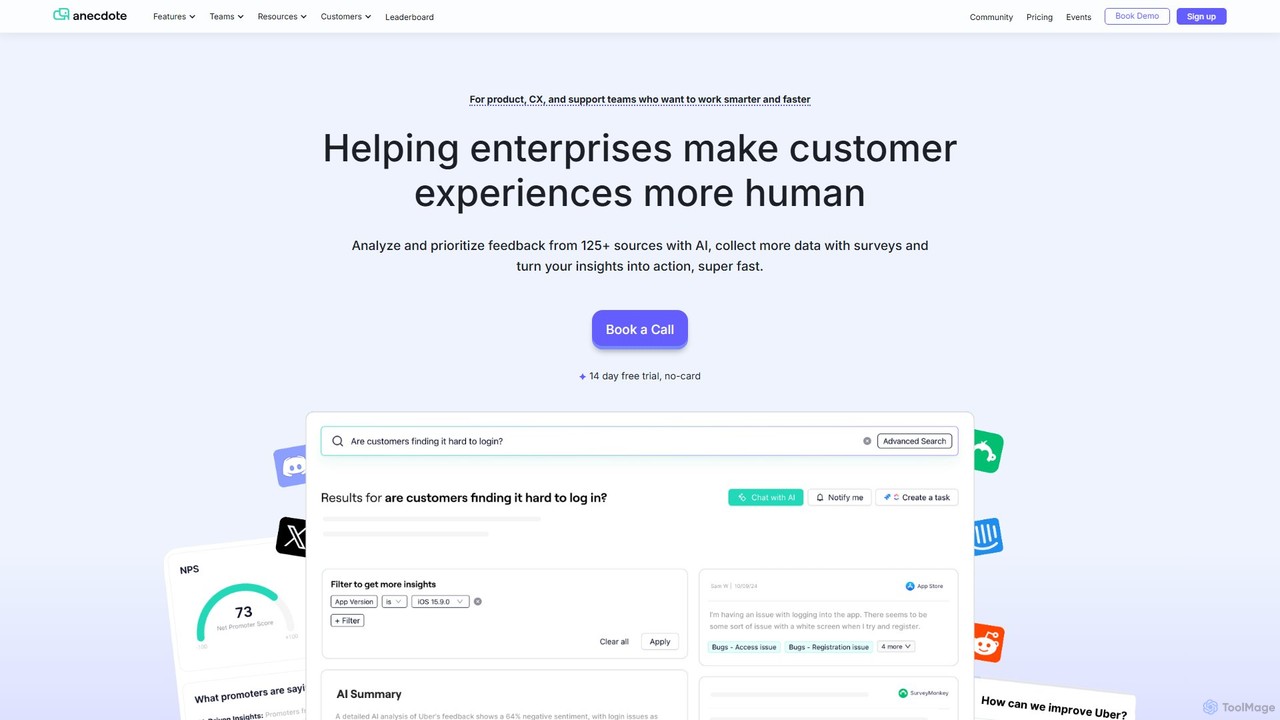
anecdoteai
AnecdoteAI is an all-in-one customer experience (CX) platform that uses AI to analyze and prioritize feedback from over 125 sources. It helps product, CX, and support teams centralize feedback, uncover actionable insights, monitor competitors, and automate analysis to build more human customer experiences, faster.
Market Research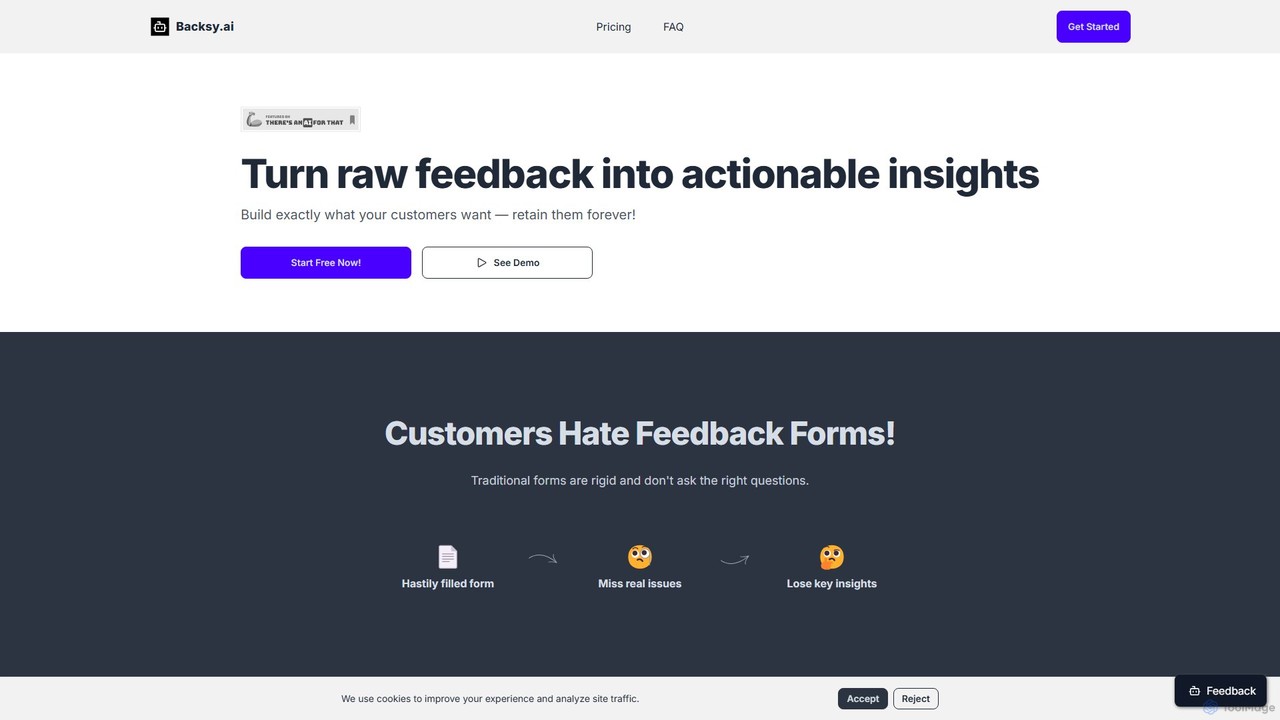
Backsy.ai
Backsy.ai is an AI-powered platform designed to transform raw, unstructured customer feedback into actionable insights. It allows businesses to collect honest opinions through anonymous text or voice submissions, bypassing rigid forms. The AI analyzes this feedback to identify trends, score product attributes, and highlight key areas for improvement, helping companies build products their customers truly want.
Feedback Management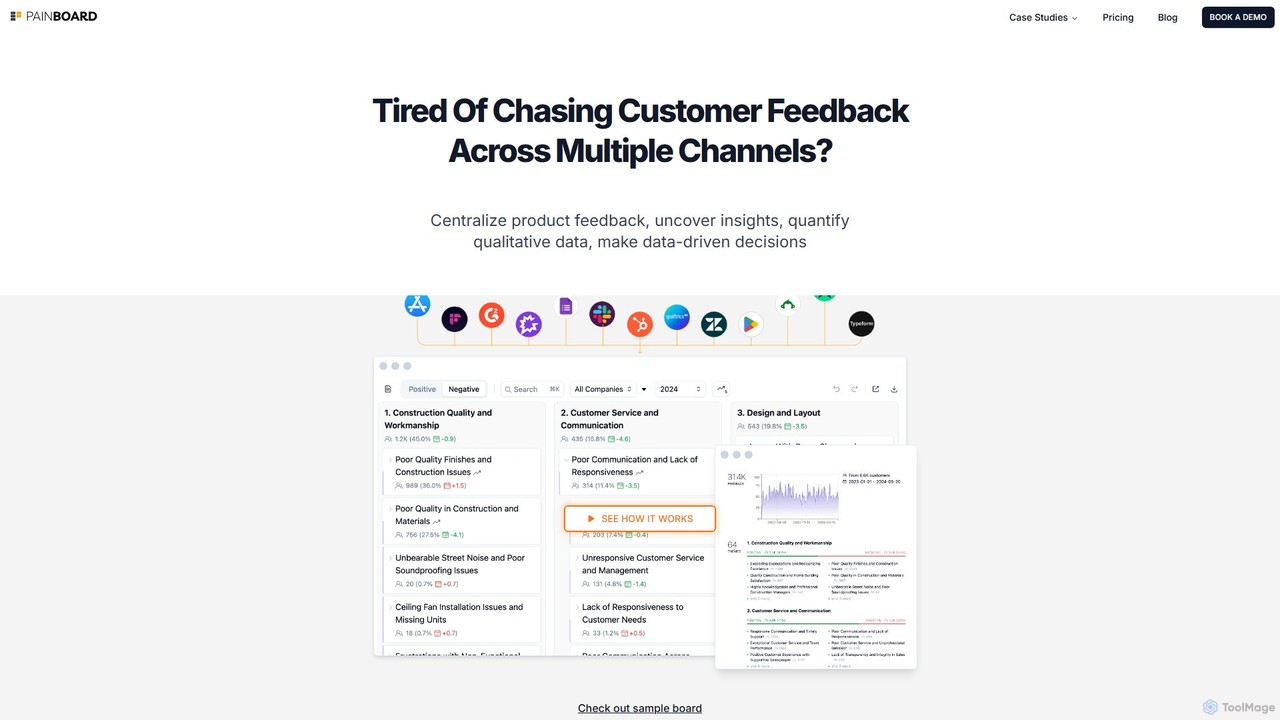
Painboard
Painboard is an AI-powered platform that centralizes and analyzes unstructured customer feedback from multiple channels. It transforms qualitative data from NPS surveys, reviews, and support tickets into quantifiable, actionable insights, helping product and CX teams make data-driven decisions.
Business Intelligence
unsurvey
unsurvey is an AI-powered platform that replaces traditional surveys with dynamic, human-like conversational interviews. It enables businesses to gather deep, actionable customer insights in over 50 languages through voice, video, or text, delivering results in hours instead of months. It automates analysis, providing summaries, structured data, and visualizations.
Feedback Collection
kansei Comments (0)
Sign in to comment.
Sign inNo comments yet.