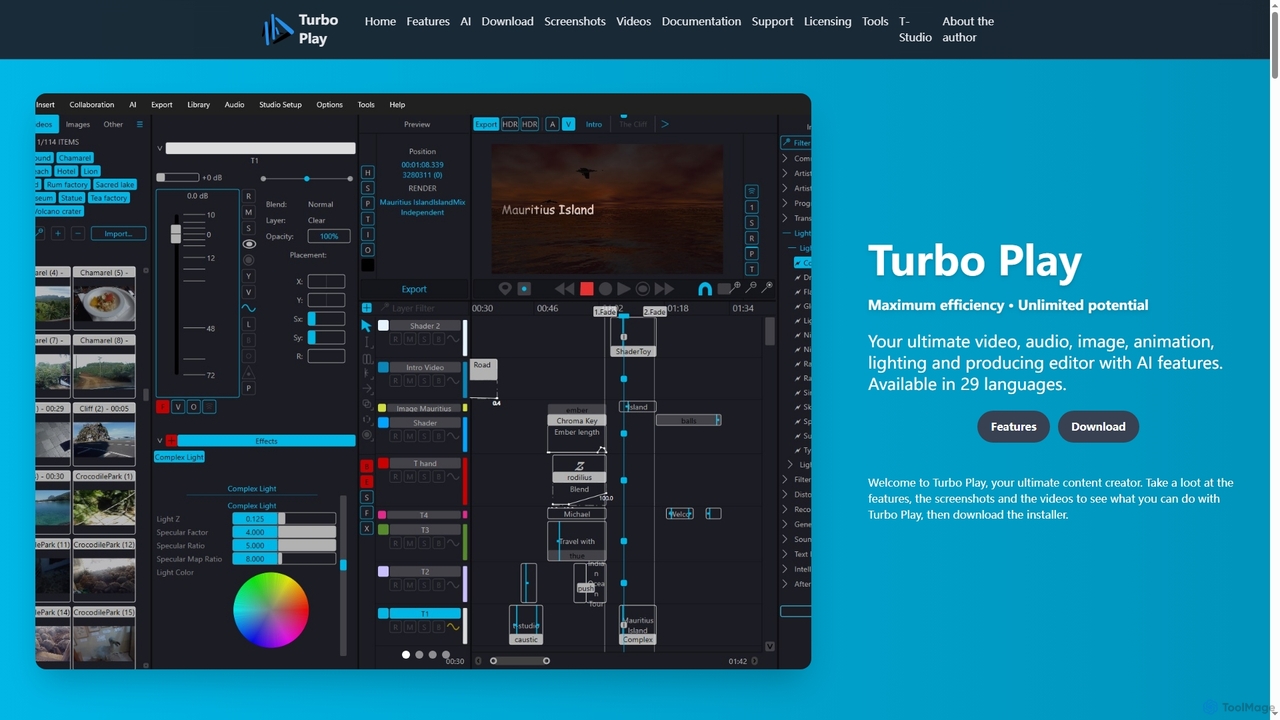
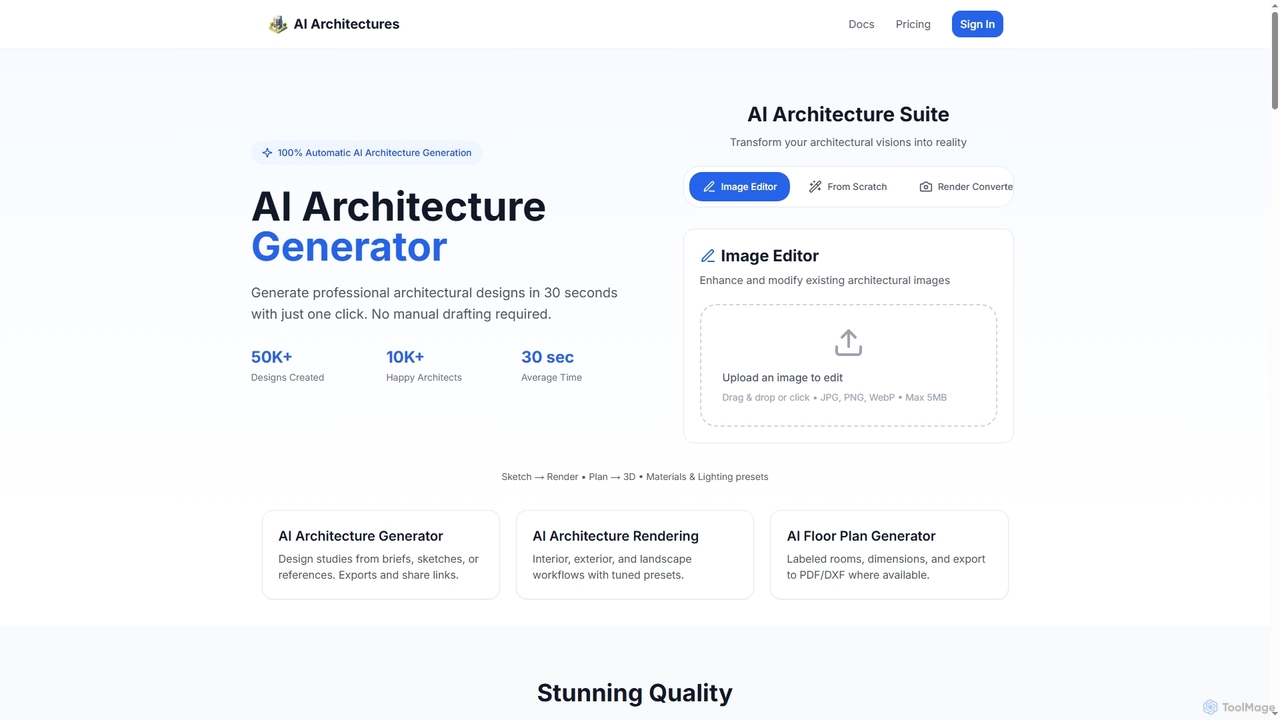
3D & Design are AI-powered tools that revolutionize the creation, modification, and optimization of visual content across two-dimensional and three-dimensional spaces. These tools leverage advanced machine learning algorithms, including generative AI, to automate complex design tasks, accelerate workflows, and unlock new creative possibilities. They empower designers, artists, architects, and engineers to generate models, textures, and entire scenes with unprecedented speed and precision, transforming traditional design processes.
Core Features
- Generative 3D Modeling: Automatically create complex 3D models from text prompts, sketches, or existing assets.
- Intelligent Texturing & Material Generation: Apply realistic textures and materials, or generate new ones based on visual input or descriptions.
- Automated Rendering & Optimization: Enhance rendering quality, optimize lighting, and accelerate rendering times using AI algorithms.
- Design Style Transfer: Apply specific artistic styles or design aesthetics to existing 2D images or 3D models.
- Layout & Composition Assistance: AI-driven suggestions for optimal visual arrangement and composition in 2D and 3D scenes.
Use Cases
These tools are widely adopted in industries requiring high-fidelity visual content and rapid iteration. From game development studios accelerating asset creation to architectural firms visualizing complex structures, and product designers prototyping new concepts, AI 3D & Design tools streamline demanding visual workflows. They also assist marketing teams in generating diverse advertising creatives and animators in automating character rigging and motion.
How to Choose
When selecting AI 3D & Design tools, consider the specific design tasks you need to automate (e.g., modeling, texturing, rendering). Evaluate the tool's integration capabilities with your existing software ecosystem (e.g., Blender, Unity, Adobe Creative Suite). Assess the quality and fidelity of the AI-generated output, and compare pricing models based on usage or subscription. Finally, consider the learning curve and available community support for efficient adoption.