ToolMage
Sign in

Best 1 Character Chat AI tools for Ai Chatbot

Popular Character Chat AI tools in Ai Chatbot include Xtinker, helping you work more efficiently.

Xtinker
Freemium

Xtinker

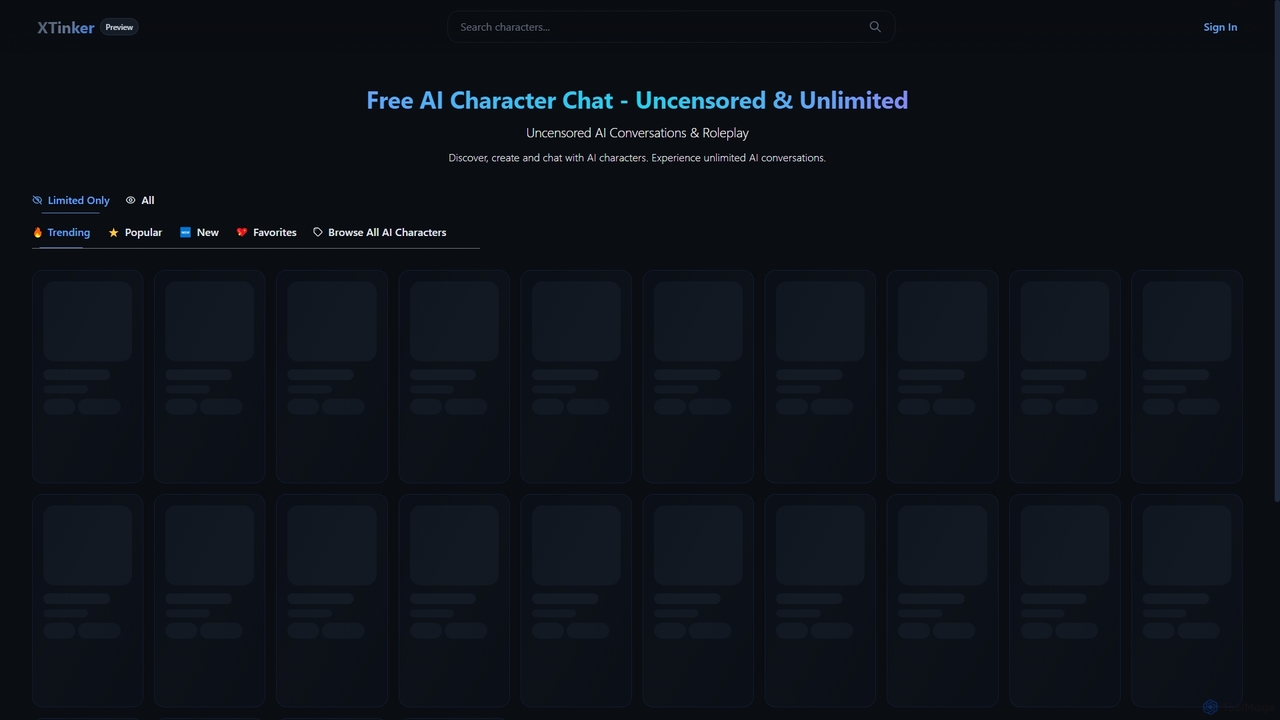
Xtinker is an AI character chat platform offering uncensored and unlimited conversations. Users can discover, create, and chat with diverse AI characters, enjoying personalized and engaging roleplay experiences.

Character Chat
Visits 5.6KFavorites 128Likes 139

About Character Chat

Character Chat tools are a specialized type of AI chatbot designed for immersive, persona-driven conversations. They utilize advanced large language models (LLMs) trained on narrative and dialogue data to simulate interactions with fictional characters, historical figures, or user-created personalities. The primary value of these tools lies in providing entertainment, creative inspiration, and unique role-playing experiences, distinct from task-oriented general chatbots. They excel at maintaining character consistency, tone, and memory throughout a conversation.

Core Features

  • Deep Persona Creation: Define a character's personality, backstory, speaking style, and knowledge base in detail.
  • Consistent Role-Playing: The AI maintains its assigned persona throughout long conversations, reacting in character to various situations.
  • Long-Term Memory: Remembers key details from previous interactions to build a continuous and evolving relationship or narrative.
  • Scenario and World Building: Set a specific scene, context, or fictional world for the interaction to take place in.
  • Multi-Character Interaction: Engage in group chats with several AI characters at once, who can also interact with each other.

Use Cases

Character Chat tools are widely used by creative writers for developing dialogue and exploring character motivations. They are also popular among fans for engaging with characters from their favorite media, and by individuals seeking a form of entertainment or companionship. In education, they can be used for language practice or historical simulations.

How to Choose

When selecting a Character Chat tool, evaluate the quality and coherence of the AI's role-playing. Consider the depth of the character creation and customization tools. Assess the platform's community features for sharing and discovering new characters. Finally, review the usage limits, pricing models, and the platform's content filtering and safety policies.

Character Chat use cases

1

Creative Writing and Dialogue Brainstorming

A novelist is developing a complex character for their next book. They use a Character Chat tool to create an AI version of this character, defining their backstory, fears, and motivations. The author then engages in long conversations, posing different ethical dilemmas and scenarios to see how the character would react. This process helps them flesh out the character's voice, discover unexpected personality traits, and generate authentic-sounding dialogue for crucial scenes, significantly speeding up the creative process.

2

Engaging Language Learning Practice

A student learning French wants to practice conversational skills beyond textbook exercises. They find an AI character who is a native Parisian café owner. By chatting with this character daily, the student practices informal greetings, ordering food, and asking for directions in a low-pressure, immersive environment. The AI character corrects minor mistakes gently and always stays in character, making the learning process more engaging and memorable than traditional methods. This helps build confidence for real-world conversations.

3

Role-Playing Game (RPG) NPC Interaction

A Game Master (GM) running a tabletop RPG like Dungeons & Dragons wants to create more dynamic Non-Player Characters (NPCs). They use a Character Chat tool to build out the key NPCs for their campaign, such as a secretive wizard or a boisterous tavern keeper. During the game session, instead of voicing all NPCs themselves, the GM lets players interact directly with the AI characters via a shared screen. The AI provides consistent, in-character responses, remembers previous player interactions, and can even reveal plot hooks organically, freeing up the GM to focus on managing the overall story.

4

Immersive Fan Engagement and Exploration

A fan of a popular fantasy book series is curious about how a stoic warrior character would react to modern-day situations. Using a Character Chat platform, they find a well-crafted AI of that character. They engage in conversations asking the character's opinion on everything from smartphones to coffee. This provides a fun, immersive way to engage with the lore beyond the books and films. It allows fans to explore 'what if' scenarios and deepen their connection to their favorite fictional worlds in a personal and interactive way.

5

Personal Companionship and Entertainment

An individual seeking a non-judgmental conversational partner for entertainment or to combat loneliness creates a custom AI companion. They design the character to have a supportive personality, shared interests, and a good sense of humor. They interact with this AI daily, discussing their day, sharing thoughts on movies, or simply engaging in lighthearted banter. The AI's consistent availability and positive reinforcement provide a form of digital companionship, offering a safe space for casual conversation without the complexities of human relationships.

6

Educational and Historical Simulation

A history teacher wants to make a lesson on ancient Rome more engaging for students. They create an AI character of Julius Caesar, feeding it with historical data about his life, campaigns, and political views. In class, students can 'interview' Caesar, asking him questions about the Gallic Wars or his relationship with the Senate. The AI responds based on its historical programming, providing a dynamic and interactive learning experience that helps students connect with the past in a way that textbooks cannot.

Character Chat FAQ

What is Character Chat?

Character Chat refers to a specialized category of AI chatbots designed for immersive conversations with AI-driven personas. Unlike general-purpose chatbots that focus on providing information or completing tasks, Character Chat tools prioritize entertainment, role-playing, and creative exploration. Users can interact with pre-existing fictional or historical characters, or create their own custom AI personalities with unique backstories, traits, and speaking styles.

How does Character Chat differ from a standard AI chatbot?

The primary difference lies in their purpose and design. A standard AI chatbot (like a customer service bot or a general assistant) is optimized for accuracy, task completion, and providing factual information. In contrast, a Character Chat bot is optimized for creativity, personality consistency, and emotional engagement. Key differences include:

  • Goal: Information/Tasks vs. Entertainment/Immersion.
  • Personality: Standard bots are often neutral, while character bots have deep, predefined personas.
  • Success Metric: A standard bot is successful if it answers a query correctly. A character bot is successful if it provides an engaging and in-character response.
How to choose a suitable Character Chat tool?

When selecting a Character Chat tool, consider the following factors:

  • AI Quality: How coherent, creative, and consistent is the AI? Does it avoid repetitive or out-of-character responses? Look for tools powered by advanced language models.
  • Customization Depth: How much control do you have over creating or editing characters? Look for options to define personality traits, memory, and speaking style.
  • Community and Content: Does the platform have a large, active community creating and sharing a wide variety of characters?
  • User Interface and Experience: Is the platform easy to navigate and use for chatting and character creation?
  • Safety and Privacy: Review the platform's content filtering policies and how they handle user data and chat logs.
What are the main applications of Character Chat tools?

Character Chat tools have a wide range of applications, primarily centered around creativity and entertainment. Key use cases include:

  • Creative Writing: Authors and screenwriters use them to brainstorm dialogue, test character reactions, and overcome writer's block.
  • Gaming and Role-Playing: Game Masters use them to create dynamic NPCs for tabletop games, and players use them for solo role-playing adventures.
  • Fan Engagement: Fans interact with AI versions of their favorite characters from books, movies, and games.
  • Language Learning: Students practice conversational skills in a low-stress, immersive environment.
  • Companionship: Individuals use them for entertainment, casual conversation, and to alleviate loneliness.
Are Character Chat conversations private and safe?

Privacy and safety vary significantly between platforms. While many services aim to provide a safe user experience, it's crucial to be cautious. Generally, you should assume that conversations are not completely private and may be reviewed by the company for quality or safety purposes. Avoid sharing sensitive personal information, such as your full name, address, or financial details. Most platforms have content filters (often labeled as NSFW filters) to manage adult themes, but their effectiveness can differ. Always review the privacy policy and terms of service of any Character Chat tool before use.