
ToolMage
Sign in

Best 1 Assistant for Ai Chatbot

Popular Assistant in Ai Chatbot include Opera, helping you work more efficiently.

Opera
Freemium

Opera

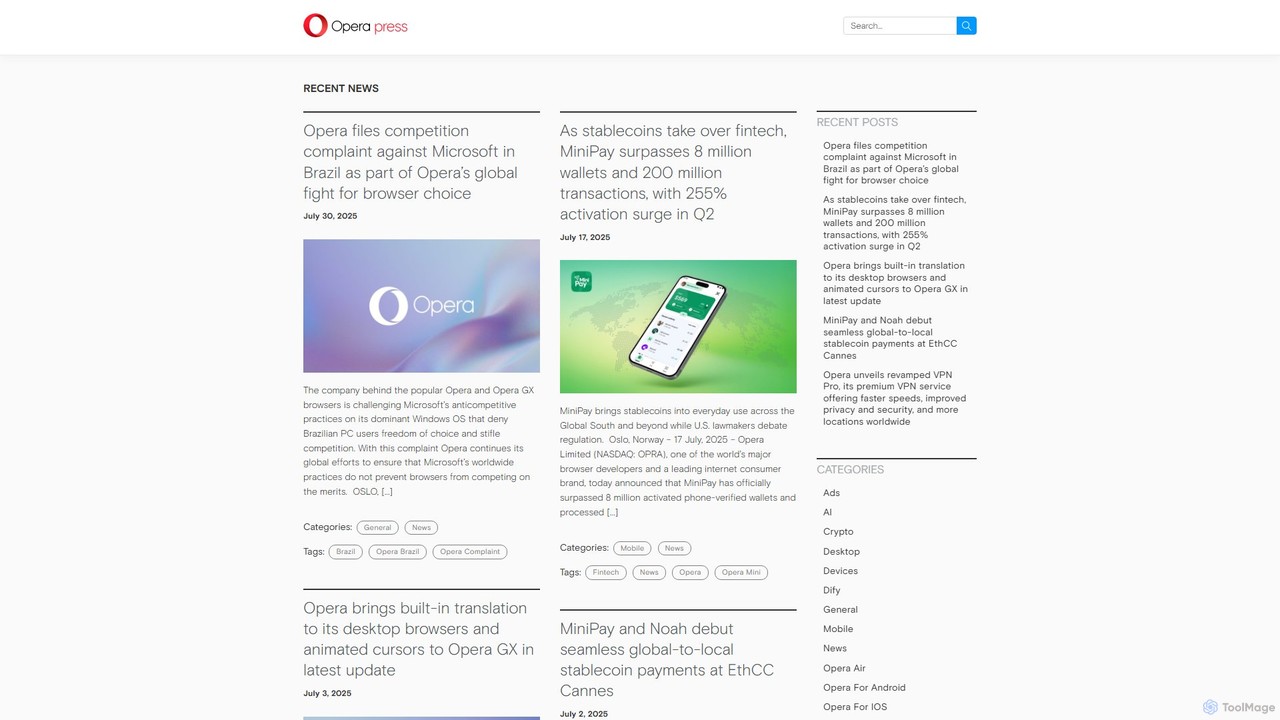
Opera is an innovative, multi-platform web browser supercharged with Aria, a native AI assistant. It offers a faster, safer, and smarter browsing experience with a free built-in VPN, ad blocker, and specialized versions like Opera GX for gamers. Aria provides real-time web information, image generation, and advanced productivity features, all integrated seamlessly.

Assistant
Visits 222.7KFavorites 119Likes 111

About Assistant

AI Assistants are specialized AI tools designed to perform specific tasks, automate workflows, and provide personalized support, distinguishing themselves from general AI chatbots by their action-oriented capabilities. They leverage advanced natural language processing and machine learning to understand user intent and execute predefined actions, significantly enhancing productivity and user experience by handling routine or complex requests efficiently.

Core Features

  • Task Automation: Automatically handles repetitive tasks like scheduling, data entry, or report generation.
  • Personalized Support: Provides tailored information, recommendations, or assistance based on user profiles and past interactions.
  • Proactive Engagement: Initiates conversations or actions based on detected patterns or triggers, anticipating user needs.
  • Integration Capabilities: Connects with various third-party applications and services to extend functionality.
  • Contextual Understanding: Maintains conversational context across interactions to offer more relevant and seamless assistance.

Use Cases

These tools are widely adopted in customer service for automating support queries, in personal productivity for managing schedules and reminders, and in business operations for streamlining administrative tasks. For instance, a marketing assistant can draft social media posts, while a coding assistant can generate code snippets.

How to Choose

When selecting an AI Assistant, consider its specific task automation capabilities, the depth of its personalized support, its integration ecosystem with existing tools, and the ease of customization for your unique workflows. Evaluate its ability to understand complex commands and its learning capacity over time to ensure it meets evolving needs.

Featured tool rankings

Assistant use cases

1

Automating Customer Service Inquiries

A customer support team uses an AI Assistant to automatically answer frequently asked questions, guide users through troubleshooting steps, and escalate complex issues to human agents. This reduces response times and frees up human agents for more critical tasks, improving overall customer satisfaction by providing instant and accurate information.

2

Streamlining Meeting Scheduling

An executive assistant or team lead employs an AI Assistant to coordinate meeting times across multiple calendars, send invitations, and manage RSVPs. The assistant handles time zone differences and availability conflicts, saving significant administrative time and ensuring efficient scheduling for complex team or client meetings.

3

Generating Personalized Content Drafts

A content creator or marketer utilizes an AI Assistant to draft initial versions of emails, social media posts, or blog outlines based on provided topics and target audience. This accelerates the content creation process, offering diverse starting points for human refinement and ideation, significantly boosting creative output.

4

Assisting with Code Development

A software developer integrates an AI Assistant into their IDE to generate code snippets, suggest syntax corrections, and explain complex functions. This enhances coding efficiency, reduces debugging time, and helps developers learn new frameworks or languages more quickly, improving overall software development productivity.

5

Automating Data Entry and Report Generation

A business analyst or administrative staff uses an AI Assistant to extract specific data from documents, input it into databases, and compile routine reports. This automates tedious data management tasks, ensuring accuracy and providing timely insights without manual effort, significantly reducing operational overhead.

6

Personalized Learning and Tutoring

A student or lifelong learner interacts with an AI Assistant to get explanations on complex topics, practice problem-solving, and receive tailored feedback. The assistant adapts to the learner's pace and style, offering a personalized educational experience outside traditional classroom settings, enhancing comprehension and retention.

Assistant FAQ

What are AI Assistants?

AI Assistants are intelligent software tools designed to perform specific tasks, automate workflows, and provide personalized support. Unlike general AI chatbots, they are typically action-oriented, focusing on executing commands, managing information, and integrating with other systems to achieve defined objectives, thereby enhancing productivity and efficiency.

How do AI Assistants differ from general AI Chatbots?

While both use conversational AI, AI Assistants are more focused on task execution and proactive support, often integrating with other applications to perform actions like scheduling, data entry, or content generation. General AI chatbots primarily focus on conversational interaction, answering questions, and providing information without necessarily performing external actions or complex workflows.

What are the key benefits of using AI Assistants?

AI Assistants significantly boost productivity by automating repetitive tasks, reduce operational costs by handling routine inquiries, and enhance user experience through personalized and instant support. They also improve accuracy in data handling, free up human resources for more strategic work, and enable faster decision-making by providing timely information and insights.

How do I choose the right AI Assistant for my needs?

Consider the specific tasks you need to automate, the level of personalization required, its compatibility with your existing software ecosystem, and the ease of customization for your unique workflows. Evaluate its natural language understanding capabilities, security features, scalability, and the vendor's support to ensure it aligns with your long-term goals and operational requirements.

Can AI Assistants integrate with existing business tools?

Yes, most advanced AI Assistants are designed with robust integration capabilities. They can connect with CRM systems, project management tools, email platforms, calendars, and other enterprise applications through APIs or pre-built connectors, enabling seamless data flow and workflow automation across your tech stack, enhancing overall operational efficiency.