ToolMage
Sign in

Best 1 Custom Bots for Ai Chatbots

Popular Custom Bots in Ai Chatbots include Rozetta, helping you work more efficiently.

Rozetta
Paid

Rozetta

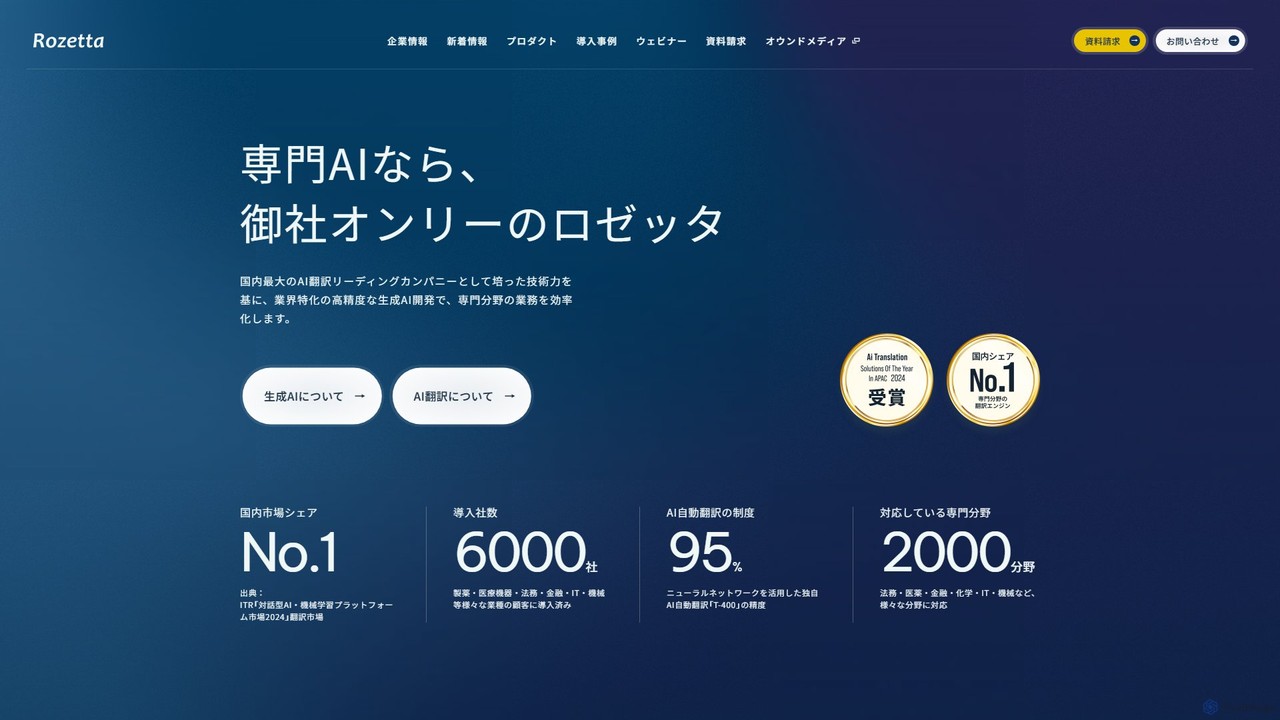
Rozetta is an enterprise-grade AI platform from Japan, specializing in high-precision, industry-specific AI translation and custom generative AI solutions. It offers secure, tailor-made systems for businesses in fields like pharmaceuticals, legal, and finance to enhance productivity and global communication.

Custom Bots
Visits 41.8KFavorites 134Likes 128

About Custom Bots

Custom Bots are AI-powered conversational agents meticulously designed and trained to meet the unique requirements of a specific business or organization. Unlike general-purpose chatbots, they leverage proprietary data, integrate deeply with existing enterprise systems, and are configured for precise workflows. This specialization allows them to deliver highly accurate, context-aware, and personalized interactions, significantly enhancing operational efficiency and user experience.

Core Features

  • Deep Data Integration: Seamlessly connects with internal databases, CRM, ERP, and other business applications to access real-time, proprietary information.
  • Tailored Knowledge Base: Trained exclusively on an organization's specific documents, product manuals, internal policies, and FAQs for domain-specific expertise.
  • Workflow Automation: Automates complex, multi-step business processes such as lead qualification, appointment scheduling, or support ticket routing.
  • Brand Voice & Personality: Configurable to adopt the company's specific tone, language, and persona, ensuring consistent brand representation.
  • Advanced Intent Recognition: Utilizes sophisticated NLP models to accurately understand domain-specific queries and user intentions, even with nuanced language.

Applicable Scenarios

Custom Bots are invaluable across various sectors, from enhancing customer support with specialized product knowledge to streamlining internal operations. They are particularly effective in industries requiring high levels of data security, personalized interactions, and integration with complex legacy systems, such as finance, healthcare, and large enterprises.

How to Choose

When selecting a Custom Bot solution, prioritize its integration capabilities with your existing tech stack, the depth of customization offered for knowledge and workflows, and its scalability to handle future demands. Evaluate the platform's security features, compliance certifications, and the ease of development and ongoing maintenance to ensure a sustainable and effective deployment.

Featured tool rankings

Custom Bots use cases

1

Automated Technical Support for SaaS Products

A SaaS company's customer support team faces high volumes of complex technical inquiries about product features and troubleshooting. A custom bot, trained on the product's entire documentation and common support tickets, can diagnose issues, provide step-by-step solutions, and escalate to human agents with pre-filled context, reducing ticket volume by 40% and improving first-response time.

2

Personalized Financial Advisory Assistant

A financial institution's clients need quick, secure answers about account balances, transaction history, or loan application status. A custom bot integrates with the banking system, securely authenticates users, and provides real-time, personalized financial information. It guides clients through applications or explains complex products, enhancing satisfaction with 24/7 access and reducing call center load.

3

Internal HR Policy & Benefits Navigator

A large enterprise's HR department is overwhelmed by employee questions about company policies, benefits, and leave requests. A custom bot, trained on all internal HR documents and handbooks, provides instant, accurate answers to natural language questions. It directs employees to relevant forms or portals, significantly reducing the HR team's administrative burden and improving employee self-service.

4

E-commerce Product Recommendation & Sales Assistant

An online retailer struggles with customers needing help finding specific products or comparing options, leading to abandoned carts. A custom bot integrates with the e-commerce platform's catalog and customer data. It asks qualifying questions, recommends suitable products, answers detailed feature queries, and assists with checkout, increasing conversion rates by 15% and reducing cart abandonment.

5

Healthcare Patient Information & Appointment Scheduler

A hospital or clinic needs to streamline patient inquiries about services, hours, and appointment scheduling. A custom bot, trained on clinic services and FAQs, integrates with the appointment system. It answers common patient questions, guides them through pre-appointment instructions, and facilitates booking or rescheduling, improving patient access to information and reducing administrative calls.

6

Legal Document Q&A and Clause Finder

Law firms or corporate legal departments need to quickly find specific clauses, definitions, or precedents within vast legal documents. A custom bot, trained on the firm's legal document repository and case law, allows users to ask natural language questions about specific legal texts. It provides precise answers or references to relevant sections, significantly accelerating legal research and improving accuracy in document review.

Custom Bots FAQ

What are Custom Bots?

Custom Bots are AI-powered conversational agents specifically designed and trained for an organization's unique needs, data, and workflows. They are built to perform specialized tasks, integrate deeply with proprietary systems, and communicate in a brand-specific voice. This tailored approach ensures highly relevant and accurate interactions, automating specific business processes and enhancing user experiences within a defined domain.

How do Custom Bots differ from general AI Chatbots?

The primary difference lies in their specialization and integration. General AI Chatbots offer broad knowledge and capabilities, often relying on publicly available data. Custom Bots, however, are built or extensively configured to a specific organization's unique requirements. They are trained on proprietary data, integrate with internal systems like CRM or ERP, and automate domain-specific workflows, providing highly accurate and context-aware responses tailored to a particular business context, unlike the more generic interactions of standard chatbots.

What are the key benefits of implementing Custom Bots for a business?

Implementing Custom Bots offers several key benefits. They significantly improve operational efficiency by automating specialized tasks and reducing manual workload. Businesses gain a competitive edge through highly personalized customer experiences and 24/7 availability. Enhanced data security and compliance are achieved by keeping proprietary information within controlled environments. Furthermore, custom bots provide scalable solutions that adapt precisely to evolving business needs, leading to better resource utilization and faster problem resolution.

What technical considerations are important when developing or deploying a Custom Bot?

When developing or deploying a Custom Bot, several technical considerations are crucial. First, assess the complexity of data integration with existing enterprise systems (CRM, ERP, knowledge bases) and the availability of robust APIs. Second, consider the quality and volume of proprietary data available for training the NLP models to ensure high accuracy in domain-specific interactions. Third, evaluate the platform's scalability, security protocols, and compliance with industry regulations. Finally, factor in the ease of ongoing maintenance, monitoring, and the flexibility for future enhancements to the bot's capabilities.

Can Custom Bots integrate with existing enterprise systems?

Yes, deep integration with existing enterprise systems is a defining characteristic and a core strength of Custom Bots. They are designed to connect seamlessly with various internal platforms such as CRM (Customer Relationship Management), ERP (Enterprise Resource Planning), internal knowledge bases, HR systems, and proprietary databases. This is typically achieved through APIs (Application Programming Interfaces), webhooks, or custom connectors, allowing the bot to access, process, and update real-time, context-specific information, which is essential for delivering personalized and accurate interactions within a business's unique operational environment.