Sparks
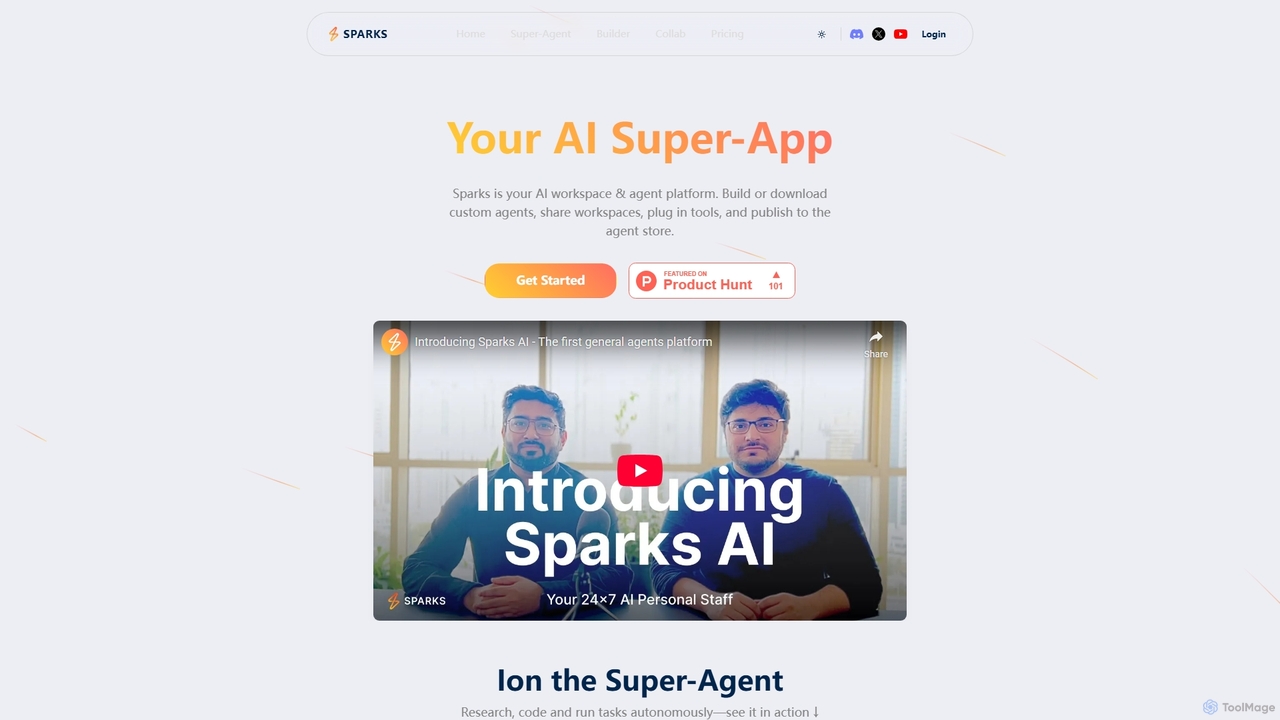
Sparks is an all-in-one AI workspace and agent platform. It allows users to build or download custom AI agents, collaborate in shared workspaces, integrate various tools, and publish creations to an agent store.
Custom ChatbotsPopular Custom Chatbots AI tools in Ai Chatbots include QuickAppFlow, Sparks, and RLAMA, helping you work more efficiently.

Sparks is an all-in-one AI workspace and agent platform. It allows users to build or download custom AI agents, collaborate in shared workspaces, integrate various tools, and publish creations to an agent store.
Custom Chatbots
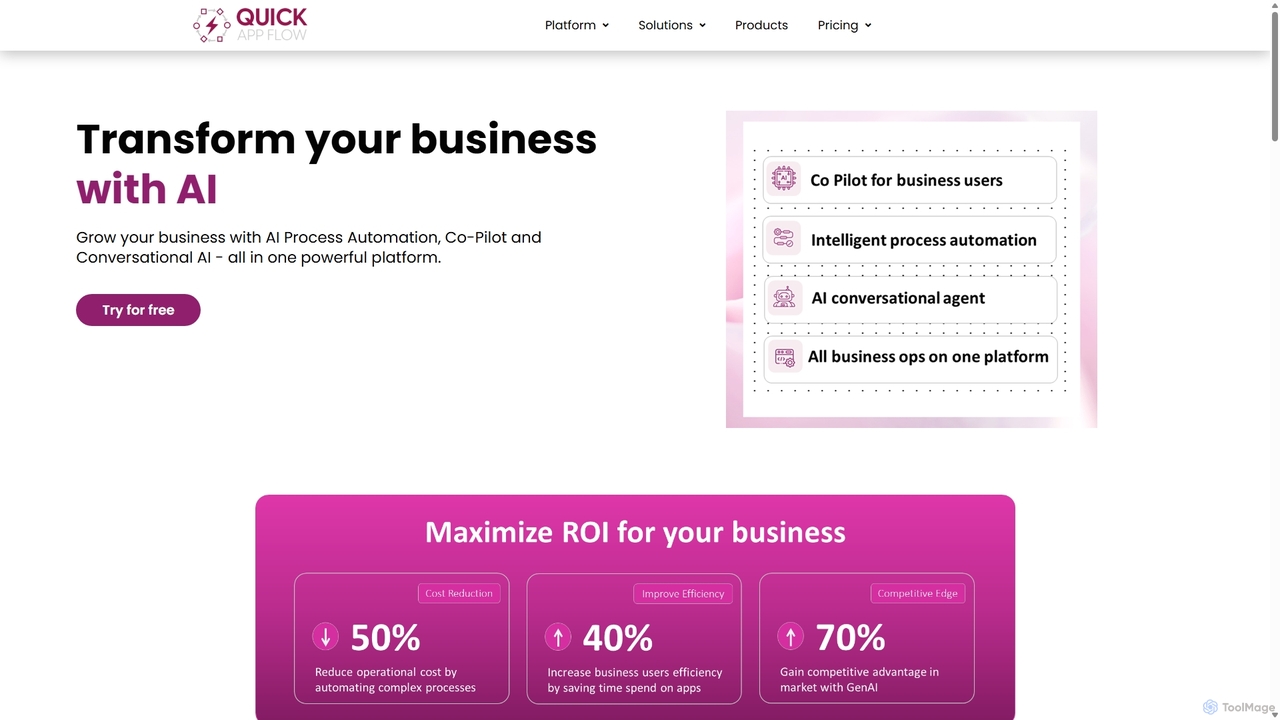
QuickAppFlow is an AI-powered low-code/no-code platform designed to build custom enterprise applications, automate complex workflows, and launch SaaS products. It integrates AI Process Automation, a conversational AI Co-Pilot, and visual development tools to accelerate digital transformation, enabling users to create powerful apps 10x faster and at a fraction of the cost without needing deep technical expertise.
Custom Chatbots
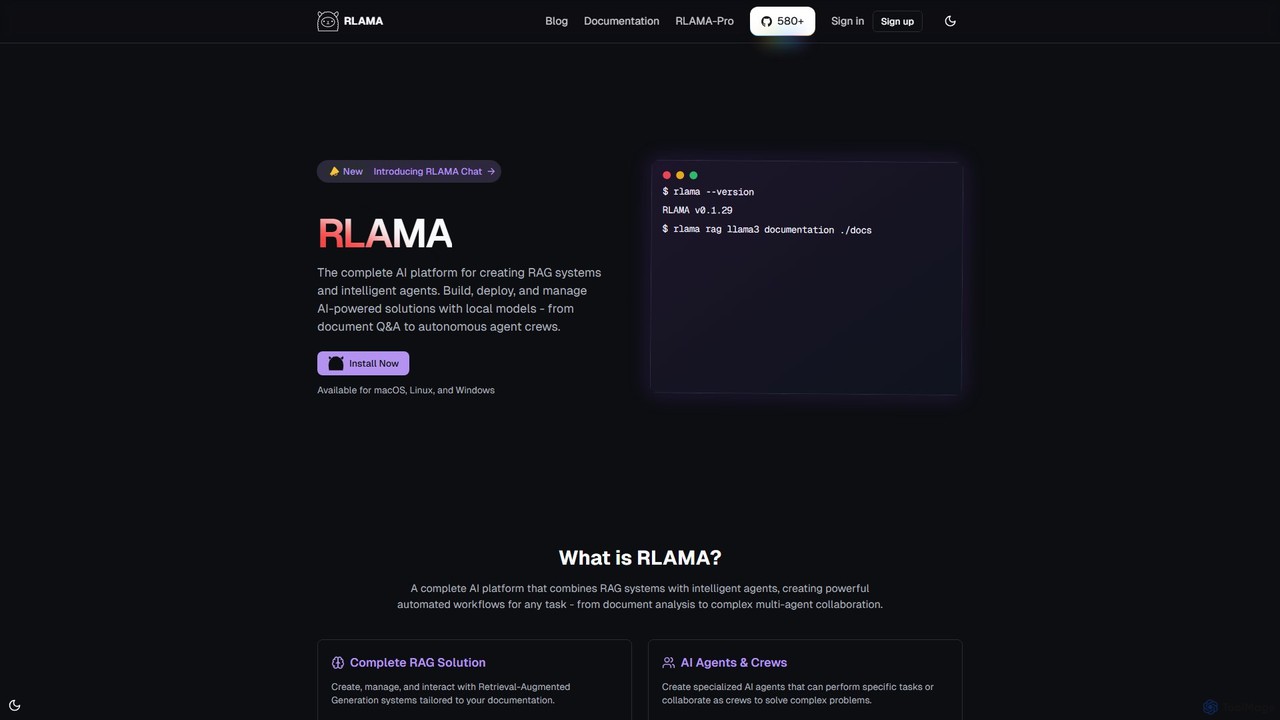
RLAMA is a comprehensive, local-first AI platform for creating Retrieval-Augmented Generation (RAG) systems and intelligent AI agents. It enables users to build, deploy, and manage powerful AI solutions on their own machines, ensuring 100% data privacy. With a robust CLI, a visual builder, and multi-agent orchestration, it's designed for tasks ranging from private document Q&A to complex automated workflows.
Custom ChatbotsCustom Chatbots are AI-powered conversational agents designed and trained specifically on an organization's proprietary data. Unlike general-purpose chatbots, they utilize a company's unique knowledge base—such as documents, websites, or internal databases—to provide accurate, context-aware answers. This enables businesses to automate specific workflows and deliver highly relevant experiences for customer support, internal knowledge management, and lead generation. The key advantage is their ability to reflect a company's brand voice and handle proprietary information securely and consistently.
Custom Chatbots are primarily used by businesses to enhance customer-facing interactions and streamline internal operations. For example, e-commerce sites deploy them for 24/7 product support, SaaS companies use them to answer technical documentation queries, and large enterprises build them as internal HR or IT helpdesks for employees.
When selecting a custom chatbot tool, evaluate the supported data sources and file types. Consider the ease of use of its no-code builder, its integration capabilities with your existing software stack, and its security and data privacy policies. Also, assess the scalability of its pricing model as your user engagement grows.
A SaaS company's support team trains a chatbot on their entire help documentation and knowledge base. The chatbot is then embedded on their website and in-app. It instantly answers common user questions about features, billing, and troubleshooting, deflecting repetitive queries. This reduces support ticket volume by over 40%, freeing up human agents to focus on complex, high-value customer issues and improving overall response times.
A large corporation uploads its HR policies, IT security guidelines, and employee handbooks into a custom chatbot platform. The chatbot is integrated with Slack, allowing employees to ask questions like "What is the policy for parental leave?" or "How do I reset my VPN password?" directly in their channels. This provides instant, accurate answers and reduces the administrative burden on HR and IT departments.
A B2B marketing team builds a chatbot for their pricing and product pages. The chatbot proactively engages visitors, asks qualifying questions (e.g., company size, role, specific needs), and based on the answers, can book a demo with the right sales representative directly in their calendar. This automates the initial lead qualification process, shortens the sales cycle, and ensures sales teams receive higher-quality leads.
An online electronics store feeds its entire product catalog, including specifications, manuals, and user reviews, into a custom chatbot. Shoppers can ask natural language questions like "Which laptop under $1000 is best for video editing?" or "Is this camera compatible with my lens?" The chatbot analyzes the data and provides tailored recommendations, acting as a virtual sales assistant to improve user experience and increase conversion rates.
A software company creates a custom chatbot to guide new users through their platform. The chatbot is trained on tutorials, getting-started guides, and feature documentation. Embedded within the application, it can proactively offer tips, answer "how-to" questions contextually, and guide users through setting up their first project. This interactive guidance improves user activation rates and reduces early-stage churn by making the learning process smoother.
A legal or research team uploads thousands of pages of case files, academic papers, or financial reports into a secure custom chatbot. Team members can then ask complex questions like "Find all mentions of 'case X' in relation to 'precedent Y' after 2020." The chatbot acts as an intelligent search and analysis assistant, instantly locating relevant information across vast datasets and saving hundreds of hours of manual review.
Custom Chatbots are AI conversational agents trained on your specific, private data, such as company documents, websites, or a knowledge base. Unlike general AI assistants, they provide answers and perform tasks strictly based on the information you provide. This makes them ideal for business applications like customer support, internal helpdesks, and lead generation, where context, accuracy, and brand consistency are critical.
The main difference is the knowledge source. General AI chatbots (e.g., ChatGPT) are trained on vast, public internet data and can discuss a wide range of topics. Custom Chatbots are trained on a limited, private dataset that you provide. This gives them deep expertise in a narrow domain but prevents them from answering off-topic questions, ensuring brand safety, data accuracy, and control over the conversation.
When choosing a tool, consider these key factors:
You can use a wide variety of data sources. Common examples include entire websites (by providing a URL), text files (.txt), documents (PDF, DOCX), spreadsheets (CSV), and even direct text input. More advanced platforms can also connect directly to APIs or third-party services like Zendesk, Confluence, or Notion to sync information automatically, ensuring the chatbot's knowledge is always up-to-date.
Not necessarily. The vast majority of modern custom chatbot platforms are designed to be "no-code" or "low-code." They provide user-friendly interfaces where you can upload your data, customize the bot's appearance, and embed it on your website with a simple copy-paste snippet. While some platforms offer advanced customization via APIs for developers, the core functionality is accessible to non-technical users, such as marketers, support managers, or business owners.