ToolMage
Sign in

Best 1 Medical Assistant for Ai Chatbots

Popular Medical Assistant in Ai Chatbots include Abridge, helping you work more efficiently.

Abridge
Paid

Abridge

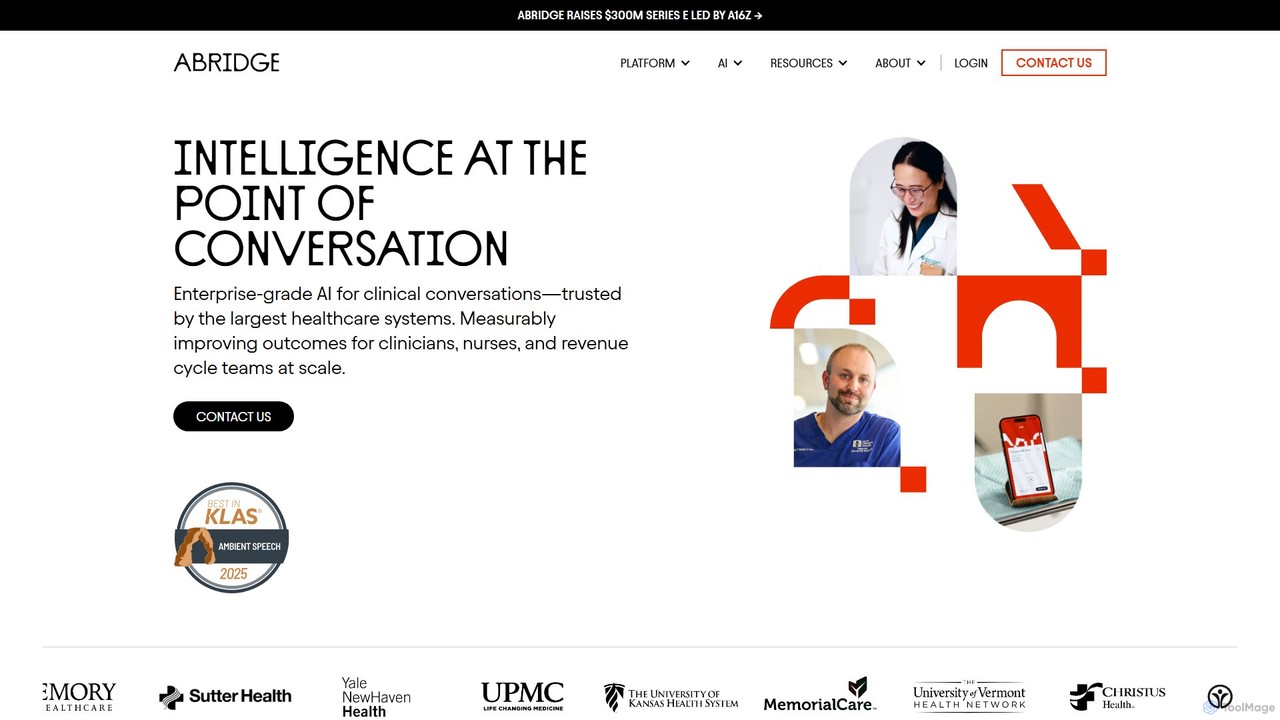
Abridge is an enterprise-grade generative AI platform that transforms clinical conversations into structured, billable medical notes. It's designed to reduce clinician burnout, improve documentation accuracy, and streamline revenue cycle management for healthcare systems.

Medical Assistant
Visits 270.8KFavorites 129Likes 141

About Medical Assistant

Medical Assistant AI tools are specialized AI chatbots designed to support healthcare professionals and patients with medical information, administrative tasks, and preliminary health assessments. These tools leverage advanced Natural Language Processing (NLP) and machine learning to access and interpret vast medical databases, providing quick, evidence-based insights. They aim to streamline clinical workflows, enhance patient engagement, and improve the efficiency of healthcare delivery by automating routine inquiries and offering decision support.

Core Features

  • Medical Information Retrieval: Instantly access up-to-date information on diseases, symptoms, drug interactions, and treatment protocols.
  • Symptom Analysis & Preliminary Diagnosis: Evaluate reported symptoms to suggest potential conditions or guide users to appropriate care pathways.
  • Administrative Automation: Automate appointment scheduling, patient registration, billing inquiries, and medical record management.
  • Patient Education & Support: Provide clear, understandable explanations of medical conditions, treatment plans, and medication instructions to patients.
  • Clinical Decision Support: Offer evidence-based recommendations and alerts to clinicians, aiding in diagnosis and treatment planning.

Applicable Scenarios

Medical Assistant AI tools are invaluable in various healthcare settings. In clinics and hospitals, they can automate patient intake processes, answer frequently asked questions from patients, and assist doctors in quickly researching complex medical cases. Pharmacies utilize them for rapid drug interaction checks and dosage verification, while home healthcare providers can leverage them for remote patient monitoring, medication reminders, and answering immediate health queries, significantly improving patient care and operational efficiency.

How to Choose

When selecting a Medical Assistant AI tool, prioritize accuracy and reliability, as medical context demands precision. Ensure the tool complies with stringent data privacy regulations like HIPAA or GDPR. Evaluate its integration capabilities with existing Electronic Medical Record (EMR) or Electronic Health Record (EHR) systems for seamless workflow. Consider the level of specialization—whether it's a general medical assistant or tailored for specific fields like cardiology or oncology—and assess its user interface for ease of use by both professionals and patients.

Medical Assistant use cases

1

Automated Patient Triage & Pre-screening

For busy clinics and emergency departments, an AI Medical Assistant can conduct initial patient interviews, gather symptom information, and assess urgency levels before a human clinician intervenes. This streamlines patient flow, reduces waiting times, and ensures critical cases are prioritized, allowing medical staff to focus on direct patient care.

2

Real-time Drug Interaction & Dosage Verification

Pharmacists and doctors can use the AI tool to instantly check for potential drug-drug interactions, contraindications, and verify correct dosages based on patient profiles. This significantly reduces medication errors, enhances patient safety, and provides quick, evidence-based support during prescription or dispensing processes.

3

Summarization of Complex Medical Records

Clinicians often face lengthy patient histories. An AI Medical Assistant can quickly analyze and summarize extensive electronic health records, highlighting key diagnoses, past treatments, allergies, and relevant lab results. This saves valuable time, improves diagnostic accuracy, and ensures comprehensive understanding of a patient's medical background.

4

Personalized Patient Education & Follow-up

Patients with chronic conditions or those recovering from procedures require ongoing education. The AI can provide personalized, easy-to-understand information about their condition, treatment plans, lifestyle adjustments, and medication adherence. It can also send automated follow-up reminders and answer common questions, empowering patients in their health management.

5

Efficient Appointment Scheduling & Reminders

Healthcare administrative staff can leverage the AI Medical Assistant to manage appointment bookings, reschedule requests, and send automated reminders to patients. This reduces no-show rates, optimizes clinic schedules, and frees up staff to handle more complex administrative tasks, improving overall operational efficiency.

6

Support for Preliminary Diagnostic Considerations

General practitioners can utilize the AI to input patient symptoms and receive a list of potential differential diagnoses, along with relevant diagnostic criteria and recommended tests. While not a substitute for human judgment, this tool acts as a valuable second opinion, broadening diagnostic considerations and supporting evidence-based decision-making.

Medical Assistant FAQ

What are Medical Assistant AI tools?

Medical Assistant AI tools are specialized artificial intelligence applications, often in the form of chatbots, designed to support healthcare professionals and patients. They leverage natural language processing (NLP) and machine learning to understand medical queries, retrieve relevant information from vast databases, and perform tasks like symptom analysis, administrative automation, and patient education. They act as intelligent aids within the healthcare ecosystem.

How do AI Medical Assistants ensure accuracy and patient data privacy?

Ensuring accuracy and privacy is paramount for AI Medical Assistants. Accuracy is achieved through training on extensive, validated medical datasets, continuous learning from expert feedback, and often, integration with evidence-based clinical guidelines. Data privacy is maintained by adhering to strict regulations like HIPAA (in the US) or GDPR (in Europe), employing robust encryption, anonymization techniques, and secure access controls. Reputable tools undergo rigorous testing and certification.

What's the difference between a general AI Chatbot and a Medical Assistant AI?

While both are AI chatbots, a general AI chatbot is designed for broad conversational tasks across various domains, lacking specialized medical knowledge. A Medical Assistant AI, however, is specifically trained on medical terminology, diseases, treatments, and healthcare workflows. It possesses deep domain expertise, understands clinical context, and is built with healthcare compliance in mind, making it suitable for sensitive medical applications where general chatbots would be inadequate.

Who benefits most from using Medical Assistant AI tools?

A wide range of users benefit. Healthcare professionals, including doctors, nurses, and pharmacists, gain support for diagnostics, treatment planning, and administrative tasks. Patients benefit from easier access to health information, symptom checkers, and personalized education. Healthcare administrators find value in automating routine tasks like scheduling and billing, leading to improved operational efficiency and better patient experience across clinics, hospitals, and home care settings.

What are the key features to look for when choosing a Medical Assistant AI?

When selecting a Medical Assistant AI, prioritize its medical accuracy and the reliability of its information sources. Look for strong data security and compliance with healthcare regulations (e.g., HIPAA, GDPR). Essential features include robust natural language understanding for medical jargon, seamless integration with existing EHR/EMR systems, and the ability to handle various tasks from information retrieval to administrative support. A user-friendly interface and customizable options are also important for adoption.