
Ai Chatbots Best in category 1 results Multi Model Access AI Tool

Popular AI tools in the Multi Model Access field of Ai Chatbots include ChatScope AI, etc., helping you quickly improve efficiency.

ChatScope AI

ChatScope AI

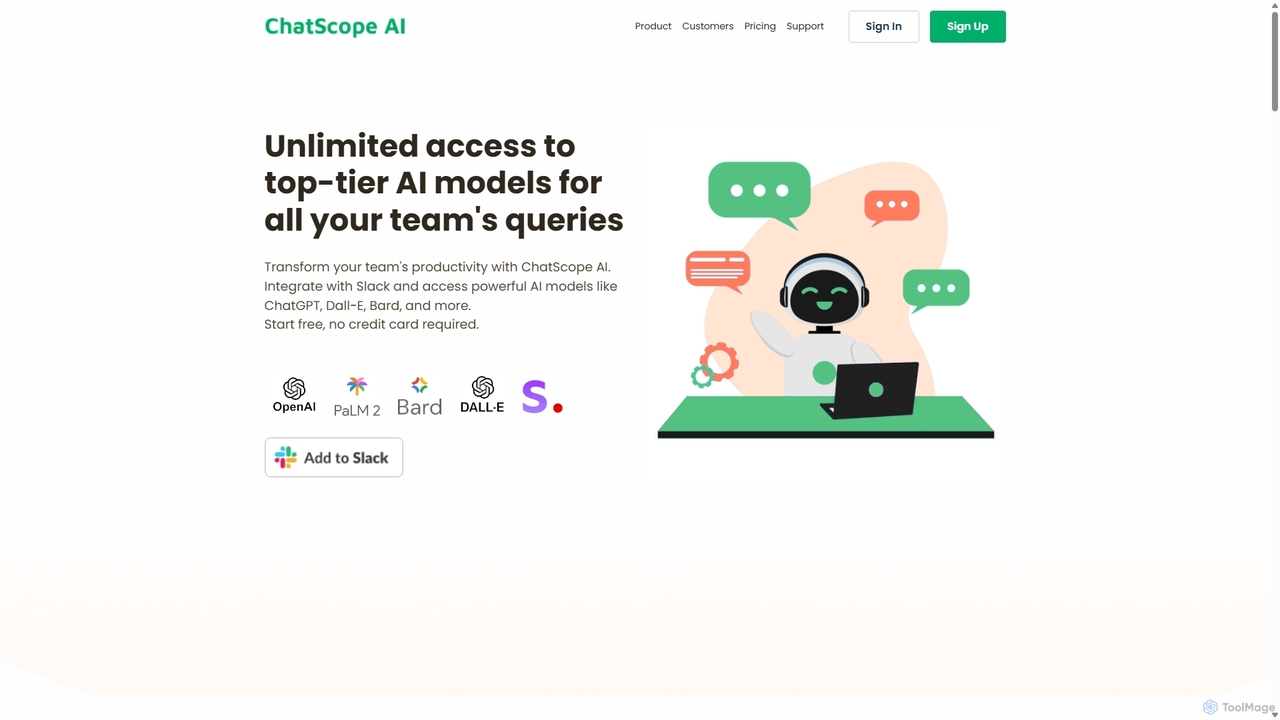
ChatScope AI integrates top-tier AI models like ChatGPT, Dall-E, and Bard directly into your Slack workspace. Boost team …

2.2K

About Multi Model Access

Multi Model Access tools are specialized AI chatbot platforms that provide a unified interface to access and switch between various large language models (LLMs) from different providers. Instead of being limited to a single model like GPT-4 or Claude 3, these tools act as a central gateway to a diverse range of AI models. This enables users to directly compare model performance for specific tasks, optimize operational costs by selecting the most efficient model, and ensure service continuity with fallback options. They often include advanced features for intelligent prompt routing and cross-model performance analytics.

Core Features

  • Model Library & Switching: Access a wide selection of LLMs (e.g., from OpenAI, Anthropic, Google, Mistral) and instantly switch between them within the same interface.
  • Unified API Endpoint: A single API that simplifies development by allowing calls to multiple different models without changing code for each provider.
  • Cost & Usage Analytics: Dashboards to monitor API spending, track token usage per model, and compare the cost-effectiveness of different options.
  • Performance Comparison: Side-by-side testing capabilities to evaluate the speed, quality, and style of responses from various models for the same prompt.
  • Intelligent Routing: Automatically directs queries to the most appropriate or cost-effective model based on complexity, content, or predefined rules.

Use Cases

These tools are ideal for developers building resilient AI applications, businesses aiming to control and optimize AI expenditure, and researchers conducting comparative studies on LLM capabilities. Content creators and prompt engineers also use them to experiment and find the best model for generating specific types of content, from marketing copy to creative writing.

How to Choose

When selecting a Multi Model Access tool, evaluate the breadth and recency of its supported model library. Assess the quality of its API documentation and SDKs for ease of integration. Scrutinize the pricing model, including any platform fees on top of base model costs. Finally, consider the sophistication of its management tools for analytics, cost control, and automated routing.

Multi Model AccessUse Cases

1

A/B Testing AI Models for Marketing Copy

A marketing specialist needs to generate compelling ad copy for a new product launch. Using a Multi Model Access platform, they input a single detailed prompt and simultaneously receive outputs from GPT-4o, Claude 3 Opus, and Llama 3. They can then compare the tone, creativity, and call-to-action effectiveness of each response side-by-side. This process allows them to identify which model best aligns with their brand voice and campaign goals without needing separate subscriptions or interfaces, streamlining the creative workflow.

2

Building Resilient AI Applications with Model Fallback

A developer is creating a customer service chatbot that must maintain high availability. By integrating a unified API from a Multi Model Access provider, they configure their application to use a primary model (e.g., GPT-4o for high-quality responses). They also set up a secondary, faster model (e.g., Claude 3 Haiku) as a fallback. If the primary model's API experiences downtime or high latency, the system automatically reroutes requests to the fallback model. This ensures the chatbot remains operational and responsive, providing uninterrupted service to users.

3

Optimizing AI Operational Costs with Smart Routing

A startup uses an AI-powered tool for internal knowledge base queries. To manage costs, they use a Multi Model Access platform with intelligent routing. Simple queries like 'What is the office Wi-Fi password?' are automatically routed to a fast, inexpensive model like Mistral 7B. More complex, analytical queries such as 'Summarize our Q2 sales performance compared to last year' are sent to a powerful model like Claude 3 Opus. This tiered approach significantly reduces their monthly API bill by ensuring they only pay for high-performance models when absolutely necessary.

4

Academic Research and Comparative LLM Analysis

An AI researcher is conducting a study on the reasoning abilities of different large language models. A Multi Model Access platform is essential for this work. It allows the researcher to create a standardized benchmark of questions and run it across a dozen different models, from open-source to proprietary, through a single interface. The platform's unified logging and output formatting capabilities simplify data collection, enabling the researcher to efficiently gather and analyze results to draw meaningful conclusions about the strengths and weaknesses of each model.

5

Creative Exploration and Prompt Engineering

A creative writer is developing a concept for a new sci-fi story. They use a Multi Model Access tool like Poe to test their core premise on a variety of models. They might send the same prompt to a highly creative model like Claude 3 Opus to generate plot ideas, a visually descriptive model to get scene descriptions, and a more logical model like GPT-4 to check for plot holes. This ability to tap into the unique 'personalities' and strengths of different models from one place accelerates their creative process and helps them refine their ideas from multiple perspectives.

6

Centralized AI Governance and Cost Control for Enterprises

An enterprise IT department needs to provide AI tools to various teams while maintaining control over security and spending. They deploy a Multi Model Access platform as a centralized gateway. This allows them to manage user access, set team-specific budgets, and enforce usage policies across all available LLMs. The platform's comprehensive dashboard provides a single view of all AI-related activities and costs, eliminating the need to manage separate subscriptions with OpenAI, Google, and Anthropic. This simplifies administration, enhances security, and provides clear visibility into the company's overall AI expenditure.

Multi Model AccessFrequently Asked Questions