Ai Chatbots Best in category 2 results Voice Assistant AI Tool

Popular AI tools in the Voice Assistant field of Ai Chatbots include CallHippo、Vagent, etc., helping you quickly improve efficiency.

Free
Vagent

Vagent

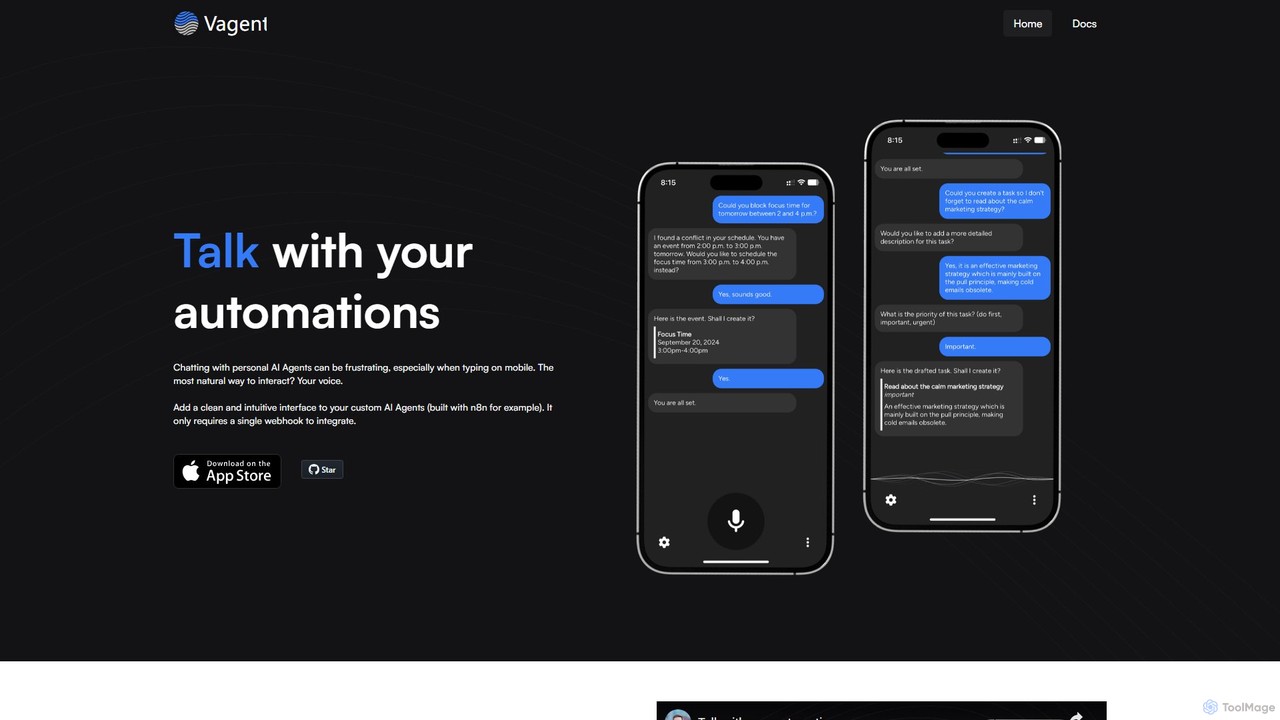
Vagent is a privacy-focused application that provides a voice interface for your custom automations. Connect it to any …

4.4K
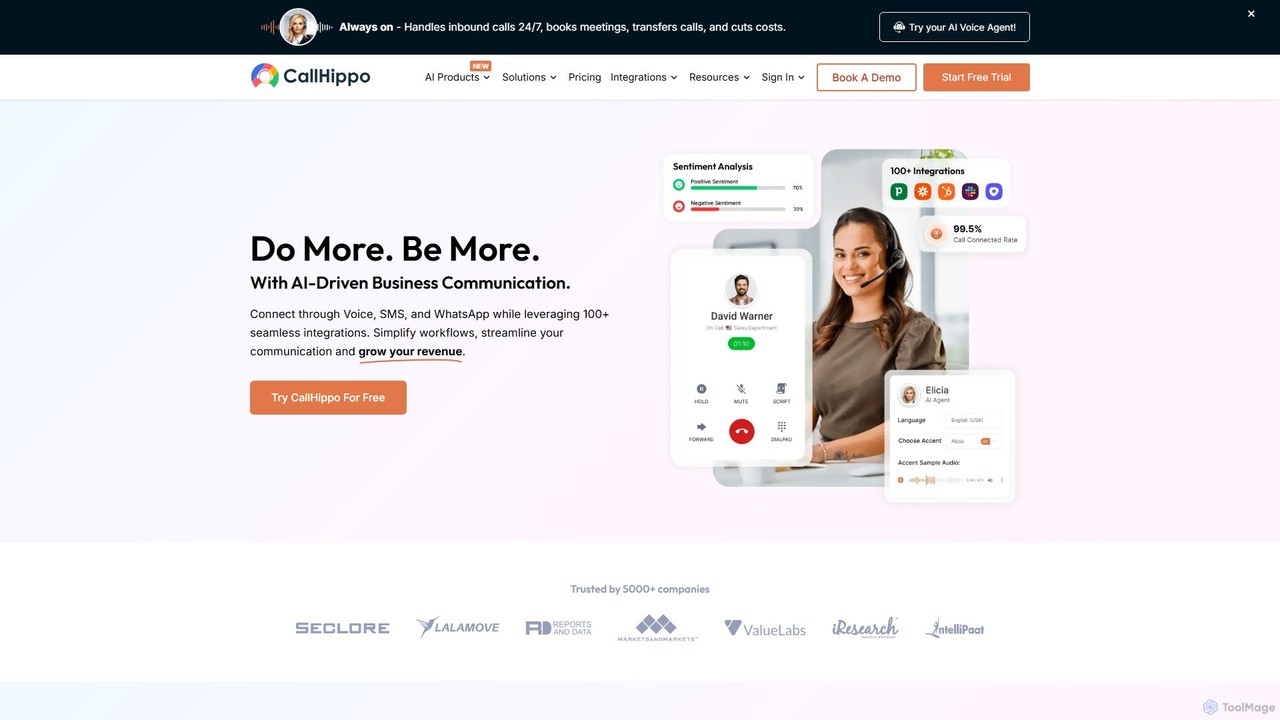
CallHippo

CallHippo

CallHippo is an AI-driven virtual phone system designed for businesses of all sizes. It unifies communication across voice, …

311.1K

About Voice Assistant

Voice Assistants are AI-powered tools that enable users to interact with devices and services using spoken commands. Leveraging advanced speech recognition and natural language processing (NLP), these assistants can understand user intent, process requests, and respond verbally, often acting as a hands-free interface within the broader category of AI Chatbots. They transform complex digital interactions into intuitive conversations, making technology more accessible and integrated into daily life.

Core Features

  • Speech Recognition: Accurately converts spoken language into text for processing.
  • Natural Language Understanding (NLU): Interprets the meaning and intent behind user utterances, even with varied phrasing.
  • Voice Synthesis (Text-to-Speech): Generates natural-sounding spoken responses to user queries and commands.
  • Task Automation: Executes specific actions like setting alarms, playing music, sending messages, or controlling smart home devices.
  • Contextual Awareness: Maintains understanding across multi-turn dialogues to provide relevant and coherent interactions.

Use Cases

Voice assistants are widely adopted across various domains. In smart homes, they allow users to control lighting, thermostats, and entertainment systems with simple voice commands. In automotive settings, they provide hands-free navigation, music control, and communication, enhancing safety. For individuals with accessibility needs, voice assistants offer an invaluable interface for interacting with technology without physical input, promoting greater independence.

How to Choose

When selecting a voice assistant, consider its accuracy in speech recognition and NLU, the range of supported languages, and its integration capabilities with existing devices and platforms. Evaluate the breadth of its task automation features and the level of customization offered. Data privacy policies and the assistant's ability to handle complex, multi-turn conversations are also crucial factors for a seamless and secure user experience.

Voice AssistantUse Cases

1

Smart Home Device Control

Homeowners can use a voice assistant to manage their smart home ecosystem. By issuing commands like "Turn off the living room lights" or "Set the thermostat to 22 degrees," users can control various connected devices hands-free, enhancing convenience and energy efficiency without needing to interact with multiple apps or switches.

2

Hands-Free Navigation & Entertainment in Vehicles

Drivers can interact with in-car infotainment systems using voice commands to get directions, play music, make calls, or send messages. This allows them to keep their hands on the wheel and eyes on the road, significantly improving driving safety and reducing distractions during commutes or long journeys.

3

Personal Productivity & Scheduling

Professionals and individuals can leverage voice assistants to manage their daily tasks. Commands such as "Add 'call client' to my to-do list," "Set a reminder for the meeting at 3 PM," or "What's on my calendar today?" help users organize their schedules, set reminders, and quickly access information without typing, boosting personal efficiency.

4

Accessibility for Users with Disabilities

Voice assistants provide an essential interface for individuals with motor impairments, visual disabilities, or other challenges that limit traditional input methods. They can dictate messages, browse information, control devices, and access services purely through voice, fostering greater independence and inclusion in the digital world.

5

Automated Customer Service (Voice IVR)

Businesses deploy voice assistants in their interactive voice response (IVR) systems to handle routine customer inquiries. Customers can speak their requests, such as "Check my account balance" or "What are your store hours?", and receive instant, automated responses, reducing call wait times and freeing up human agents for more complex issues.

6

Information Retrieval & Quick Answers

Students, researchers, and general users can quickly obtain information by asking questions like "What's the weather like?" or "Who is the capital of France?". Voice assistants can instantly search the web and provide concise answers, making knowledge acquisition immediate and effortless for everyday queries and learning.

Voice AssistantFrequently Asked Questions