ToolMage
Sign in

Best 1 Virtual Assistant for Avatar

Popular Virtual Assistant in Avatar include MetaBrix, helping you work more efficiently.

MetaBrix
Freemium

MetaBrix

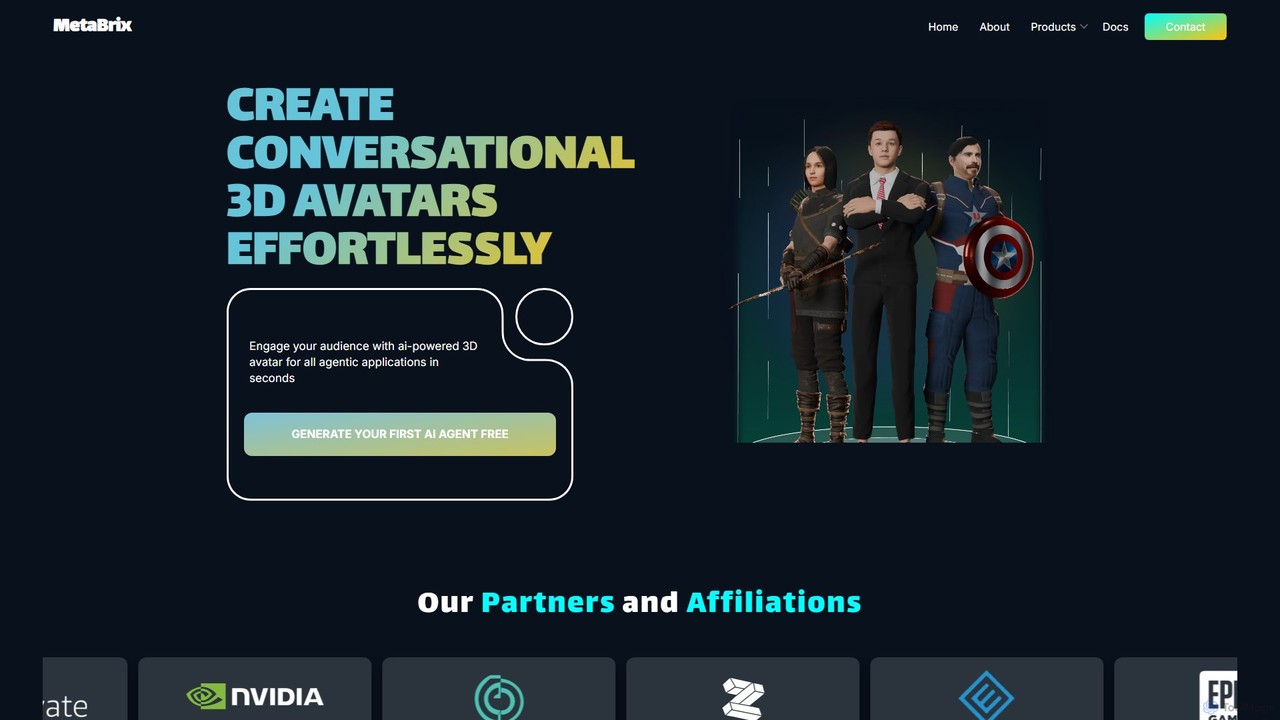
MetaBrix is a Gen-AI powered platform for effortlessly creating conversational 3D avatars. It enables users to generate fully-rigged, emotionally expressive characters from text or images in seconds. Designed for gaming, healthcare, and enterprise applications, it offers seamless integration with major engines like Unity and Unreal via API and SDK.

Character Generation
Visits 6.8KFavorites 142Likes 138

About Virtual Assistant

Virtual Assistants are AI-powered tools designed to automate tasks, provide information, and interact with users through natural language, often taking the form of a digital avatar. Leveraging advanced natural language processing (NLP) and machine learning, they streamline operations and enhance user experience across various platforms. These intelligent agents act as digital companions, assisting with everything from scheduling to customer support, thereby boosting efficiency and accessibility.

Core Features

  • Natural Language Understanding (NLU): Interprets and comprehends user queries and commands in conversational language.
  • Task Automation: Executes predefined tasks such as scheduling, sending emails, or managing data entries.
  • Information Retrieval: Accesses and delivers relevant information from vast databases or the web instantly.
  • Personalization: Learns user preferences and adapts interactions for a tailored and more effective experience.
  • Multi-channel Integration: Operates seamlessly across websites, mobile apps, messaging platforms, and voice interfaces.

Applicable Scenarios

Virtual Assistants are widely adopted in customer service for instant support, in personal productivity for managing daily tasks, and in healthcare for patient engagement. They can handle routine inquiries, provide quick access to information, and free up human agents for more complex issues, making them invaluable across diverse sectors.

How to Choose

When selecting a Virtual Assistant, consider its natural language understanding capabilities, the range of tasks it can automate, and its integration options with existing systems. Evaluate the ease of customization, data security features, and the scalability to meet future demands, ensuring it aligns with your specific operational needs and budget.

Virtual Assistant use cases

1

Automating Customer Service Inquiries

E-commerce businesses deploy virtual assistants to handle common customer questions about orders, shipping, and product details 24/7. This reduces call center volume, provides instant support, and improves customer satisfaction by offering quick, accurate responses without human intervention, allowing human agents to focus on complex issues.

2

Enhancing Personal Productivity and Scheduling

Busy professionals use virtual assistants to manage their calendars, set reminders, make travel arrangements, and organize emails. By delegating routine administrative tasks, individuals can focus on high-priority work, significantly boosting their daily efficiency and time management, leading to better work-life balance.

3

Providing Healthcare Patient Support

Hospitals and clinics utilize virtual assistants to answer frequently asked questions about appointments, medication, and general health information. These assistants can guide patients through pre-visit procedures, provide post-discharge instructions, and offer initial symptom assessment, improving patient engagement and reducing staff workload, ensuring timely care.

4

Streamlining Internal IT Helpdesk Support

Large organizations implement virtual assistants to provide immediate support for common IT issues, such as password resets, software installation guides, or network troubleshooting. This allows employees to resolve problems quickly, minimizing downtime and freeing IT staff to address more complex technical challenges that require human expertise, enhancing overall operational efficiency.

5

Assisting Sales Lead Qualification and Nurturing

Sales teams employ virtual assistants on websites to engage visitors, answer initial product questions, and qualify leads based on predefined criteria. The assistant can then schedule demos or pass qualified leads to human sales representatives, streamlining the sales funnel and improving conversion rates by focusing human effort on high-potential prospects.

6

Facilitating Content Creation and Research

Content creators and researchers leverage virtual assistants to quickly gather information, summarize articles, or even draft initial outlines for reports and presentations. This accelerates the research phase, helps in organizing vast amounts of data, and provides a starting point for creative work, saving significant time and improving the quality of initial drafts.

Virtual Assistant FAQ

What are Virtual Assistants?

Virtual Assistants are AI-powered software programs designed to perform tasks or services for an individual or organization. They use natural language processing to understand and respond to user commands, automating routine operations and providing information across various digital platforms. Common use cases include customer support, personal scheduling, and data retrieval, significantly enhancing efficiency and user experience.

How do Virtual Assistants differ from traditional chatbots?

While both interact with users, Virtual Assistants are generally more advanced than traditional rule-based chatbots. Virtual Assistants leverage AI and machine learning to understand context, learn from interactions, and perform complex tasks, whereas traditional chatbots follow predefined scripts and keyword matches. This allows VAs to handle nuanced conversations and provide more dynamic, personalized support.

What are the key benefits of using a Virtual Assistant?

The primary benefits include increased efficiency through task automation, 24/7 availability for support, and improved customer satisfaction with instant responses. They also offer cost reduction by handling routine inquiries, personalization based on user preferences, and scalability for growing business needs, ultimately freeing up human resources for more strategic work.

What should I consider when integrating a Virtual Assistant into my business?

Key considerations include defining clear objectives for the assistant, ensuring seamless integration with existing systems (CRM, ERP), and planning for data privacy and security. It's also crucial to have a strategy for continuous training and improvement of the AI model, along with robust fallback options for complex queries that may require human intervention, ensuring a smooth user experience.

Can Virtual Assistants handle complex conversations or only simple queries?

Modern Virtual Assistants, especially those powered by advanced AI and large language models, are increasingly capable of handling complex, multi-turn conversations and understanding nuanced user intent. While simple queries are their bread and butter, many can now escalate to human agents or provide sophisticated problem-solving for more intricate issues, offering a blend of automation and human oversight.