ToolMage
Sign in

Best 1 Character Generation AI tools for 3D

Popular Character Generation AI tools in 3D include MetaBrix, helping you work more efficiently.

MetaBrix
Freemium

MetaBrix

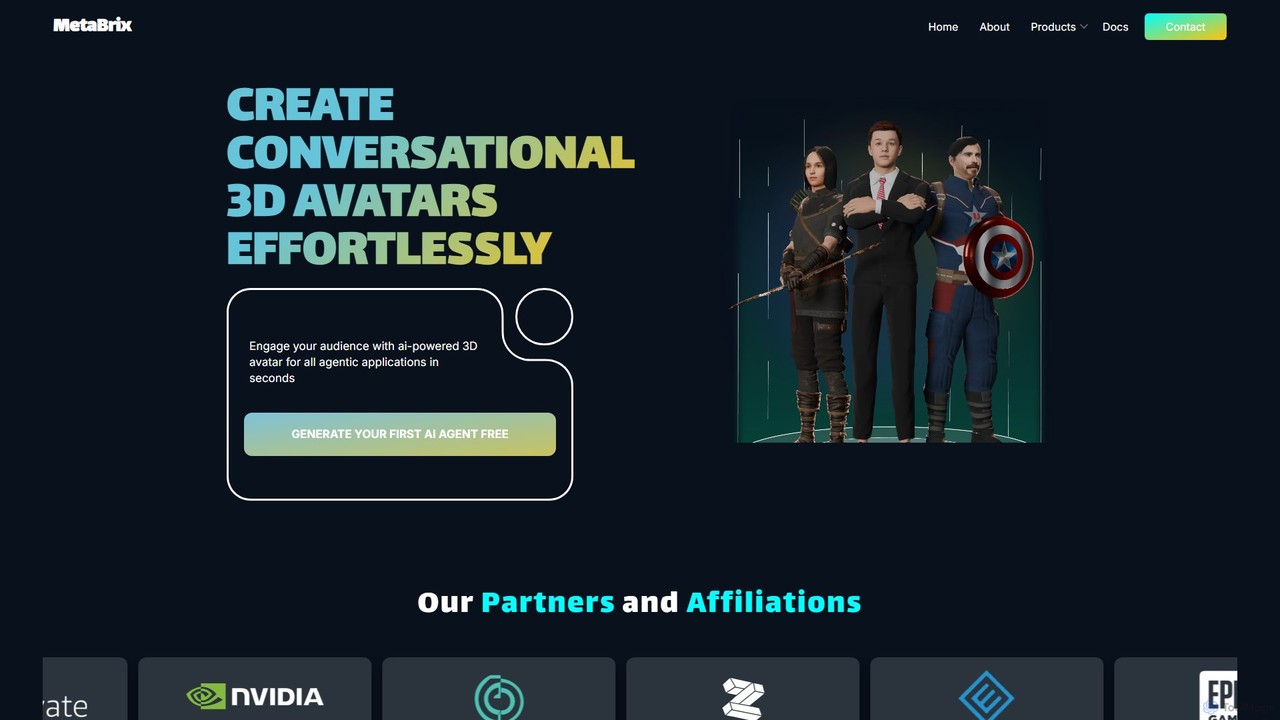
MetaBrix is a Gen-AI powered platform for effortlessly creating conversational 3D avatars. It enables users to generate fully-rigged, emotionally expressive characters from text or images in seconds. Designed for gaming, healthcare, and enterprise applications, it offers seamless integration with major engines like Unity and Unreal via API and SDK.

Character Generation
Visits 4.4KFavorites 128Likes 118

About Character Generation

Character Generation tools are AI-powered platforms designed to automatically create realistic or stylized 3D characters. Leveraging advanced generative AI models, these tools streamline the complex process of character design, modeling, and texturing within the broader 3D domain. They enable users to quickly produce diverse characters for various applications, significantly accelerating creative workflows and reducing manual effort.

Core Features

  • Automated 3D Character Creation: Generate full-body 3D characters from text descriptions, image prompts, or basic sketches.
  • Extensive Customization Options: Modify facial features, body proportions, hairstyles, clothing, accessories, and expressions.
  • Rigging and Animation Readiness: Output characters with pre-built skeletal rigs, making them immediately suitable for animation.
  • High-Quality Texture and Material Generation: Apply detailed PBR (Physically Based Rendering) textures and materials for realistic visual fidelity.
  • Style Transfer and Artistic Control: Adapt character aesthetics to specific artistic styles, from photorealistic to cartoonish.

Use Cases

These tools are invaluable for professionals in game development, animation studios, and virtual reality content creation. They allow artists and designers to rapidly iterate on character concepts, populate virtual worlds with unique NPCs, or create custom avatars for interactive experiences without extensive manual modeling.

How to Choose

When selecting an AI character generation tool, consider the quality and fidelity of the generated output, the depth of customization available, its compatibility with your existing 3D software (e.g., Blender, Unity, Unreal Engine), and the flexibility of its rigging and animation features. Evaluate the range of styles it supports and its pricing model to ensure it aligns with your project needs and budget.

Featured tool rankings

Character Generation use cases

1

Rapid Game Character Prototyping

Game developers use AI character generation to quickly create a wide array of non-player characters (NPCs) or initial player character concepts. By inputting simple descriptions, they can generate multiple character variations in minutes, accelerating the design iteration phase and populating game worlds efficiently.

2

Animated Film Production

Animation studios leverage these tools to design unique characters for films, series, or shorts. Artists can generate base models with specific traits, then refine them, saving significant time on initial modeling and rigging, allowing more focus on storytelling and animation.

3

Virtual Reality & Metaverse Avatars

Creators in VR and metaverse platforms utilize AI character generation to produce highly customizable avatars for users or virtual inhabitants for digital environments. This enables a diverse and personalized user experience without requiring individual manual modeling for each character.

4

Digital Art & Concept Design

Digital artists and illustrators employ these tools to generate character concepts and references. They can explore various body types, outfits, and poses quickly, using the AI-generated output as a foundation or inspiration for their final artworks, enhancing creative exploration.

5

Marketing & Brand Mascots

Marketing agencies and brands use AI character generation to create unique virtual mascots or spokespersons for campaigns. This allows for consistent brand representation across digital platforms, with the ability to easily adapt the character's appearance for different marketing initiatives.

6

Film Pre-visualization

Filmmakers and production teams can use AI-generated characters to quickly populate pre-visualization scenes. This helps in blocking out shots, testing camera angles, and understanding character placement and movement within a scene without waiting for final character models, streamlining the early stages of film production.

Character Generation FAQ

What are AI Character Generation tools?

AI Character Generation tools are specialized platforms that use artificial intelligence, particularly generative adversarial networks (GANs) or diffusion models, to automatically create 3D characters. Unlike traditional manual 3D modeling, these tools can generate diverse characters—from realistic humans to stylized creatures—based on text prompts, image inputs, or predefined parameters, significantly speeding up the character design process for 3D applications.

How do AI Character Generation tools work?

These tools typically work by processing user inputs, such as textual descriptions (e.g., "a medieval knight with a scarred face"), reference images, or selected attributes (gender, age, body type). The AI model then synthesizes a 3D mesh, applies textures, and often generates a skeletal rig. Some advanced tools use large datasets of existing 3D models and textures to learn how to construct new, unique characters that adhere to the specified parameters.

What's the difference between AI Character Generation and traditional 3D modeling?

The primary difference lies in automation and speed. Traditional 3D modeling involves manual sculpting, retopology, texturing, and rigging by a skilled artist, offering precise control over every detail. AI Character Generation, conversely, automates much of this process, allowing for rapid prototyping and iteration. While AI tools excel at speed and generating variations, traditional modeling often provides unparalleled artistic control and bespoke quality for highly specific or unique designs.

What are the key features to look for in a Character Generation AI?

When evaluating these tools, look for robust customization options for facial features, body types, clothing, and accessories. Essential features include automatic rigging for animation readiness, high-quality texture generation (PBR support), and compatibility with standard 3D software export formats (e.g., FBX, OBJ). The ability to control artistic style and generate diverse character types is also crucial for versatile use.

Who can benefit from using AI Character Generation tools?

A wide range of professionals can benefit. Game developers can rapidly create NPCs and player avatars. Animators can quickly generate base characters for their projects. Digital artists and concept designers can use them for inspiration and rapid prototyping. Additionally, creators in virtual reality, metaverse platforms, and even marketing professionals looking for unique brand mascots can leverage these tools to streamline their character creation workflows.