experiments
RunwayML Experiments is a cutting-edge platform for artists, researchers, and developers to access and test the latest, pre-release …
RunwayML Experiments is a cutting-edge platform for artists, researchers, and developers to access and test the latest, pre-release generative AI models. Explore novel tools for video, image, and 3D creation before they become mainstream. Push the boundaries of creativity by experimenting with next-generation AI technologies and providing direct feedback to the RunwayML research team.
ModelsLab
A developer-first API platform offering unified access to over 100,000 AI models for image, video, audio, 3D, and …
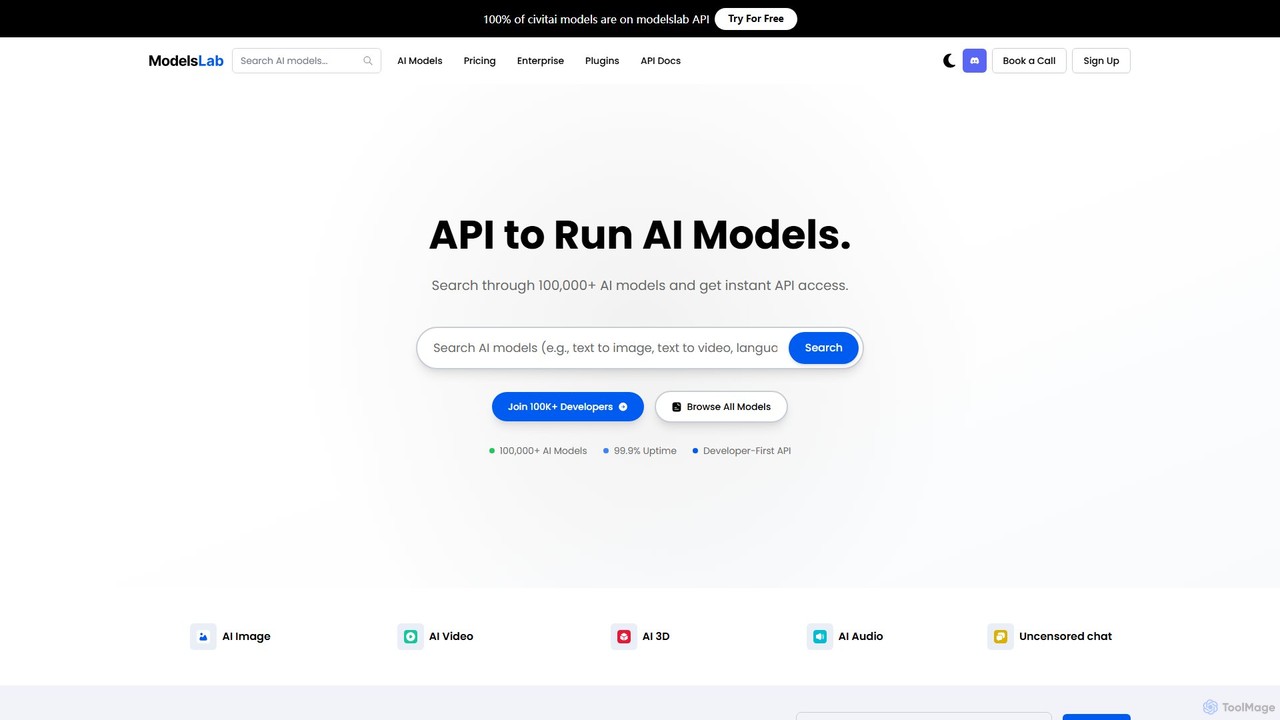
A developer-first API platform offering unified access to over 100,000 AI models for image, video, audio, 3D, and text generation. It simplifies development with a single API, one subscription, and robust, scalable infrastructure for building advanced AI applications.
About 3D Model Generation
3D Model Generation tools are a specialized category within 3D tools, leveraging AI to automatically create three-dimensional digital models from various inputs, such as text descriptions, 2D images, or existing 3D data. These platforms utilize advanced machine learning algorithms to interpret complex prompts and synthesize intricate geometries, textures, and materials. They significantly accelerate the design and prototyping process across industries, enabling users to rapidly visualize concepts and populate virtual environments without extensive manual modeling expertise.
Core Features
- Text-to-3D Generation: Creates detailed 3D models directly from natural language descriptions.
- Image-to-3D Conversion: Transforms 2D images or sketches into full 3D objects with depth and volume.
- Mesh Optimization & Texturing: Automatically refines model topology and applies realistic textures and materials.
- Style Transfer & Variation: Generates multiple stylistic variations of a base model or applies specific artistic styles.
- Asset Library Integration: Seamlessly integrates generated models into existing 3D software and game engines.
Applicable Scenarios
These tools are invaluable for game developers needing to quickly populate virtual worlds with unique assets, product designers iterating on new concepts, and architects visualizing building designs. They also serve marketing professionals creating immersive advertisements and educators developing interactive learning materials.
How to Choose
When selecting a 3D model generation tool, consider the input types it supports (text, image, scan), the quality and complexity of the output models, and its integration capabilities with your existing 3D software. Evaluate the ease of use, the range of customization options, and the pricing model, including any credit-based systems for generation.

3D Model GenerationUse Cases
Rapid Game Asset Creation
Game developers rapidly generate diverse environmental props, character accessories, or architectural elements from simple text prompts or concept art, speeding up world-building and asset population.
Product Design Prototyping
Industrial designers quickly visualize and iterate on new product concepts by generating 3D models from sketches or descriptive text, allowing for faster design reviews and modifications before physical prototyping.
Enhanced Architectural Visualization
Architects and interior designers create detailed 3D models of furniture, fixtures, or landscape elements for their renderings, enhancing realism and providing clients with more immersive visual presentations.
E-commerce Product Showcases
Online retailers generate high-quality 3D models of their products from 2D images, enabling interactive 360-degree views or augmented reality experiences for customers, boosting engagement and sales.
Efficient Film & Animation Production
VFX artists and animators generate background objects, minor characters, or intricate set pieces from textual descriptions, significantly reducing manual modeling time for complex scenes.
Interactive Educational Content Development
Educators create interactive 3D models of historical artifacts, biological structures, or scientific phenomena for virtual classrooms and e-learning platforms, making complex subjects more engaging and understandable.