Fotol AI
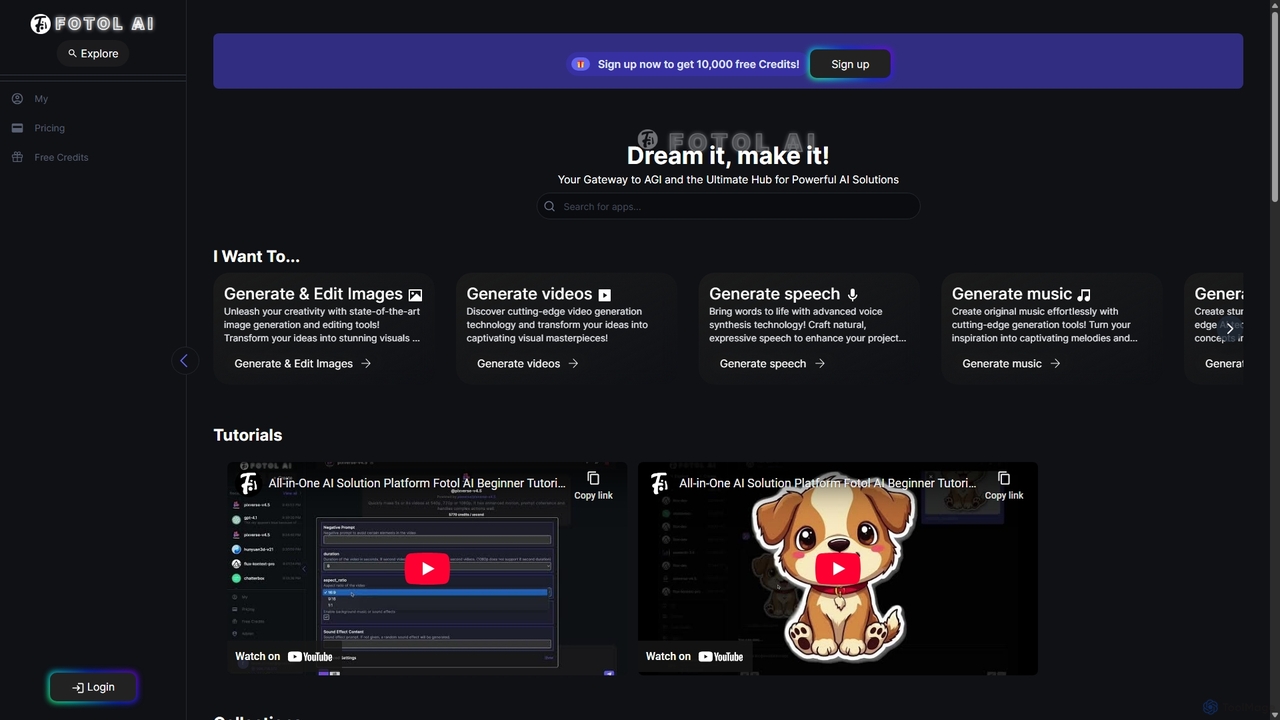
Fotol AI is an all-in-one platform serving as a gateway to the world's most powerful generative AI models. …
Fotol AI is an all-in-one platform serving as a gateway to the world's most powerful generative AI models. It aggregates cutting-edge tools for image, video, speech, music, and 3D asset creation, alongside a vast library of advanced conversational AI models from providers like OpenAI, Google, and Anthropic. Users can access and switch between these diverse applications seamlessly through a unified interface and a single credit-based system, streamlining creative and development workflows.
nv_tlabs
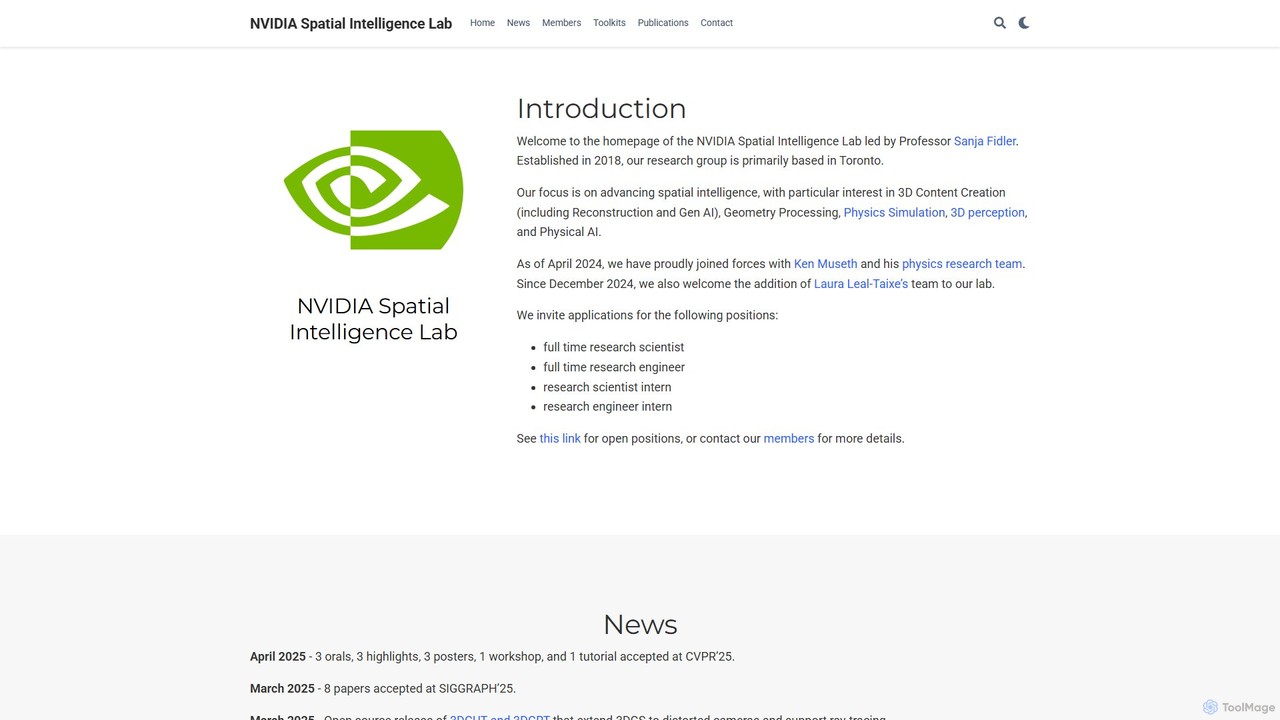
nv_tlabs is NVIDIA's research hub, showcasing a portfolio of cutting-edge AI projects. It provides access to pioneering research …
nv_tlabs is NVIDIA's research hub, showcasing a portfolio of cutting-edge AI projects. It provides access to pioneering research papers, interactive demos, and open-source code in fields like generative AI, computer vision, and neural graphics, targeting researchers and developers.
Lyndium
Lyndium is an all-in-one AI-powered content creation platform that enables users to generate videos, images, 3D models, and …
Lyndium is an all-in-one AI-powered content creation platform that enables users to generate videos, images, 3D models, and speech. It features powerful tools for video translation, text-to-speech in multiple languages, and a lightweight media editor for a seamless creative workflow.
Dream3D
Dream3D is a pioneering AI platform that leverages foundational 3D models to generate dynamic, controllable, and consistent video …
Dream3D is a pioneering AI platform that leverages foundational 3D models to generate dynamic, controllable, and consistent video content. It features an interactive 3D editor and a powerful 3D-powered video generation engine, enabling creators to produce cinematic-quality animations and visual effects with unprecedented control over scenes, objects, and camera movements.
About 3D Generation
3D Generation tools are a class of AI-powered applications that automatically create three-dimensional models, textures, or scenes from various inputs such as text prompts or 2D images. Leveraging advanced generative AI models like diffusion networks and Neural Radiance Fields (NeRF), these tools significantly accelerate the creation of complex 3D assets. They empower designers, developers, and artists to rapidly prototype and produce immersive digital content, streamlining workflows for games, virtual reality, and product visualization. This innovative approach transforms traditional 3D content creation by reducing manual effort and opening new creative possibilities.
Core Features
- Text-to-3D: Generate detailed 3D models directly from descriptive text prompts.
- Image-to-3D: Convert one or more 2D images into a full 3D model or scene.
- Texture Generation: Automatically create high-quality PBR (Physically Based Rendering) textures for 3D models.
- Scene Reconstruction: Reconstruct entire 3D environments or objects from photos or videos.
- Style Transfer: Apply specific artistic styles or material properties to generated 3D assets.
Applicable Scenarios
These tools are invaluable for game developers needing rapid asset creation, e-commerce businesses for interactive product mockups, and architectural firms for quick pre-visualization. They streamline the initial stages of content production, allowing for faster iteration and exploration of design concepts across various industries.
How to Choose
When selecting a 3D Generation tool, consider its input flexibility (text, image, video), output format compatibility (OBJ, FBX, GLB), the quality and detail of generated assets, and ease of integration with your existing 3D software pipeline. Evaluate the learning curve and the specific generative AI models used for optimal results.

3D GenerationUse Cases
Game Asset Prototyping
Game developers rapidly generate diverse 3D models for characters, props, and environments from text descriptions or concept art. This accelerates the initial design phase, allowing for quick iteration and visualization of game worlds without extensive manual modeling, significantly reducing development time and costs.
Product Visualization for E-commerce
E-commerce businesses create high-quality 3D models of products from a few 2D images or CAD files. These models can then be used for interactive 3D viewers on websites, augmented reality (AR) applications, or virtual try-ons, enhancing customer engagement and reducing the need for expensive photoshoots.
Architectural & Interior Design Pre-visualization
Architects and interior designers generate realistic 3D models of buildings, rooms, and furniture from sketches, floor plans, or simple text prompts. This enables quick creation of multiple design variations and immersive walkthroughs for clients, facilitating faster feedback and decision-making in the design process.
Virtual Reality (VR) & Metaverse Content Creation
Artists and developers produce immersive 3D environments and interactive objects for VR experiences and metaverse platforms. By generating complex scenes and assets from simple inputs, they can populate virtual worlds more efficiently, creating rich and engaging digital spaces for users to explore.
Film & Animation Pre-production
Filmmakers and animators generate preliminary 3D models for props, sets, and background elements based on script descriptions or concept art. This helps in visualizing scenes, blocking shots, and iterating on visual storytelling early in the production pipeline, saving significant time and resources in later stages.
Educational & Training Simulations
Educators and trainers create detailed 3D models of anatomical structures, machinery, or historical artifacts for interactive learning modules and simulations. AI 3D generation allows for the rapid development of accurate and engaging visual aids, making complex subjects more accessible and understandable for students.