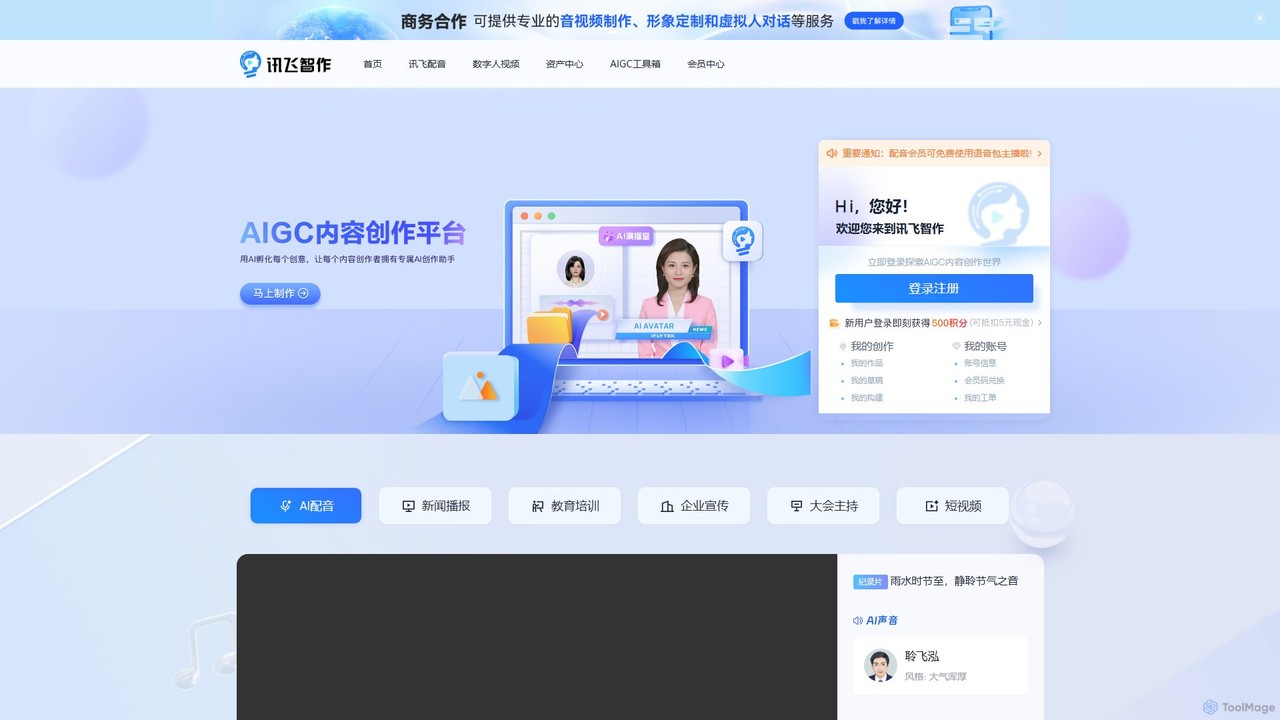
iFlytek Zhizuo
iFlytek Zhizuo is an all-in-one AI content creation platform by iFlytek, specializing in text-to-speech, AI video generation, and …
iFlytek Zhizuo is an all-in-one AI content creation platform by iFlytek, specializing in text-to-speech, AI video generation, and virtual human services. It empowers users to efficiently produce high-quality, professional-grade audio and video content for various applications like marketing, education, and entertainment.
About Virtual Humans
Virtual Humans are AI-powered digital entities designed to realistically mimic human appearance, voice, and behavior. These advanced AI avatars leverage sophisticated technologies like natural language processing, 3D rendering, and emotional AI to engage in dynamic, real-time interactions. They serve various roles from customer service to digital content creation, offering engaging and scalable interactions across multiple platforms. Unlike static digital representations, virtual humans possess a degree of autonomy and intelligence, making them highly versatile tools for modern communication.
Core Features
- Realistic Rendering & Animation: High-fidelity visual representation with natural facial expressions and body language.
- Natural Language Interaction: Advanced conversational AI for understanding user input and generating human-like speech.
- Emotional Expression: Ability to convey a wide range of emotions through nuanced visual and auditory cues.
- Real-time Responsiveness: Dynamic interaction capabilities, allowing for live conversations and adaptive responses.
- Personalization & Customization: Tools to tailor appearance, voice, personality, and knowledge base to specific needs.
Applicable Scenarios
Virtual Humans are increasingly adopted across industries for enhanced digital engagement. They are ideal for roles requiring consistent, scalable, and interactive human-like presence, such as automated customer support, personalized educational tutoring, and dynamic brand ambassadorship in marketing campaigns. Their ability to deliver information and interact emotionally makes them valuable in diverse public-facing applications.
How to Choose
When selecting a Virtual Human tool, consider the desired level of realism and customization options for appearance and personality. Evaluate its interaction capabilities, including natural language processing accuracy, voice synthesis quality, and real-time responsiveness. Assess integration potential with existing platforms and scalability for future needs. Finally, compare pricing models and the availability of technical support to ensure a sustainable solution.

Virtual HumansUse Cases
Engaging Customers as an AI Brand Ambassador
Marketing teams utilize virtual humans to represent brands, deliver product information, and interact with customers on websites or social media. These AI ambassadors create a consistent and memorable brand presence 24/7, enhancing customer engagement and extending brand reach without human resource limitations. They can personalize messages and respond to queries, fostering stronger customer relationships and brand loyalty.
Providing 24/7 AI-Powered Customer Support
Companies deploy virtual humans as frontline customer service agents on their platforms. These AI entities can answer FAQs, guide users through processes, and resolve common issues in real-time, offering a more personal touch than traditional chatbots. This significantly reduces call center wait times and provides instant support, improving overall customer satisfaction and operational efficiency.
Delivering Personalized Learning Experiences
Educational institutions and corporate trainers utilize virtual humans as interactive tutors or guides. They can explain complex concepts, provide personalized feedback, and simulate real-world scenarios, making learning more engaging and accessible. This is particularly beneficial for remote or self-paced courses, allowing learners to interact with an AI instructor tailored to their individual needs and pace.
Automating News Delivery and Content Presentation
Media organizations employ virtual humans to present news, weather forecasts, or other digital content. This allows for rapid content generation, multilingual broadcasting, and a consistent on-screen presence, reducing production costs and enabling round-the-clock content delivery. Virtual anchors can be quickly updated with new scripts and visuals, making them highly efficient for dynamic media environments.
Supporting Patients as a Virtual Healthcare Assistant
Healthcare providers use virtual humans to offer initial patient consultations, provide health information, or act as wellness coaches. They can answer common medical questions, remind patients about appointments, and offer emotional support, improving patient access to information and care. This helps alleviate the burden on human staff and provides a consistent, non-judgmental point of contact for patients.
Enhancing Online Shopping with Virtual Assistants
E-commerce platforms integrate virtual humans to greet shoppers, recommend products based on preferences, and assist with navigation. This creates a more interactive and personalized shopping experience, mimicking in-store assistance and potentially boosting sales conversion rates. Virtual assistants can handle multiple customer inquiries simultaneously, providing instant, tailored advice and improving the overall online retail journey.